
Introduction
Wireless connectivity has become one of the most important parts of modern life in the United States. People use mobile networks for communication, entertainment, online shopping, remote work, navigation, financial services, education, healthcare, and countless other daily activities. As the demand for faster and more reliable connections continues to grow, wireless technology is also evolving.
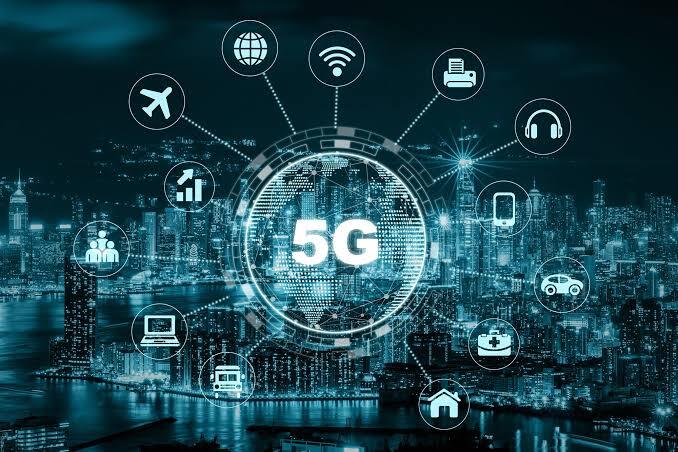
The arrival of 5G technology in the USA has introduced significant improvements in mobile connectivity, including higher speeds, lower latency, and greater network capacity. But 5G is more than simply a faster version of 4G. The technology is also becoming an important foundation for connected devices, industrial automation, smart infrastructure, cloud applications, and emerging digital services.
At the same time, researchers, telecommunications companies, technology manufacturers, and infrastructure providers are exploring technologies that could eventually contribute to 6G and next-generation wireless networks.
The future of wireless communication in America is therefore not limited to smartphones. It could influence factories, vehicles, businesses, cities, homes, healthcare facilities, and many other environments.
This article explores how 5G is developing in the United States, where the technology is being used, what benefits it can provide, the challenges surrounding deployment, and what the future of wireless connectivity could look like.
What Is 5G Technology?
5G stands for the fifth generation of mobile wireless technology. It was developed to improve several aspects of mobile communication compared with previous generations.
Traditional mobile networks were primarily designed around connecting phones and allowing people to make calls, send messages, browse websites, and use mobile applications. Modern networks need to handle a much broader range of devices and services.
Today, wireless networks may connect:
- Smartphones
- Tablets
- Laptops
- Smartwatches
- Security cameras
- Industrial equipment
- Sensors
- Connected vehicles
- Smart home devices
- Business systems
- Internet of Things devices
5G is designed to support this increasingly connected environment.
One of its major characteristics is lower network latency. Latency refers to the amount of time required for information to travel between devices and network systems. Lower latency can be particularly useful for applications that require rapid communication.
Another important feature is increased network capacity. As more devices connect to wireless networks, providers need infrastructure capable of managing large amounts of traffic.
How 5G Is Different From 4G
The transition from 4G to 5G is not simply about increasing download speeds.
5G introduces improvements across several areas.
Faster Data Transfer
5G networks can provide significantly faster connections under suitable conditions. This can make activities such as downloading large files, streaming high-resolution video, and using cloud-based applications more responsive.
However, actual performance varies depending on network coverage, spectrum, device hardware, congestion, location, and other factors.
Lower Latency
Latency is particularly important for applications where devices need to communicate quickly.
For example, industrial systems may need machines and sensors to exchange information almost immediately. Similarly, cloud gaming and certain interactive applications can benefit from responsive connections.
Greater Network Capacity
The number of connected devices continues to increase. 5G infrastructure is designed to support larger numbers of connected devices and higher traffic volumes.
This is especially important in densely populated locations such as major American cities, airports, stadiums, business districts, and transportation hubs.
Support for Connected Devices
5G can help support the broader Internet of Things ecosystem.
Instead of connecting only smartphones, future wireless networks can connect large numbers of sensors, machines, appliances, vehicles, and other devices.
5G Deployment Across the United States
The United States has become one of the major markets for 5G deployment.
Wireless carriers have invested heavily in network infrastructure, including spectrum, antennas, small cells, fiber connections, and other supporting technologies.
5G availability, however, is not identical everywhere.
Large metropolitan areas generally have more extensive network infrastructure because they contain large populations and high concentrations of mobile users.
Rural communities can face different challenges because network deployment may require significant investment across larger geographic areas with fewer customers.
This means that the experience of 5G can vary considerably from one part of the country to another.
Why Spectrum Is Important for 5G
Wireless communication depends heavily on radio-frequency spectrum.
Different portions of spectrum have different characteristics.
Some frequencies can travel relatively long distances and penetrate obstacles more effectively. Other higher-frequency bands can provide large amounts of capacity but may have shorter effective coverage ranges.
This is why modern wireless networks can use multiple spectrum bands.
Low-Band Spectrum
Low-band spectrum can provide broad geographic coverage and can be useful for expanding network availability.
Mid-Band Spectrum
Mid-band spectrum offers a balance between coverage and capacity and has become particularly important for 5G deployments.
High-Band Spectrum
Higher-frequency spectrum can provide very high capacity and fast data rates, although coverage characteristics can be more challenging.
Using multiple bands allows wireless providers to design networks around different geographic and performance requirements.
5G and the Internet of Things
One of the most important long-term applications of 5G is the Internet of Things, commonly called IoT.
IoT refers to physical objects equipped with sensors, software, connectivity, or computing capabilities that allow them to collect and exchange information.
In the United States, IoT applications can be found across many industries.
Factories can use connected sensors to monitor equipment.
Warehouses can use connected systems to track inventory and automate operations.
Buildings can use sensors to monitor energy consumption.
Agricultural operations can use connected devices to monitor environmental conditions.
Cities can deploy connected infrastructure for transportation and public services.
As more devices become connected, wireless networks become increasingly important.
5G and American Manufacturing
Manufacturing is another sector where wireless technology could have a significant impact.
Modern factories increasingly use automation, sensors, robotics, machine-vision systems, and data analytics.
Traditionally, many industrial systems depended heavily on wired connections.
Wireless industrial networking can provide greater flexibility in certain environments.
For example, a factory could potentially connect mobile equipment and sensors without requiring every device to have a dedicated physical network connection.
This could make it easier to modify production environments and introduce new connected systems.
5G can also support real-time communication between machines, sensors, and computing systems.
The Role of 5G in Smart Factories
Smart manufacturing is based on the idea of using connected technologies to make industrial operations more intelligent and automated.
A smart factory may contain thousands of sensors.
These sensors can collect information about:
- Temperature
- Pressure
- Machine vibration
- Production speed
- Energy consumption
- Equipment performance
- Product quality
The collected data can then be analyzed to identify potential problems or improve operations.
With appropriate network infrastructure, 5G can help move this information between devices and computing systems.
This can support predictive maintenance and other data-driven manufacturing strategies.
5G and Connected Vehicles
The automotive industry is also becoming increasingly connected.
Modern vehicles can communicate with cloud services, smartphone applications, navigation systems, entertainment platforms, and other digital services.
Future connected transportation systems could involve communication between vehicles, infrastructure, traffic systems, and other devices.
For example, roadside infrastructure could potentially exchange information with connected vehicles.
Such systems may help transportation operators collect more information about traffic patterns and road conditions.
However, connected transportation also introduces cybersecurity and privacy considerations that need to be addressed carefully.
5G and Smart Cities
American cities are exploring different ways to use connected technology.
A smart city can use sensors and digital infrastructure to collect information about urban environments.
Potential applications include:
- Traffic monitoring
- Public transportation systems
- Parking management
- Environmental monitoring
- Street lighting
- Infrastructure management
- Public safety systems
- Energy management
Wireless connectivity can provide an important communication layer for these systems.
Instead of connecting every sensor through traditional wired infrastructure, wireless technologies can provide additional deployment flexibility.
The success of smart-city projects depends on more than connectivity, though. Data management, cybersecurity, funding, maintenance, interoperability, and public acceptance are also important.
5G and Remote Work
The growth of remote and hybrid work has increased the importance of reliable internet connectivity.
Employees may use cloud applications, video conferencing, collaboration platforms, virtual desktops, and other online services throughout the workday.
Mobile 5G can provide another connectivity option for people who need internet access outside traditional office environments.
For businesses, wireless connectivity can also provide backup connectivity in certain situations.
The quality of the experience depends on local network conditions and the capabilities of the device being used.
5G in Rural America
One of the biggest challenges for wireless technology in the United States is providing reliable connectivity across rural areas.
Rural regions can cover large geographic areas with relatively low population density.
Building network infrastructure in such locations can therefore be more difficult and expensive on a per-user basis.
Improved wireless technologies could help expand connectivity, but network deployment still requires physical infrastructure.
This includes towers, antennas, fiber connections, power systems, backhaul networks, and maintenance.
The future of rural connectivity is likely to involve a combination of technologies rather than one universal solution.
The Importance of Fiber Infrastructure
Although 5G is a wireless technology, wireless networks still depend heavily on wired infrastructure.
Behind many wireless sites are fiber-optic connections carrying large amounts of data.
This supporting infrastructure is sometimes called backhaul or transport infrastructure.
As mobile traffic increases, wireless providers need sufficient capacity throughout the network.
Therefore, the expansion of 5G is connected to broader investments in fiber networks and digital infrastructure.
A fast wireless connection ultimately depends on the entire network working together.
Edge Computing and 5G
Another important technology associated with next-generation wireless networks is edge computing.
Traditional cloud computing often involves sending data to centralized data centers for processing.
Edge computing moves some computing resources closer to where data is generated.
This can reduce the distance information needs to travel.
When combined with high-performance wireless connectivity, edge computing could support applications that require rapid data processing.
Potential examples include industrial automation, connected transportation, augmented reality, video analytics, and interactive applications.
This combination of wireless connectivity and distributed computing could become increasingly important as more devices generate large volumes of data.
5G and Augmented Reality
Augmented reality, or AR, overlays digital information onto the physical world.
AR applications can be used through smartphones, smart glasses, headsets, and other devices.
Some future AR systems could rely heavily on cloud and edge computing.
Wireless networks can help devices communicate with remote computing resources.
For businesses, AR could have applications in training, maintenance, design, manufacturing, logistics, and customer experiences.
For example, technicians could potentially receive digital instructions while working on equipment.
The combination of advanced displays, computing, sensors, cloud services, and wireless networks could make these applications more practical over time.
Challenges Facing 5G in the USA
Despite its potential, 5G deployment comes with several challenges.
Infrastructure Costs
Building and maintaining wireless networks requires substantial investment.
Network providers must deploy equipment and connect it to supporting infrastructure.
Coverage Differences
5G performance can vary significantly by location.
A technology that performs extremely well in one area may provide a different experience elsewhere.
Device Compatibility
Users need compatible hardware to take advantage of particular network capabilities.
Older smartphones and devices may not support newer technologies.
Network Security
More connected devices create a larger potential attack surface.
Wireless networks therefore require strong security practices.
Energy Consumption
The growth of digital infrastructure also creates energy demands.
Network operators and technology companies continue to explore ways to improve efficiency.
Cybersecurity and 5G Networks
Security is particularly important because wireless networks connect large numbers of devices.
A compromised device could potentially become a pathway into a broader system.
Businesses using 5G-connected equipment therefore need to consider:
- Device authentication
- Encryption
- Network segmentation
- Software updates
- Access controls
- Monitoring
- Threat detection
Security cannot be treated as an afterthought.
As wireless networks become part of industrial and business operations, cybersecurity becomes an essential component of network design.
What Is 6G?
While 5G networks continue to expand, researchers are already exploring technologies associated with the next generation of wireless communication.
This future generation is commonly referred to as 6G.
6G remains a developing area, and many technical specifications and applications are still being researched.
Potential areas of exploration include:
- Extremely high data rates
- Advanced sensing
- Artificial intelligence-assisted networking
- Highly intelligent network management
- New spectrum technologies
- Advanced device-to-device communication
- Integration of communication and sensing
It is important to distinguish research concepts from commercially available technology. Many ideas associated with 6G are still being studied and developed.
Artificial Intelligence and Future Wireless Networks
Artificial intelligence could become increasingly important in network management.
Modern communication networks generate huge amounts of operational data.
AI systems could potentially analyze this information to identify unusual network behavior, predict congestion, optimize resources, and automate certain maintenance processes.
Future networks may therefore become more adaptive.
Instead of relying entirely on fixed configurations, intelligent software could dynamically respond to changing traffic conditions.
This could become particularly useful as networks connect billions of devices.
The Future of Wireless Technology in America
The future of wireless technology will likely involve more than faster smartphone connections.
Wireless networks are gradually becoming part of the infrastructure supporting the broader digital economy.
In the coming years, wireless connectivity could play increasingly important roles in:
- Connected factories
- Smart buildings
- Transportation
- Retail
- Logistics
- Agriculture
- Entertainment
- Cloud applications
- IoT systems
- Digital infrastructure
The development of 6G and other emerging technologies could further expand these possibilities.
However, technology adoption will depend on economics, infrastructure availability, security, standards, device costs, and practical business requirements.
Why 5G Matters for the US Technology Industry
The United States has a large technology ecosystem involving telecommunications companies, cloud providers, chip manufacturers, software developers, equipment manufacturers, startups, and enterprise technology companies.
5G connects many of these sectors.
Network equipment supports telecommunications companies.
Cloud infrastructure processes data.
Semiconductor technology powers network equipment and connected devices.
Software applications use network connectivity to deliver services.
Businesses use connected technologies to improve operations.
This makes wireless technology an important component of the broader American technology economy.
Conclusion
5G represents an important stage in the development of wireless connectivity in the United States.
Although consumers often associate 5G with faster smartphone downloads, the technology has a much broader role. It can support connected devices, industrial systems, smart infrastructure, cloud applications, transportation technologies, and emerging digital services.
The development of 5G is also closely connected with other technologies, including edge computing, artificial intelligence, the Internet of Things, fiber infrastructure, and advanced semiconductor systems.
At the same time, challenges such as infrastructure costs, coverage differences, cybersecurity, energy consumption, and network complexity remain important considerations.
Looking further ahead, research into 6G could introduce another generation of wireless capabilities. Many of those technologies are still under development, but the direction is clear: wireless networks are becoming an increasingly important part of the digital infrastructure supporting modern America.
For businesses and consumers alike, the evolution of wireless technology could influence how devices communicate, how companies operate, and how digital services are delivered.
The next phase of connectivity will not simply be about making smartphones faster. It will be about creating a more connected digital environment in which machines, people, infrastructure, and computing systems can communicate more efficiently.
Frequently Asked Questions
What is 5G technology?
5G is the fifth generation of mobile wireless technology. It is designed to provide improved speed, latency, capacity, and support for connected devices compared with previous generations.
Is 5G available throughout the USA?
5G is available across many parts of the United States, but coverage and performance vary depending on location, network provider, spectrum, infrastructure, and device capabilities.
How does 5G help businesses?
5G can support connected equipment, industrial IoT, smart manufacturing, mobile workforces, cloud applications, automation, and other business technologies.
What is the connection between 5G and IoT?
5G can provide connectivity for large numbers of connected sensors, machines, and other IoT devices. This makes wireless infrastructure an important component of many IoT applications.
Is 6G available in the USA?
6G is still an emerging research and development area. Commercial 6G networks are not yet the standard consumer technology, and many technical details continue to evolve.
Will 5G replace Wi-Fi?
5G and Wi-Fi serve different purposes and are likely to coexist. Wi-Fi remains important for homes, offices, schools, and other local environments, while cellular networks provide wide-area connectivity.
Can 5G improve rural internet access?
5G has the potential to improve connectivity in some rural areas, but deployment depends on infrastructure, geography, spectrum, economics, and network investment.











No responses yet