
Introduction
Space technology has entered a new era in the United States. For decades, space exploration was primarily associated with government agencies and large national programs. Today, the American space industry includes a much broader ecosystem of private companies, startups, research organizations, satellite operators, manufacturers, software developers, and traditional aerospace businesses.
The United States remains one of the world’s most important centers for space technology and innovation. American organizations are developing reusable launch systems, advanced satellites, lunar technologies, space-based communications, Earth-observation platforms, spacecraft software, robotics, and other technologies designed for operations beyond Earth.
One of the biggest changes in the industry is the growing role of commercial companies. Private-sector innovation is helping introduce new approaches to launching spacecraft, operating satellites, collecting data, and developing space infrastructure.
Space technology is also becoming increasingly connected with everyday life. Satellite systems support communications, weather monitoring, Earth observation, navigation, scientific research, disaster response, agriculture, logistics, and many other activities.
As launch costs, satellite technology, computing capabilities, and manufacturing techniques continue to evolve, the American space industry could become even more important to the broader technology economy.
What Is Space Technology?
Space technology includes the hardware, software, systems, and scientific technologies used to explore, operate in, and communicate through space.
It covers a wide range of technologies, including:
- Rockets
- Spacecraft
- Satellites
- Space telescopes
- Communication systems
- Earth-observation platforms
- Space robotics
- Navigation systems
- Satellite sensors
- Ground stations
- Space software
- Life-support systems
- Scientific instruments
Space technology also depends on technologies developed for use on Earth.
Advanced computing, artificial intelligence, materials science, robotics, electronics, telecommunications, and manufacturing all contribute to modern space systems.
Why the USA Is Important to the Space Industry
The United States has a large aerospace ecosystem supported by government agencies, universities, research institutions, established aerospace companies, and commercial technology companies.
The country has decades of experience in spacecraft development, launch systems, satellite operations, scientific missions, and human spaceflight.
At the same time, the American private sector has expanded its role in the industry.
This combination of public research and private innovation has created a large space technology ecosystem.
The Rise of Commercial Space Companies
One of the biggest changes in the American space industry has been the growth of commercial space companies.
Historically, developing and launching spacecraft required enormous budgets and long development cycles.
Private companies are experimenting with different approaches to reduce costs and improve flexibility.
Commercial companies now participate in areas such as:
- Rocket development
- Satellite manufacturing
- Space communications
- Earth observation
- Launch services
- Space logistics
- Lunar missions
- Space stations
- Space software
- In-space services
This commercial expansion has changed the structure of the industry.
Reusable Rockets and Lower Launch Costs
Rocket launches have traditionally been expensive because many launch vehicles were designed for limited or single-use missions.
Reusable launch technology aims to change this model.
A reusable launch system can potentially recover and reuse important components of a rocket.
If successful, reusability can reduce the amount of hardware that needs to be manufactured for every mission.
It can also support more frequent launches.
The development of reusable launch technology has therefore become one of the most significant trends in commercial spaceflight.
Why Rocket Reusability Matters
The benefits of reusable launch systems extend beyond reducing costs.
More frequent launches can create new opportunities for:
- Satellite deployment
- Scientific missions
- Commercial services
- Technology demonstrations
- Space infrastructure
- Lunar missions
A more flexible launch industry can also allow organizations to deploy smaller payloads without waiting for limited launch opportunities.
This could encourage innovation among smaller companies and research organizations.
The Growing Satellite Industry
Satellites are one of the most important components of modern space infrastructure.
They can provide services related to:
- Communications
- Weather monitoring
- Earth observation
- Scientific research
- Navigation
- Disaster monitoring
- Environmental analysis
The development of smaller satellites has also changed the industry.
Traditional satellites could be large, expensive, and complex.
Modern small satellites can sometimes provide useful capabilities at lower development and launch costs.
Small Satellites and New Space Businesses
Small satellites have created opportunities for startups and specialized technology companies.
Smaller spacecraft can be designed for specific missions.
For example, a company may develop a satellite platform focused on Earth imaging or communications.
Advances in miniaturized electronics, sensors, processors, and manufacturing have helped make smaller spacecraft more capable.
This trend is contributing to the broader commercialization of space.
Satellite Internet and Space Communications
Space-based communications have become increasingly important.
Traditional internet infrastructure depends heavily on terrestrial networks such as fiber-optic cables, cellular towers, and fixed broadband systems.
Satellite networks can provide another way to connect users.
This can be particularly valuable in locations where terrestrial infrastructure is difficult or expensive to deploy.
Satellite connectivity can potentially support:
- Remote communities
- Ships
- Aircraft
- Emergency services
- Rural areas
- Remote industrial operations
The development of large satellite networks is creating a new category of communications infrastructure.
Earth Observation Technology
Satellites can observe Earth’s surface using cameras, radar, infrared sensors, and other instruments.
Earth-observation data can support many industries.
Agriculture can use satellite information to monitor crops.
Businesses can analyze changes in infrastructure and land use.
Scientists can study environmental conditions.
Emergency organizations can monitor disaster areas.
Governments can use satellite imagery for planning and monitoring.
As satellite sensors improve, the amount and quality of Earth-observation data are likely to continue increasing.
Artificial Intelligence and Space Technology
Artificial intelligence is becoming increasingly relevant to the space industry.
Spacecraft can generate large quantities of data.
Processing all of this information on Earth can take time and require significant communication bandwidth.
AI systems could potentially help spacecraft process information closer to where it is collected.
For example, onboard systems could analyze images and identify important features before sending selected information back to Earth.
This could make satellite operations more efficient.
AI can also assist with mission planning, anomaly detection, satellite operations, image analysis, and predictive maintenance.
Autonomous Spacecraft
Future spacecraft may become increasingly autonomous.
Communication delays can make real-time control difficult for missions far from Earth.
A spacecraft traveling to another planet cannot always wait for instructions from Earth before responding to every situation.
Autonomous systems can allow spacecraft to make certain decisions independently.
This can be particularly useful for:
- Navigation
- Scientific observations
- Equipment management
- Fault detection
- Mission planning
- Robotic operations
As artificial intelligence and onboard computing improve, autonomous spacecraft could become more capable.
Space Robotics
Robotics is another important part of American space technology.
Robotic systems can perform tasks that would be difficult, dangerous, or expensive for humans.
Space robots may be used for:
- Surface exploration
- Equipment inspection
- Sample collection
- Satellite servicing
- Cargo handling
- Construction
- Scientific research
Robotic technology is expected to become increasingly important as human and commercial activity expands beyond Earth.
The Return of Lunar Exploration
The Moon is receiving renewed attention from the American space industry.
Lunar exploration can support scientific research while also helping organizations develop technologies for future missions.
Potential areas of lunar technology include:
- Landing systems
- Lunar communications
- Surface mobility
- Robotics
- Navigation
- Power generation
- Habitat technologies
- Resource research
The Moon can also serve as a testing environment for technologies that could eventually support deeper-space exploration.
Lunar Infrastructure
Future lunar missions may require more than individual spacecraft.
A sustained lunar presence could require supporting infrastructure.
This could include:
- Communication networks
- Navigation systems
- Power systems
- Landing zones
- Surface vehicles
- Scientific instruments
- Robotics
- Storage systems
Developing such infrastructure would represent a significant technological challenge.
It could also create opportunities for American companies specializing in space hardware and software.
Space Stations and Commercial Habitats
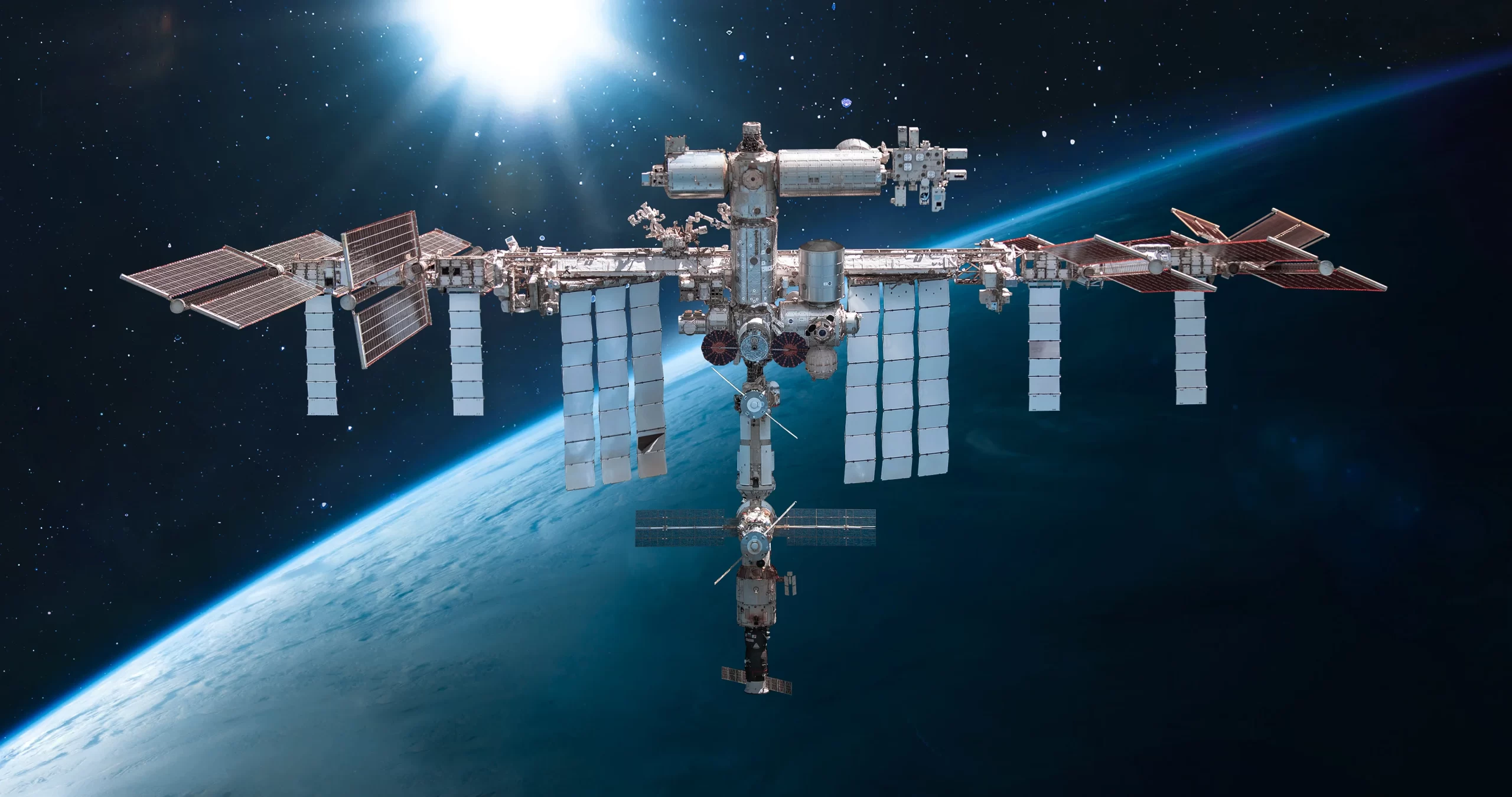
The International Space Station demonstrated the value of long-term human activity in low Earth orbit.
The next stage could involve a larger role for commercial space stations.
Private companies are exploring concepts for commercial orbital habitats that could potentially support research, manufacturing, tourism, and other activities.
A commercial space-station ecosystem would require reliable transportation, life-support systems, communications, power generation, and orbital logistics.
Such developments could gradually transform low Earth orbit into a more commercially active environment.
Space Manufacturing
Space provides a unique environment for manufacturing and scientific research.
Microgravity can affect materials and processes differently than conditions on Earth.
Researchers are exploring whether certain manufacturing processes could benefit from operating in orbit.
Potential areas of interest include:
- Advanced materials
- Pharmaceuticals
- Fiber production
- Semiconductor-related research
- Biological research
- Specialized manufacturing
The commercial value of space manufacturing remains an emerging field, but technological progress could create new opportunities.
The Role of Advanced Materials
Spacecraft and rockets operate in extremely demanding environments.
They must handle:
- Extreme temperatures
- Vibration
- Radiation
- Vacuum
- High acceleration
- Atmospheric reentry
This creates demand for advanced materials.
Engineers are exploring lighter and stronger materials that can improve spacecraft performance.
Composite materials, advanced alloys, ceramics, thermal-protection materials, and other technologies can all contribute to space systems.
Materials developed for aerospace can sometimes influence technology used on Earth as well.
Space Technology and Climate Monitoring
Satellites play an important role in monitoring Earth’s environment.
Space-based sensors can collect information about:
- Atmospheric conditions
- Ocean temperatures
- Ice coverage
- Vegetation
- Weather systems
- Air quality
- Land-use changes
Long-term satellite observations can help scientists understand environmental changes.
Space technology therefore contributes not only to exploration but also to scientific research about our own planet.
Space Technology and Disaster Response
Satellites can provide valuable information during natural disasters.
Satellite imagery can help organizations assess affected areas when roads or communication networks are damaged.
Space-based communication systems can also provide connectivity in locations where terrestrial infrastructure has been disrupted.
Potential applications include:
- Flood monitoring
- Wildfire analysis
- Hurricane tracking
- Earthquake assessment
- Search and rescue
- Emergency communications
The ability to observe large areas from space makes satellites particularly useful during major emergencies.
Cybersecurity in the Space Industry
As space systems become increasingly connected, cybersecurity becomes more important.
Satellites, ground stations, mission-control systems, and communication networks all rely on digital technology.
A cybersecurity incident could potentially disrupt important services.
Modern space systems therefore need strong protection against unauthorized access, malicious software, communication attacks, and other threats.
Security must be considered throughout the entire lifecycle of a spacecraft.
Space Debris: A Growing Challenge
The increasing number of satellites and launches also creates concerns about space debris.
Space debris can include:
- Defunct satellites
- Rocket components
- Fragmented spacecraft
- Other objects left in orbit
Even relatively small objects can become dangerous because orbital objects travel at very high speeds.
As commercial space activity increases, responsible orbital management will become increasingly important.
Space operators need to consider tracking, collision avoidance, spacecraft disposal, and other methods of reducing orbital risks.
The Future of Satellite Technology
Satellite technology is likely to continue becoming smaller, smarter, and more capable.
Future satellites could contain more powerful processors, advanced sensors, improved communication systems, and greater levels of autonomy.
Satellite networks may also become more integrated with terrestrial infrastructure.
The boundary between space technology and conventional telecommunications could therefore become increasingly blurred.
The Economic Impact of America’s Space Industry
Space technology supports a wide range of industries.
The sector creates demand for:
- Engineers
- Software developers
- Electronics specialists
- Manufacturing companies
- Robotics experts
- Scientists
- Communications specialists
- Data analysts
- Aerospace technicians
It also supports supply chains involving materials, electronics, software, transportation, testing, and industrial equipment.
As commercial space activity expands, the economic impact could extend beyond traditional aerospace companies.
Startups and Space Innovation
One of the most interesting developments in the American space industry is the growth of startups.
New companies are exploring specialized opportunities rather than attempting to build every part of a space system themselves.
Startups may focus on:
- Satellite components
- Space software
- Earth observation
- Launch technologies
- Space robotics
- Communications
- Navigation
- Data analytics
Lower-cost computing and manufacturing technologies have made it easier for smaller companies to participate in the industry.
Challenges Facing the US Space Industry
The American space sector also faces significant challenges.
High Development Costs
Space hardware is expensive to design, test, and manufacture.
Extreme Reliability Requirements
A spacecraft cannot always be repaired after launch, so components need extensive testing.
Complex Manufacturing
Space systems require specialized manufacturing processes.
Regulatory Requirements
Space activities operate within complex legal and regulatory environments.
Space Debris
Increasing orbital activity creates additional safety challenges.
Communication Constraints
Deep-space missions can experience significant communication delays.
These challenges require continued investment and engineering innovation.
What the Future of Space Technology Could Look Like
The future of space technology may be more commercial, connected, automated, and data-driven.
Instead of viewing space as a destination visited only for scientific missions, the industry is increasingly treating orbit and other environments as places where commercial infrastructure can operate.
Future developments could include:
- More reusable launch systems
- Larger satellite networks
- Commercial orbital facilities
- Advanced lunar missions
- Autonomous spacecraft
- Space robotics
- Improved Earth observation
- New communication networks
- Advanced space manufacturing
Not every proposed technology will become commercially successful, but the overall industry is moving toward greater technological diversity.
Why Space Technology Matters to America’s Technology Future
Space technology is no longer isolated from the rest of the technology industry.
It depends on artificial intelligence, software, advanced computing, robotics, telecommunications, materials science, manufacturing, and data analytics.
At the same time, space systems provide infrastructure and information that can support industries on Earth.
This creates a two-way relationship between space technology and the broader digital economy.
As American companies continue developing new spacecraft, launch systems, satellites, and space services, innovation in the sector could influence many other technology markets.
Conclusion
Space technology in the United States is undergoing a major transformation.
Government agencies remain important to exploration and scientific research, but commercial companies are playing an increasingly significant role in launching spacecraft, building satellites, providing communications, developing lunar technologies, and creating new space-based services.
Reusable rockets, small satellites, artificial intelligence, robotics, advanced materials, Earth observation, and commercial space stations are all contributing to this changing environment.
At the same time, challenges such as space debris, cybersecurity, development costs, reliability, and orbital congestion require careful attention.
The future of America’s space industry will likely depend on cooperation between government organizations, established aerospace companies, startups, research institutions, and technology providers.
As launch systems become more capable and spacecraft become smaller and smarter, space could become an increasingly important part of the American technology economy.
The next generation of space innovation may therefore not be defined by a single mission or company. Instead, it could be defined by an expanding ecosystem of technologies that connects Earth-based industries with an increasingly active space environment.
Frequently Asked Questions
Why is space technology important in the USA?
Space technology supports communications, weather monitoring, Earth observation, scientific research, navigation, disaster response, national infrastructure, and commercial services.
What is commercial space technology?
Commercial space technology refers to space-related products and services developed or operated by private companies. These can include rockets, satellites, communications systems, Earth-observation services, and space infrastructure.
Why are reusable rockets important?
Reusable rockets can potentially reduce launch costs and support more frequent missions by allowing important components of a launch vehicle to be recovered and used again.
What are small satellites?
Small satellites are spacecraft designed with relatively compact sizes and masses. Advances in electronics, sensors, computing, and manufacturing have made them increasingly capable.
How is AI used in space technology?
AI can assist with spacecraft operations, image analysis, anomaly detection, mission planning, autonomous decision-making, and processing large amounts of satellite data.
What is space debris?
Space debris consists of human-made objects and fragments left in Earth’s orbit, including inactive satellites and discarded rocket components. It can pose collision risks to operational spacecraft.
Will commercial space stations become common?
Commercial orbital habitats are an emerging area of development. Their long-term success will depend on technical reliability, economics, demand, transportation systems, and regulatory factors.











No responses yet