
Introduction
The United States is entering an important period of energy innovation. Electricity demand is changing as artificial intelligence, cloud computing, electric transportation, advanced manufacturing, and digital infrastructure continue to expand. These developments are creating new questions about how the country can produce enough reliable electricity while improving the performance and resilience of its energy infrastructure.
Solar and wind power have become important parts of the American energy landscape, but their electricity generation depends on weather and environmental conditions. Battery storage can help balance these variations, although storage systems have their own technical and economic limitations.
Another energy source is attracting growing attention: geothermal energy.
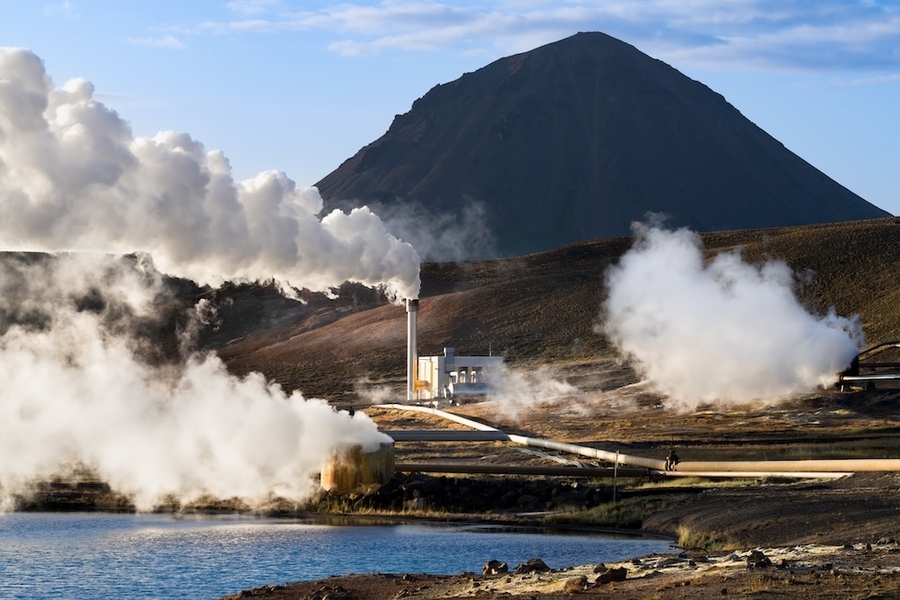
Geothermal technology uses heat stored beneath the Earth’s surface to produce electricity or provide heating and cooling. Unlike solar and wind generation, geothermal power can potentially operate continuously when a suitable underground resource and well-designed power system are available.
In 2026, the United States is investing in newer geothermal approaches that could make underground heat accessible in more locations. These include enhanced geothermal systems, advanced drilling methods, closed-loop designs, and technologies capable of working with extremely hot underground rock.
The U.S. Department of Energy announced more than $99 million for 21 geothermal projects in September 2026. The projects include field demonstrations and exploration drilling intended to improve understanding of geothermal resources and reduce the technical risks associated with future commercial development.
Another major development came in November 2026, when the Department of Energy’s Advanced Research Projects Agency-Energy announced up to $30 million for eight projects under its SUPERHOT program. The program focuses on technologies designed to access superhot geothermal resources.
These investments demonstrate that geothermal energy is becoming an important area of American engineering and energy research.
What Is Geothermal Energy Technology?
Geothermal energy is energy obtained from heat beneath the Earth’s surface.
The Earth’s interior contains enormous quantities of thermal energy. In certain locations, underground temperatures are high enough to heat water and produce steam that can drive electricity-generating turbines.
A conventional geothermal power plant generally requires a naturally occurring underground reservoir containing hot water or steam. Wells bring the geothermal fluid to the surface, where its heat is used to operate a power-generation system.
After extracting heat, many geothermal facilities reinject the cooled fluid underground through specially designed wells.
This process can support continued operation while managing the underground resource.
However, naturally suitable geothermal reservoirs are not evenly distributed across the United States. Conventional geothermal power development has historically been concentrated in western states where underground geological conditions are favorable.
Newer geothermal technologies aim to expand the number of locations where underground heat can be used.
The main approaches include:
- Conventional hydrothermal geothermal systems.
- Enhanced geothermal systems.
- Closed-loop geothermal systems.
- Advanced geothermal drilling.
- Superhot rock geothermal technology.
Each approach has different engineering requirements and development challenges.
Why Geothermal Energy Is Becoming Important in the USA in 2026
Several developments are encouraging greater interest in geothermal technology.
1. Increasing Electricity Demand
American electricity consumption is changing as more businesses depend on digital infrastructure.
Large data centers require electricity to operate servers, networking equipment, cooling systems, and supporting infrastructure. Artificial intelligence workloads can add further electricity requirements.
Industrial facilities and advanced manufacturing operations also need dependable power.
Geothermal energy could contribute to this demand because suitable geothermal plants can provide continuous electricity rather than depending directly on daily sunlight or changing wind conditions.
This does not mean geothermal can replace every other energy source. Instead, it may become one component of a diversified electricity system.
2. Interest in Reliable, Around-the-Clock Power
Electricity networks must maintain a balance between supply and demand.
Solar and wind generation can provide substantial electricity, but their output changes according to weather conditions and time of day.
Geothermal plants can operate independently of these short-term weather variations when their underground reservoirs and power-generation equipment are functioning properly.
This makes geothermal particularly interesting for electricity consumers that require consistent power.
3. Better Drilling Technology
The geothermal industry has benefited from technologies developed in the oil and gas sector.
Directional drilling, horizontal drilling, improved well construction, advanced sensors, and underground monitoring can help developers reach geothermal resources more effectively.
These technologies are especially important for enhanced geothermal systems, which require engineered underground reservoirs rather than relying entirely on naturally permeable formations.
4. Opportunities for Domestic Energy Development
Geothermal resources exist beneath many parts of the United States.
Improving exploration and drilling methods could create additional opportunities for domestic energy development.
It may also allow some existing industrial knowledge, engineering capabilities, and infrastructure to be adapted for geothermal projects.
Enhanced Geothermal Systems: A Major Technology Breakthrough
Enhanced geothermal systems, commonly called EGS, are among the most important developments in next-generation geothermal energy.
Conventional geothermal systems depend on naturally occurring combinations of heat, fluid, and underground rock permeability.
EGS takes a different approach.
It aims to create or improve underground pathways through which fluid can circulate and absorb heat from hot rock.
How Enhanced Geothermal Systems Work
A typical EGS project involves several important stages.
1. Underground exploration
Developers study geological information to identify suitable areas with high underground temperatures and appropriate rock formations.
They may use seismic surveys, temperature measurements, existing well data, and geological modeling.
2. Drilling geothermal wells
Engineers drill wells into hot underground rock. Depending on the design, wells may include vertical and horizontal sections.
3. Reservoir development
The underground rock formation is engineered to improve fluid circulation. Controlled stimulation techniques may create or improve pathways that allow water to move through the heated rock.
4. Heat extraction
Water circulates through the underground reservoir, absorbs heat, and returns to the surface through production wells.
5. Electricity generation
The recovered heat is transferred to a power-generation system. Depending on the plant design and resource conditions, steam or a secondary working fluid can drive a turbine.
6. Reinjection
After transferring its heat, the cooled fluid can be returned underground through injection wells.
The objective is to establish a managed underground circulation system that can produce useful thermal energy over an extended operating period.
Why EGS Matters
The biggest potential advantage of EGS is geographic flexibility.
Conventional geothermal resources require specific natural underground conditions. EGS attempts to create suitable fluid pathways in hot rock where naturally productive reservoirs may not exist.
This could potentially expand geothermal development beyond traditional geothermal regions.
However, commercial success depends on several factors, including drilling costs, underground rock characteristics, reservoir performance, fluid management, and long-term operating reliability.
Closed-Loop Geothermal Systems: A Different Engineering Approach
Closed-loop geothermal technology is another promising approach.
Unlike many conventional geothermal and EGS designs, closed-loop systems circulate a working fluid through sealed underground pipes or wellbores.
The fluid absorbs heat from surrounding rock without requiring the same type of open underground reservoir circulation.
How Closed-Loop Technology Works
A closed-loop geothermal installation generally includes:
- Underground wellbores or pipe networks.
- A sealed fluid circulation system.
- Heat exchangers.
- Surface pumps and control equipment.
- A power-generation or heating system.
Fluid moves through the underground system, collects heat from the surrounding rock, and returns to the surface.
The heat can then be used for electricity production or other applications, depending on the temperature and system design.
Potential Benefits
Closed-loop systems may offer advantages in certain geological conditions because they do not depend on creating the same type of interconnected underground reservoir required by EGS.
They may also reduce some fluid-management challenges associated with open-loop systems.
However, they still face engineering challenges.
The underground pipes must transfer enough heat to support an economically practical project. Drilling expenses, well depth, thermal performance, and long-term equipment durability all influence commercial viability.
Closed-loop technology is promising, but its performance must be demonstrated under real operating conditions.
Superhot Geothermal Technology: Accessing Extremely High Temperatures
One of the most ambitious areas of geothermal research is superhot rock energy.
Superhot geothermal projects aim to access underground resources at extremely high temperatures, potentially above 375 degrees Celsius.
At these temperatures, geothermal fluids and surrounding rock behave differently from conventional geothermal conditions.
The potential attraction is that higher-temperature resources may provide more useful thermal energy per well, depending on pressure, fluid conditions, reservoir design, and power-generation equipment.
However, accessing these resources is technically difficult.
Why Superhot Rock Is Challenging
Extremely high underground temperatures create demanding operating conditions.
Drilling equipment must withstand heat, pressure, and chemically challenging environments.
Materials that perform well at conventional geothermal temperatures may deteriorate under more extreme conditions.
Engineers must also understand how fluids behave inside very hot rock formations and how to maintain reliable circulation.
The DOE SUPERHOT Program
On November 12, 2026, the U.S. Department of Energy’s Advanced Research Projects Agency-Energy announced the selection of eight projects for up to a combined $30 million under its SUPERHOT program.
The program focuses on technologies designed to harness geothermal resources above 375 degrees Celsius and pressures above 22 megapascals.
Selected organizations include the University of Oklahoma, Oak Ridge National Laboratory, Lawrence Livermore National Laboratory, XGS Energy, Pacific Northwest National Laboratory, the University of Southern California, Los Alamos National Laboratory, and Blade Energy Partners.
The program aims to address engineering challenges involving well construction, heat transfer, and geothermal productivity.
The department has described the technology as a potential source of reliable baseload electricity, but these are development goals rather than guaranteed commercial outcomes.
Major Geothermal Developments in the United States in 2026
The year 2026 has brought several important developments in American geothermal research and investment.
1. Department of Energy Announces More Than $99 Million for 21 Projects
On September 21, 2026, the U.S. Department of Energy announced more than $99 million for 21 geothermal projects.
The projects were selected to advance next-generation geothermal development through field testing and resource exploration.
Five projects focus on field-scale enhanced geothermal system testing. Another 16 involve exploration drilling and characterization of promising geothermal resources.
The projects are intended to reduce development risks and provide better information about underground conditions.
The announcement also emphasizes making project-generated data available through the Department of Energy’s Geothermal Data Repository.
This is important because shared technical information can help researchers and developers understand geothermal formations and improve future projects.
2. Geothermal Center of Excellence
In September 2026, the Department of Energy announced the establishment of a Geothermal Center of Excellence.
The center is designed to connect expertise from national laboratories and industry to accelerate geothermal research and commercial development.
The initiative aims to improve resource discovery, technical development, and collaboration between researchers and companies.
This type of cooperation is important because geothermal development requires knowledge from multiple engineering disciplines, including geology, drilling, materials science, fluid mechanics, and electricity generation.
3. New Research in Pennsylvania
Geothermal development is not limited to western states.
In April 2026, the Department of Energy announced a $14 million enhanced geothermal demonstration project in Pennsylvania.
The project is designed to explore the use of existing horizontal shale-gas well infrastructure for geothermal development.
It will examine underground heat resources and test techniques for developing geothermal reservoirs in the Appalachian region.
If successful, the project could provide useful information about expanding EGS into parts of the eastern United States.
Companies Developing Geothermal Technology in America
Private companies are playing a significant role in turning geothermal research into commercial projects.
1. Fervo Energy
Fervo Energy is developing enhanced geothermal technology and commercial geothermal projects.
The company applies drilling methods and reservoir engineering techniques to access underground heat.
Its Cape Station project in Utah has been identified by the U.S. Energy Information Administration as a major commercial-scale EGS development.
Fervo’s work is important because it demonstrates how technologies adapted from the oil and gas industry may support large-scale geothermal power development.
2. Quaise Energy
Quaise Energy is working on next-generation geothermal drilling and superhot geothermal development.
Its Project Obsidian in central Oregon is designed to test a commercial-scale superhot enhanced geothermal system.
In September 2026, Quaise announced that it had been selected for up to $25 million in U.S. Department of Energy support.
The project is intended to advance drilling, stimulation, and testing of geothermal wells targeting extremely high temperatures.
The company’s longer-term ambition is to make deeper and hotter geothermal resources more accessible.
3. Ormat Technologies
Ormat Technologies is an established geothermal energy company involved in geothermal power generation and related technology.
In September 2026, the company announced that it had been selected for approximately $35 million in potential Department of Energy support for projects involving Dixie Valley in Nevada and Cove Fort in Utah.
The projects include enhanced geothermal testing and further exploration of underground geothermal resources.
The awards were subject to completion of funding negotiations.
4. XGS Energy
XGS Energy is developing advanced geothermal technology focused on expanding access to underground heat.
The company was among the organizations selected for the Department of Energy’s November 2026 SUPERHOT program.
Its work contributes to research into how geothermal resources can be developed under more demanding underground conditions.
5. SLB
SLB provides technology and services for energy development, including drilling, subsurface analysis, and engineering.
The company has partnered with geothermal developers and research organizations on projects involving well design and underground resource development.
Oil and gas expertise can be valuable for geothermal projects, although geothermal conditions introduce their own technical requirements.
How Geothermal Energy Can Support Data Centers and Artificial Intelligence
Data centers have become an important part of the modern American economy.
They support cloud computing, artificial intelligence, digital services, online platforms, and enterprise applications.
These facilities need electricity throughout the day, and their power requirements can be substantial.
Geothermal energy is attracting attention because it can potentially provide continuous electricity near suitable underground resources.
Reliable Electricity for Computing Infrastructure
Data centers require dependable power to operate servers, cooling equipment, networking systems, and supporting infrastructure.
Geothermal plants may contribute to electricity supplies that are less dependent on weather conditions than solar or wind installations.
Long-Term Energy Agreements
Technology companies may enter into power purchase agreements with electricity developers to secure energy supplies over extended periods.
These arrangements can help support new energy projects by providing a potential customer for future electricity generation.
Supporting a Diversified Energy Mix
Geothermal energy is unlikely to meet every data center’s electricity needs by itself.
However, it could complement other generation sources, energy storage, and grid infrastructure.
The actual suitability of a geothermal project depends on its location, development timeline, transmission access, cost, and available generation capacity.
Environmental Considerations and Safety
Geothermal energy is often described as a low-carbon electricity source, but its environmental performance depends on the specific technology and project.
Developers must consider several issues.
Induced Seismicity
Some geothermal projects use underground stimulation techniques to improve fluid circulation.
These activities can change pressure conditions in rock formations and may trigger small earthquakes.
Developers must evaluate geological conditions, monitor seismic activity, and follow appropriate operational controls.
Water Management
Geothermal systems may use water or other working fluids.
Project design must account for fluid requirements, reinjection, possible leakage, water quality, and local water availability.
Closed-loop systems have a different fluid-management approach from open-loop geothermal systems.
Land and Infrastructure Requirements
Geothermal projects require drilling sites, access roads, power-generation equipment, and connections to electricity networks.
Careful site planning can help reduce conflicts with local communities and environmental resources.
Underground Materials and Corrosion
Geothermal fluids can contain dissolved minerals and other substances that may damage equipment.
Materials selection, corrosion protection, maintenance, and monitoring are important for long-term plant operation.
Challenges Facing Geothermal Energy Technology in 2026
Despite its potential, geothermal technology still faces major commercial and technical challenges.
1. Expensive Drilling Operations
Deep geothermal wells can be costly to construct.
Drilling equipment must operate under high temperatures and pressures, and unexpected geological conditions can increase project costs.
Improved drilling tools and better underground data could help reduce uncertainty, but cost reductions are not guaranteed.
2. Uncertain Underground Conditions
Developers cannot always know exactly what they will encounter before drilling.
Rock properties, temperature distribution, fractures, fluid pathways, and permeability can vary significantly.
Exploration drilling and geological modeling are therefore important parts of project development.
3. High-Temperature Equipment
Superhot geothermal systems require equipment capable of operating under demanding conditions.
Drill bits, well casings, sensors, seals, and other components must maintain performance at elevated temperatures.
Developing reliable materials is a major research priority.
4. Financing and Commercial Risk
Geothermal projects often require substantial investment before they produce electricity.
Exploration and drilling may take years, and unsuccessful wells can create significant financial losses.
Government research funding and partnerships can help reduce early-stage development risk, but commercial projects still need sustainable financing.
5. Grid Connections
A geothermal resource may be located far from major electricity consumers or existing transmission infrastructure.
Developers must consider how electricity will reach customers and whether new grid connections are required.
6. Public Understanding
Geothermal projects can involve unfamiliar underground engineering techniques.
Clear communication about water management, seismic monitoring, land use, safety, and project performance can help communities understand the technology.
The Future of Geothermal Energy in the USA
The future of American geothermal energy will depend on continued improvements in drilling, underground reservoir engineering, materials science, and power-generation technology.
Several developments could influence the industry over the next decade.
More enhanced geothermal projects: Field demonstrations may help developers understand how to create reliable underground reservoirs in a wider range of geological settings.
Advanced drilling systems: Improved drilling technology could reduce construction time and make deeper geothermal resources more accessible.
Superhot geothermal development: Research into high-temperature materials and drilling systems could unlock new sources of thermal energy.
Closed-loop systems: Additional testing may help establish where sealed underground circulation systems can operate economically.
Better geothermal data: Shared geological and operational information could improve exploration decisions and reduce uncertainty.
New industrial partnerships: Collaboration between technology companies, utilities, research laboratories, and energy developers may help accelerate commercial projects.
More electricity agreements: Data centers and other large electricity consumers may become important customers for geothermal developers where location and economics are suitable.
These developments are still evolving. Some technologies are commercially established, while others remain at the research or demonstration stage.
The industry will need to demonstrate consistent performance, competitive costs, and responsible environmental management before next-generation geothermal power can achieve widespread deployment.
Conclusion
Geothermal energy technology is becoming an important part of the United States’ energy innovation landscape in 2026.
Enhanced geothermal systems, closed-loop designs, advanced drilling, and superhot rock research are creating new possibilities for accessing underground heat.
Federal initiatives, including the Department of Energy’s $99 million geothermal project announcement and ARPA-E’s SUPERHOT program, demonstrate growing interest in developing the technology.
Companies such as Fervo Energy, Quaise Energy, Ormat Technologies, and XGS Energy are contributing to research, field testing, and commercial development.
The potential benefits are significant. Geothermal power could provide reliable electricity, support large industrial users, complement variable renewable energy, and help diversify domestic energy resources.
However, important challenges remain. Drilling expenses, underground uncertainty, high-temperature equipment, seismic risks, financing, and grid connections will influence how quickly the technology can expand.
The future of geothermal energy in America will depend on turning promising engineering research into dependable, economically practical power projects.
As development continues, geothermal technology could become an increasingly valuable part of the country’s long-term electricity strategy.
Frequently Asked Questions (FAQs)
1. What is geothermal energy technology?
Geothermal technology uses heat from beneath the Earth’s surface for electricity generation or heating and cooling applications.
2. Why is geothermal energy important in the USA in 2026?
Growing electricity demand and interest in reliable power are encouraging investment in geothermal technology. New drilling and reservoir engineering methods could make more underground resources accessible.
3. What are enhanced geothermal systems?
Enhanced geothermal systems create or improve underground pathways that allow fluid to circulate through hot rock and collect thermal energy.
4. What is superhot geothermal energy?
Superhot geothermal energy focuses on accessing extremely high-temperature underground resources, generally above 375 degrees Celsius in the DOE’s SUPERHOT program.
5. Can geothermal energy generate electricity all day?
Suitable geothermal power plants can operate continuously, provided their underground resources and surface equipment are operating reliably.
6. Which companies are developing geothermal technology in the USA?
Companies involved in the industry include Fervo Energy, Quaise Energy, Ormat Technologies, XGS Energy, and SLB.
7. Is geothermal energy better than solar and wind?
These technologies have different characteristics. Geothermal can provide continuous generation where suitable resources exist, while solar and wind provide electricity from renewable natural sources that vary with weather and time.
8. What is the biggest challenge facing geothermal energy?
High drilling costs, underground uncertainty, equipment limitations, induced seismicity, and financing are among the major challenges.
9. Can geothermal energy power AI data centers?
Geothermal electricity could support data centers in locations where suitable projects can provide reliable power and connect to the electricity network.
10. What is the future of geothermal technology in America?
Future development may include more enhanced geothermal projects, superhot rock research, improved drilling equipment, closed-loop systems, and partnerships with large electricity consumers.











No responses yet