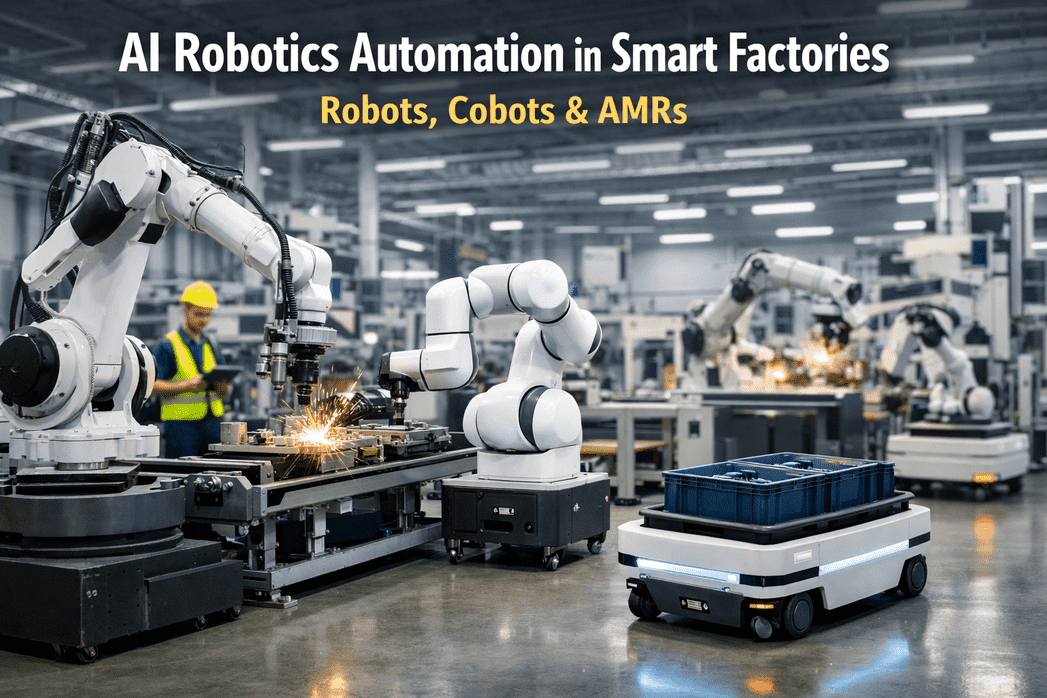

Robotics and automation are becoming increasingly important parts of the technology landscape in the United States. From manufacturing plants and warehouses to hospitals, farms, laboratories, restaurants, and research facilities, automated machines are being used to perform tasks that once required extensive manual effort.
The growth of artificial intelligence, advanced sensors, computer vision, cloud computing, and semiconductor technology is making modern robots more capable than earlier generations of industrial machines. Instead of simply repeating a fixed movement, newer robotic systems can increasingly interact with their surroundings, process information, identify objects, and adapt to different operating conditions.
For American businesses, robotics can provide opportunities to improve productivity, increase consistency, automate repetitive work, and support workers in physically demanding environments.
At the same time, the expansion of automation raises important questions about workforce skills, training, investment costs, safety, cybersecurity, and how businesses should integrate humans and machines.
In 2026, robotics is no longer limited to traditional factory automation. It is becoming part of a much broader technology ecosystem that includes artificial intelligence, autonomous systems, warehouse automation, healthcare robotics, agricultural technology, and service robots.
What Is Robotics and Automation?
Robotics involves designing and using machines capable of performing physical tasks.
Automation refers more broadly to using technology to perform processes with reduced direct human intervention.
A robotic system can include several components:
- Mechanical hardware
- Motors and actuators
- Sensors
- Cameras
- Computer processors
- Control software
- Artificial intelligence
- Networking systems
Automation does not always require a physical robot. Software automation can also perform repetitive digital tasks, such as processing documents or moving information between business systems.
When physical robotics and software automation work together, businesses can create highly automated workflows.
Why Robotics Is Growing in the United States
Several technology trends are contributing to the growth of robotics in America.
Artificial Intelligence
AI is improving the ability of machines to understand information and make decisions.
Computer vision can help robots identify objects, while machine learning can help systems recognize patterns and improve performance.
Labor and Productivity Needs
Businesses often look for ways to improve productivity and reduce repetitive manual tasks.
Robotics can help organizations perform certain operations consistently over long periods.
E-Commerce Growth
Online shopping has increased demand for faster warehouse processing, sorting, packaging, and inventory management.
Robotic systems can assist with many of these activities.
Manufacturing Modernization
American manufacturers are increasingly using automation to modernize production lines and improve efficiency.
Advances in Sensors
Modern sensors allow robots to collect detailed information about their environment.
This can make robotic systems more flexible than earlier generations.
Robotics in American Manufacturing
Manufacturing remains one of the most important applications of robotics.
Industrial robots can perform tasks such as:
- Welding
- Painting
- Assembly
- Material handling
- Packaging
- Inspection
- Machine tending
- Palletizing
Robots can perform highly repetitive tasks with consistent movements.
Manufacturers can also use automated inspection systems to identify defects during production.
Smart Factories
The concept of the smart factory combines robotics with connected sensors, software, analytics, and AI.
Instead of operating as isolated machines, production equipment can exchange information with other systems.
A smart manufacturing environment may monitor:
- Machine performance
- Production speed
- Product quality
- Energy consumption
- Equipment temperature
- Maintenance requirements
This information can help companies understand how production systems are operating.
Predictive Maintenance
One important application of automation is predictive maintenance.
Traditional maintenance schedules may rely on fixed intervals.
Connected equipment can instead collect information about machine condition and performance.
Analytics systems can identify unusual patterns that may indicate a developing problem.
This can potentially help businesses address maintenance issues before equipment failures cause significant production interruptions.
Robotics in Warehouses
Warehouse automation has expanded alongside e-commerce.
Large distribution facilities may use automated systems for:
- Sorting
- Picking
- Moving inventory
- Packing
- Pallet handling
- Scanning
- Transportation within facilities
Autonomous mobile robots can move goods around warehouses and coordinate with other automated systems.
This can reduce the amount of walking and repetitive transportation required from workers.
Robots and E-Commerce
Fast delivery has become an important part of online retail.
Behind many online orders are complex logistics operations involving warehouses, inventory systems, transportation networks, and fulfillment centers.
Automation can help businesses process large numbers of orders efficiently.
Robotic systems can assist with locating products, moving inventory, sorting packages, and preparing orders for shipment.
Autonomous Mobile Robots
Autonomous mobile robots, often called AMRs, are designed to move through environments without requiring constant manual control.
They can use sensors and software to navigate around obstacles.
In warehouses and factories, AMRs can transport materials between different areas.
This can allow human employees to focus on tasks requiring judgment, problem-solving, or specialized skills.
Robotics in Healthcare
Healthcare is another area where robotics technology is developing rapidly.
Robotic systems can assist with tasks such as:
- Surgical procedures
- Rehabilitation
- Patient assistance
- Laboratory automation
- Medication management
- Hospital logistics
Medical robotics requires careful testing, regulatory oversight, and specialized training because the consequences of errors can be significant.
Robotic technology is therefore generally designed to support healthcare professionals rather than simply replace human expertise.
Surgical Robotics
Surgical robotic systems can provide doctors with specialized tools and interfaces for certain procedures.
Depending on the system and procedure, robotic technology may provide benefits such as precise instrument control and enhanced visualization.
However, robotic surgery still involves trained medical professionals who control or supervise the procedure.
The technology is an advanced tool within a larger healthcare system.
Robotics in Agriculture
American agriculture is also exploring robotics and automation.
Agricultural robots can potentially assist with:
- Crop monitoring
- Weed detection
- Harvesting
- Planting
- Soil analysis
- Spraying
- Autonomous field operations
Computer vision and AI can help agricultural machines identify plants, detect conditions, and perform specific tasks.
Automation may become increasingly useful as farms look for ways to improve efficiency and manage labor-intensive operations.
Autonomous Farm Equipment
Modern agricultural equipment can use sensors, satellite-based positioning, cameras, and onboard computing systems.
Automated equipment can potentially follow planned routes and perform certain farming operations with reduced direct control.
These systems are part of a broader movement toward precision agriculture.
Robotics in Construction
Construction is another industry where automation is attracting attention.
Robotic systems can assist with tasks such as:
- Brick placement
- Concrete operations
- Surveying
- Inspection
- Material transportation
- Site monitoring
Construction environments are more unpredictable than controlled factories, making robotics particularly challenging.
However, improvements in computer vision, sensors, and AI may allow robots to operate more effectively in changing environments.
Robots in Retail and Hospitality
Robots are also being tested and deployed in some retail and hospitality environments.
Possible applications include:
- Inventory scanning
- Cleaning
- Delivery within facilities
- Food preparation
- Customer assistance
- Warehouse operations
These applications are generally focused on specific repetitive tasks rather than replacing entire business operations.
Robotics and Artificial Intelligence
AI is one of the most important technologies influencing the future of robotics.
Traditional robots were often programmed to follow precise instructions.
AI-enabled robots can potentially process information about their environment and make more flexible decisions.
For example, computer vision can allow a robot to identify different objects.
Machine learning can help systems recognize patterns.
AI can also support planning and navigation.
The combination of robotics and AI is sometimes referred to as intelligent robotics.
Computer Vision
Computer vision allows machines to analyze images and video.
A robotic system equipped with cameras can use computer vision to identify:
- Objects
- People
- Shapes
- Labels
- Products
- Obstacles
- Defects
In manufacturing, computer vision can support quality inspection.
In warehouses, it can help robotic systems identify products.
In agriculture, it can assist with plant and crop analysis.
Human-Robot Collaboration
Not every automation system is designed to operate separately from humans.
Collaborative robots, often called cobots, are designed for environments where people and robotic systems work near each other.
Cobots can assist with tasks such as:
- Assembly
- Material handling
- Packaging
- Inspection
- Machine operation
Safety systems are important because robots operating around people must detect obstacles and respond appropriately.
Benefits of Robotics for American Businesses
Businesses can use robotics for several reasons.
Increased Productivity
Robotic systems can perform repetitive tasks continuously.
Consistency
Automated systems can perform certain operations with consistent movements and processes.
Workplace Safety
Robots can potentially perform dangerous, repetitive, or physically demanding tasks.
Improved Efficiency
Automation can help businesses optimize material movement and production workflows.
Data Collection
Connected robots can collect operational information that can be used for analysis.
Scalability
Automated systems can help businesses handle increased production or order volumes in certain environments.
Challenges of Robotics Adoption
Despite its potential benefits, robotics also has challenges.
High Initial Investment
Robotic systems can require significant upfront spending on equipment, software, integration, training, and facility changes.
Maintenance
Robots require maintenance, software updates, repairs, and technical support.
Integration
Connecting new robotic systems to older business equipment can be complicated.
Workforce Training
Employees may need new skills to operate, maintain, program, and supervise automated systems.
Cybersecurity
Connected robots can become part of a company’s digital network and therefore need appropriate cybersecurity protections.
Robotics and the American Workforce
Automation is often discussed in relation to employment.
The effect of robotics can vary significantly depending on the industry, occupation, technology, and business model.
Automation may reduce the need for humans to perform certain repetitive tasks while increasing demand for other roles.
For example, a company introducing warehouse robots may need fewer workers for certain transportation tasks but more employees with skills in robotics maintenance, software, systems integration, and data analysis.
This means workforce development and technical education can become increasingly important.
The Importance of Reskilling
As automation changes job responsibilities, workers may need opportunities to develop new skills.
Potentially valuable skills include:
- Robotics programming
- Mechanical maintenance
- Electrical systems
- Data analysis
- Software development
- AI systems
- Cybersecurity
- Industrial automation
Community colleges, technical schools, universities, and employer training programs can play a role in preparing workers for these changing requirements.
Robotics and Cybersecurity
Connected robots create another cybersecurity consideration.
Modern robotic systems can communicate with cloud platforms, factory networks, databases, and other machines.
If these systems are poorly secured, unauthorized access could potentially affect operations.
Security practices can include:
- Strong authentication
- Network segmentation
- Software updates
- Access controls
- Monitoring
- Secure communications
- Device management
Cybersecurity therefore needs to be considered during the design and deployment of robotic systems.
The Future of Robotics in the USA
The next stage of robotics development is likely to involve greater integration with artificial intelligence.
Several areas are particularly important.
More Intelligent Robots
AI can help robots understand complex environments and respond to changing conditions.
Greater Warehouse Automation
E-commerce and logistics are likely to continue driving demand for automated material handling.
Industrial AI
Manufacturers may increasingly combine robotics with predictive analytics and intelligent production systems.
Autonomous Systems
Robots may become increasingly capable of operating with less direct human control in carefully defined environments.
Healthcare Robotics
Medical and rehabilitation robotics may continue expanding as technology and clinical applications develop.
Agricultural Automation
Farms may use more automated equipment for monitoring and precision operations.
Humanoid Robots
Humanoid robots have also attracted significant attention in the technology industry.
These machines are designed with human-like physical structures that can potentially allow them to operate in environments created for people.
Potential applications include:
- Manufacturing
- Warehousing
- Logistics
- Research
- Service operations
However, widespread deployment requires advances in hardware reliability, battery technology, AI, safety, cost, and practical performance.
Humanoid robotics remains an active area of technological development.
Robotics and the Future of American Industry
Robotics is becoming part of a broader transformation in American industry.
Instead of viewing robots as isolated machines, companies increasingly combine them with:
- Artificial intelligence
- Cloud computing
- Data analytics
- IoT sensors
- Advanced semiconductors
- Computer vision
- Automation software
This creates interconnected industrial environments where machines, software, and human workers can cooperate.
Final Thoughts
Robotics and automation are transforming many areas of the American economy.
Manufacturing, logistics, healthcare, agriculture, construction, retail, and other industries are exploring ways to use robotic systems to improve productivity, automate repetitive tasks, collect information, and support workers.
The biggest change may come from the combination of robotics and artificial intelligence. AI can give machines greater ability to understand their surroundings, recognize objects, analyze information, and adapt to certain situations.
However, robotics also presents challenges. Companies need to consider investment costs, safety, cybersecurity, maintenance, workforce training, and integration with existing systems.
The future of automation is therefore unlikely to be based solely on replacing manual processes. Instead, many organizations may use robotics as part of a larger technology strategy in which humans and machines work together.
As AI, sensors, processors, and robotics hardware continue to improve, smart machines are likely to become an increasingly visible part of American industry.
For businesses, workers, and technology developers, understanding this transformation will be important as the US economy continues moving toward more automated and digitally connected operations.
Frequently Asked Questions
What is robotics?
Robotics is the field of designing, building, programming, and operating machines capable of performing physical tasks.
Why is robotics growing in the USA?
Robotics is growing because businesses are looking for greater productivity, automation, consistency, workplace safety, and improved management of repetitive tasks.
How does AI improve robots?
AI can help robots process information, recognize objects, analyze their environment, navigate spaces, and make decisions within defined operating conditions.
What industries use robotics?
Manufacturing, logistics, healthcare, agriculture, construction, retail, automotive production, and research are among the industries using or developing robotic technologies.
Will robots replace human workers?
The effect of automation varies by occupation and industry. Robotics can automate some tasks while creating demand for other skills, including maintenance, programming, engineering, supervision, and systems integration.
What are collaborative robots?
Collaborative robots, or cobots, are robotic systems designed to work alongside people in appropriate environments with safety features and controls intended for human-robot interaction.











No responses yet