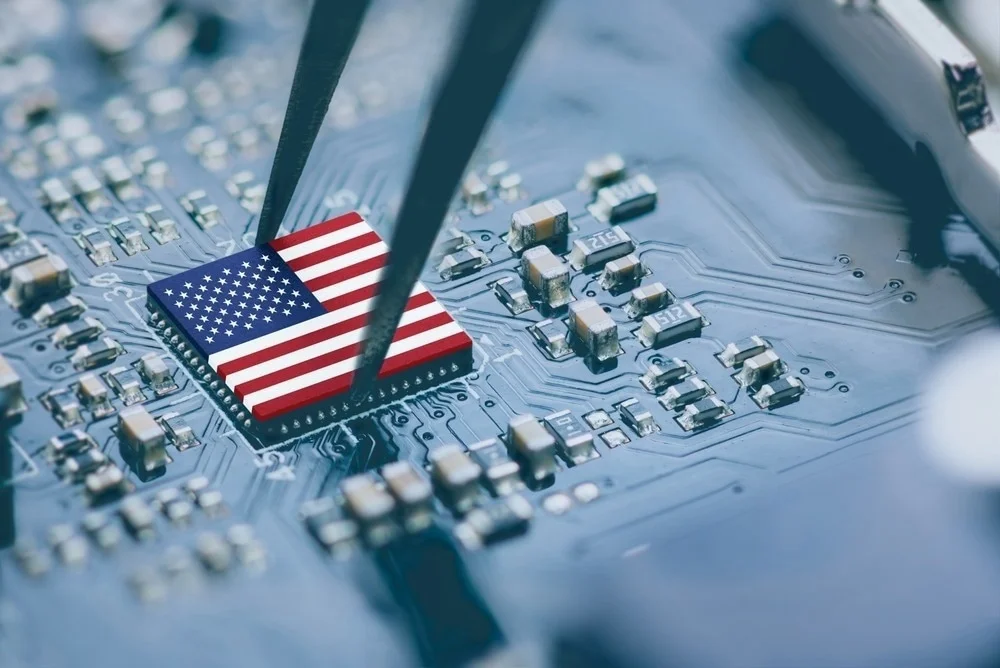

Semiconductors are among the most important technologies behind the modern digital economy. Almost every major technology product depends on semiconductor chips in some way, including smartphones, computers, automobiles, medical equipment, industrial machines, communication systems, data centers, and artificial intelligence infrastructure.
In the United States, semiconductor technology has become an increasingly important part of the country’s technology and manufacturing strategy. American companies have played a major role in chip design, software, research, and advanced computing for decades, while semiconductor manufacturing has also become a major area of investment and development.
The importance of semiconductors has increased even further with the growth of artificial intelligence, cloud computing, electric vehicles, connected devices, advanced robotics, and high-performance computing.
Modern AI systems, for example, require powerful processors and specialized chips capable of handling enormous amounts of data. As demand for AI infrastructure continues to grow, semiconductor technology has become an increasingly important part of the broader US technology ecosystem.
This article explores the semiconductor industry in the USA, explains why chips are important, examines major applications, discusses manufacturing and supply-chain challenges, and looks at how semiconductor technology could shape the future of American innovation.
What Is a Semiconductor?
A semiconductor is a material with electrical properties that fall between those of a conductor and an insulator.
The most commonly used semiconductor material is silicon.
Engineers can manipulate semiconductor materials to create extremely small electronic components called transistors. Billions of transistors can be integrated into modern chips.
These transistors allow chips to perform calculations, process information, store data, control electrical signals, and execute software instructions.
A single semiconductor chip can perform functions that would have required much larger electronic systems in the past.
Why Are Semiconductors Important?
Semiconductors are often described as the foundation of modern electronics because they are present in a huge range of products.
They can be found in:
- Smartphones
- Personal computers
- Servers
- Cars
- Electric vehicles
- Medical equipment
- Industrial machinery
- Telecommunication equipment
- Consumer electronics
- Data centers
- Artificial intelligence systems
- Robotics
- Aerospace systems
As digital technology expands, demand for semiconductor components can increase across multiple industries.
The growth of AI has created another major source of demand because advanced AI workloads require high-performance processors, memory, networking components, and specialized accelerators.
The US Semiconductor Industry
The United States has a large semiconductor ecosystem that includes chip designers, equipment manufacturers, software developers, research organizations, manufacturers, suppliers, and technology companies.
The industry covers much more than the physical production of chips.
Semiconductor development can involve several stages, including:
- Research and development
- Chip architecture
- Electronic design
- Verification
- Manufacturing
- Packaging
- Testing
- Distribution
Different companies may specialize in different parts of this process.
Some companies focus primarily on chip design, while others operate manufacturing facilities or provide semiconductor equipment and supporting technologies.
Semiconductor Design in America
The United States has a strong position in semiconductor design.
Chip designers create architectures that determine how processors and other components operate.
Modern chip design is extremely complex. Engineers must consider performance, power consumption, heat generation, reliability, security, and manufacturing requirements.
Design teams use specialized electronic design automation software to create and test chip architectures before physical manufacturing begins.
This means semiconductor innovation is closely connected to software and engineering.
Semiconductors and Artificial Intelligence
Artificial intelligence has become one of the most important drivers of semiconductor demand.
AI models can require enormous amounts of computing power for training and deployment.
Specialized processors can accelerate operations such as matrix calculations and parallel data processing that are common in AI workloads.
Modern AI infrastructure can involve:
- Accelerators
- Graphics processors
- Central processors
- High-bandwidth memory
- Networking chips
- Storage controllers
- Specialized AI processors
The demand for AI computing infrastructure has therefore increased the importance of advanced semiconductor technology.
Why AI Needs Advanced Chips
Traditional computer processors are designed to perform many different types of tasks.
AI workloads often benefit from highly parallel processing.
Specialized processors can perform many calculations simultaneously, which can make them useful for machine learning applications.
This is one reason semiconductor manufacturers and technology companies continue to develop increasingly advanced chip architectures.
As AI models become larger and more sophisticated, hardware efficiency becomes an important consideration.
Improving performance while controlling power consumption can be critical for large data centers.
Semiconductor Manufacturing
Chip manufacturing is an extremely complex industrial process.
Manufacturing facilities, often called fabs, use specialized equipment to create electronic circuits on semiconductor wafers.
The process involves multiple stages, including:
- Wafer preparation
- Deposition
- Lithography
- Etching
- Doping
- Cleaning
- Inspection
- Packaging
- Testing
Advanced manufacturing can require highly controlled environments and extremely precise equipment.
Even tiny manufacturing defects can affect chip performance.
What Are Advanced Nodes?
The semiconductor industry often refers to manufacturing processes using terms such as 7-nanometer, 5-nanometer, or 3-nanometer technology.
These terms describe aspects of semiconductor manufacturing processes and are commonly associated with increasingly advanced generations of chip technology.
Smaller and more advanced process technologies can potentially improve performance and energy efficiency, although manufacturing complexity also increases.
Developing advanced manufacturing capabilities requires significant investment in equipment, engineering expertise, research, and facilities.
The Importance of Semiconductor Supply Chains
Semiconductor production depends on a global supply chain.
Different parts of chip production may involve companies and facilities located in different countries.
For example, chip design, manufacturing equipment, materials, fabrication, packaging, and testing can involve different suppliers and locations.
This interconnected system can provide efficiency and specialization, but it can also create vulnerabilities when disruptions occur.
Natural disasters, geopolitical developments, transportation problems, shortages, and sudden increases in demand can affect supply chains.
Why the US Is Investing in Semiconductor Manufacturing
Semiconductors have become an important strategic technology area for the United States.
Increasing domestic manufacturing capacity can potentially help diversify supply chains and support the broader technology ecosystem.
Investment in semiconductor facilities can also create demand for engineers, technicians, construction workers, equipment specialists, and other skilled professionals.
The development of semiconductor manufacturing can therefore have effects beyond the technology industry itself.
Semiconductor Manufacturing and Jobs
Advanced semiconductor facilities require specialized workers.
The industry can create opportunities in areas such as:
- Electrical engineering
- Chemical engineering
- Mechanical engineering
- Materials science
- Software engineering
- Equipment maintenance
- Manufacturing operations
- Quality control
- Research and development
As manufacturing facilities expand, demand can also increase for supporting services and local infrastructure.
This can create broader economic effects in regions where semiconductor projects are developed.
Semiconductors in Automobiles
Modern vehicles are increasingly dependent on semiconductor technology.
A conventional vehicle can contain many electronic control systems, while electric and software-defined vehicles can require even more sophisticated electronics.
Semiconductors can control:
- Engine systems
- Battery management
- Safety systems
- Driver assistance
- Infotainment
- Connectivity
- Power management
- Sensors
- Vehicle communications
Electric vehicles rely heavily on power electronics for battery and motor management.
As automotive technology becomes increasingly digital, semiconductor demand in the automotive industry is expected to remain significant.
Semiconductors and Data Centers
Data centers are another major consumer of semiconductor technology.
Cloud computing companies operate large numbers of servers containing processors, memory, networking chips, storage controllers, and other semiconductor components.
The growth of cloud services and AI computing has increased demand for high-performance data center hardware.
Data center operators must also consider energy efficiency because powerful computing systems generate significant heat and require cooling.
This means semiconductor designers increasingly need to balance performance with power consumption.
Semiconductor Technology and Smartphones
Smartphones are among the most visible examples of semiconductor technology.
A modern smartphone can contain multiple types of chips, including:
- Application processors
- Memory
- Storage
- Image processors
- Connectivity chips
- Security components
- Power management chips
- Wireless communication components
These chips work together to provide computing, photography, communications, navigation, security, and other features.
As smartphone manufacturers add more AI capabilities, semiconductor requirements continue to evolve.
The Role of Semiconductor Equipment
Advanced semiconductor manufacturing requires highly specialized equipment.
Equipment manufacturers develop systems used for processes such as lithography, deposition, etching, inspection, and measurement.
These machines can be extremely complex and expensive.
The semiconductor equipment industry is therefore an important part of the broader chip ecosystem.
Without advanced manufacturing equipment, semiconductor companies would not be able to produce increasingly sophisticated chips.
Challenges Facing the US Semiconductor Industry
The semiconductor industry faces several challenges.
High Manufacturing Costs
Building an advanced semiconductor fabrication facility can require enormous capital investment.
Facilities need specialized equipment, highly controlled environments, reliable utilities, and large teams of skilled professionals.
Complex Supply Chains
The industry depends on materials, equipment, software, and services from many suppliers.
Managing these dependencies can be challenging.
Skilled Workforce Requirements
Advanced semiconductor manufacturing requires highly trained workers.
Building a sufficient workforce can take time because many positions require specialized technical knowledge.
Rapid Technological Change
Semiconductor technology evolves quickly.
Companies need continuous research and development to remain competitive as computing requirements change.
Semiconductors and Cybersecurity
Modern chips can also play an important role in cybersecurity.
Security features can be integrated directly into processors and other hardware components.
These technologies can help protect encryption keys, authentication processes, secure boot systems, and other sensitive operations.
Hardware-level security can complement software-based cybersecurity measures.
As cyber threats become more sophisticated, secure hardware design is becoming increasingly important.
Semiconductor Innovation and Robotics
Robotics is another field that depends heavily on semiconductor technology.
Robots need processors and sensors to understand their environments, control movement, communicate with other systems, and perform complex tasks.
AI-enabled robots may require additional computing resources for computer vision, machine learning, and real-time decision-making.
This creates another potential source of demand for specialized chips.
Semiconductors and the Internet of Things
The Internet of Things connects physical devices to digital networks.
Connected devices can include industrial sensors, smart appliances, medical equipment, security systems, and infrastructure monitoring equipment.
Many IoT devices require small, energy-efficient semiconductor components.
As more physical objects become digitally connected, semiconductor technology becomes increasingly important to everyday infrastructure.
Energy Efficiency and Future Chips
Energy consumption has become an important consideration in chip development.
More powerful processors can consume significant amounts of electricity.
For data centers running thousands of processors, even small improvements in energy efficiency can have substantial effects at scale.
Future semiconductor development is therefore likely to focus not only on raw computing performance but also on:
- Energy efficiency
- Thermal management
- Specialized processing
- Better memory systems
- Improved networking
- Advanced packaging
Advanced Chip Packaging
Chip packaging is becoming an increasingly important area of semiconductor innovation.
Traditional systems often rely on individual chips mounted separately on circuit boards.
Advanced packaging techniques can place multiple chip components closer together or combine different types of semiconductor components into a larger system.
This can potentially improve communication between components and increase system performance.
Advanced packaging is especially relevant for high-performance computing and AI systems.
The Future of Semiconductor Technology in the USA
The future of the American semiconductor industry will likely be influenced by AI, advanced computing, automotive technology, robotics, telecommunications, and other digital industries.
Several trends are particularly important.
More Specialized Processors
Instead of using one general-purpose processor for every task, future systems may increasingly combine different processors optimized for specific workloads.
AI-Focused Hardware
AI applications are likely to continue influencing processor architecture and semiconductor design.
Advanced Manufacturing
The industry will continue researching increasingly sophisticated manufacturing processes and materials.
Advanced Packaging
Packaging technologies may become increasingly important as engineers look for ways to improve performance without relying exclusively on smaller manufacturing processes.
Greater Supply Chain Resilience
Companies and governments are likely to continue focusing on supply-chain resilience and manufacturing capacity.
What Semiconductor Growth Means for Consumers
Semiconductor development may not always be visible to consumers, but it directly affects the technology they use.
More advanced chips can contribute to improvements in:
- Smartphone performance
- Computer speed
- AI applications
- Vehicle technology
- Battery systems
- Medical devices
- Gaming
- Cloud services
- Connected devices
As semiconductor technology advances, consumers may benefit from more capable and efficient digital products.
Final Thoughts
The semiconductor industry has become one of the most important foundations of modern technology in the United States.
From artificial intelligence and cloud computing to automobiles, smartphones, robotics, and medical equipment, semiconductor chips power a huge portion of the modern digital economy.
The industry is also highly complex. Designing and manufacturing advanced chips requires specialized engineering, sophisticated equipment, extensive research, and carefully coordinated supply chains.
For the United States, semiconductor technology represents not only an important technology sector but also a critical part of future digital infrastructure.
As artificial intelligence and advanced computing continue to expand, demand for increasingly capable and efficient chips is likely to remain an important factor shaping the technology industry.
The next generation of American innovation will depend on many technologies, but semiconductors will remain one of the fundamental building blocks behind them.
Frequently Asked Questions
What is a semiconductor?
A semiconductor is a material with electrical properties that can be controlled to create electronic components such as transistors and integrated circuits.
Why are semiconductors important in the USA?
Semiconductors power many technologies used across the American economy, including computers, vehicles, smartphones, data centers, medical equipment, AI systems, and industrial machinery.
How are semiconductors used in AI?
AI systems require significant computing power. Specialized semiconductor processors can perform the parallel calculations needed for training and running many AI models.
What is semiconductor manufacturing?
Semiconductor manufacturing is the process of creating electronic circuits on semiconductor wafers and turning them into tested and packaged chips.
Why is semiconductor supply-chain resilience important?
Chip production depends on a complex network of manufacturers, equipment suppliers, material providers, and other companies. Disruptions in one part of the network can affect availability elsewhere.
Will AI increase semiconductor demand?
AI requires substantial computing infrastructure, including processors, memory, networking technology, and specialized accelerators. The growth of AI is therefore an important factor influencing semiconductor development and demand.











No responses yet