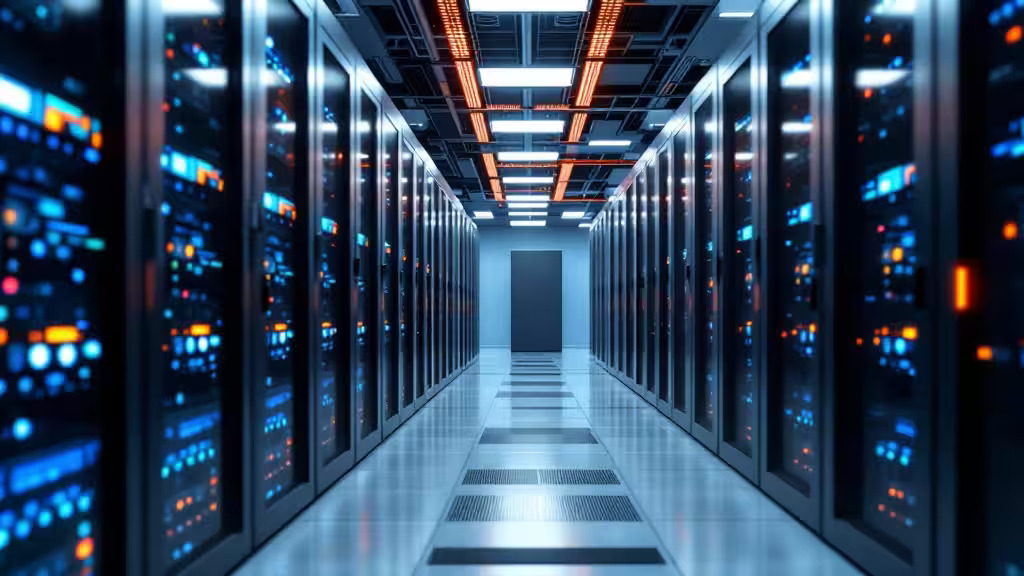

Introduction: Why Data Centers Are Becoming Essential to America’s Digital Economy
Modern life depends on digital infrastructure more than ever. People use online banking, cloud storage, video streaming, navigation applications, digital payment platforms, and artificial intelligence tools throughout the day. Behind many of these services are large facilities known as data centers.
Data centers contain servers, storage systems, networking equipment, power infrastructure, cooling systems, and security technologies that keep digital services operating. Although users rarely see these facilities, they form an essential foundation for the internet and the modern digital economy.
In the United States, data center infrastructure is attracting significant attention in 2026 because of the growing demand for artificial intelligence, cloud computing, enterprise software, and digital services. Technology companies need more computing capacity to train AI models, process information, support business applications, and deliver services to millions of users.
This expansion creates opportunities for construction companies, electrical engineers, networking specialists, cooling-system manufacturers, cloud providers, and cybersecurity businesses. It also creates challenges involving electricity supply, water consumption, equipment availability, construction costs, and local infrastructure planning.
A June 2026 update from Lawrence Berkeley National Laboratory estimated that US data centers could account for approximately 11.8% of national electricity consumption by 2030, with scenarios ranging from 9.5% to 15.3%. These are projections rather than guaranteed outcomes, but they demonstrate the scale of the infrastructure challenge.
As the industry grows, the challenge is no longer simply building larger facilities. Companies must also ensure that these facilities have sufficient power, efficient cooling, dependable network connections, strong cybersecurity, and responsible operating practices.
This article explores the technologies, companies, opportunities, and challenges shaping data center infrastructure in the United States in 2026.
1. What Is Data Center Infrastructure?
Data center infrastructure refers to the physical equipment, software, and supporting systems required to operate computing facilities reliably.
A data center is much more than a building filled with computers. Its design must support continuous operations, manage substantial electrical loads, maintain appropriate temperatures, protect equipment, and provide reliable connections to networks and storage systems.
Servers and Computing Hardware
Servers are the computers that process information and run applications. They may host websites, business databases, cloud platforms, AI models, and other digital services.
Traditional servers can handle a wide range of workloads, including email, file storage, business software, and web applications. AI-focused facilities may also use specialized accelerators and high-performance computing systems designed to process large amounts of data efficiently.
The type of hardware installed determines many of a facility’s power, cooling, and networking requirements.
Storage Infrastructure
Data centers require systems that store and retrieve information. These can include solid-state drives, hard disk drives, storage arrays, and distributed storage platforms.
Storage infrastructure supports everything from customer records and business documents to large datasets used in scientific research and AI development.
Organizations must also plan for backups, data replication, recovery procedures, and protection against unauthorized access.
Networking Equipment
Routers, switches, optical connections, and other networking systems move data between servers, facilities, businesses, and end users.
Network design influences how quickly applications respond, how efficiently workloads communicate, and how well a service performs during periods of heavy demand.
Power and Cooling Systems
Servers require electricity and generate heat during operation. Data centers therefore need electrical distribution equipment, backup power arrangements, monitoring systems, and cooling technology.
A failure in these supporting systems can affect large numbers of applications, which makes infrastructure reliability a central design priority.
2. AI Is Changing the Design of American Data Centers
Artificial intelligence is one of the most important factors influencing data center development in 2026.
AI training and inference workloads can require specialized processors, high-speed communication between computing devices, and substantial electrical capacity. As a result, some facilities are being designed specifically for AI rather than conventional enterprise computing.
AI Training Infrastructure
Training an advanced AI model can involve processing enormous datasets across many interconnected computing devices.
These systems need fast networking, coordinated computing resources, efficient storage access, and software capable of distributing workloads across available hardware.
The physical infrastructure must support these requirements while managing heat, power distribution, and equipment maintenance.
AI Inference and Everyday Applications
Training is only one part of the AI lifecycle. Once a model is deployed, inference systems generate responses, analyze information, summarize documents, classify images, and support other applications.
Inference workloads can grow as more businesses integrate AI into their products and operations.
This creates demand for infrastructure that balances computing performance, response time, reliability, and operating costs.
Higher-Density Server Racks
Some AI systems concentrate substantially more computing power into each rack than conventional server configurations.
Higher rack density can reduce the floor space needed for a given amount of computing capacity, but it can also increase cooling and electrical distribution requirements.
Operators must carefully match facility design to the hardware they plan to install.
The US Department of Energy identifies AI growth, computing capacity, and reliable energy supply as important considerations in the country’s data center expansion. Explore the DOE Data Center Resource Hub.
3. Cloud Computing and Hyperscale Data Centers
Cloud computing allows organizations to use computing resources over a network instead of purchasing and operating all the necessary hardware themselves.
Cloud providers operate large infrastructure networks that support storage, databases, application hosting, AI services, analytics, and enterprise software.
What Makes a Data Center Hyperscale?
Hyperscale data centers are large facilities or groups of facilities designed to support extensive computing operations. They typically use standardized hardware, automated management systems, and carefully coordinated power and networking infrastructure.
Their scale can help providers distribute workloads and manage resources across many customers.
However, building a hyperscale facility requires substantial planning, financing, construction expertise, equipment procurement, and access to electricity.
Major Companies in the US Market
Several major technology companies have significant cloud and digital infrastructure businesses.
- Amazon Web Services (AWS): Provides cloud computing, storage, databases, networking, and AI infrastructure.
- Microsoft Azure: Supports enterprise cloud services, software platforms, data analytics, and AI workloads.
- Google Cloud: Provides cloud infrastructure, data analytics, networking, and machine-learning services.
- Oracle Cloud Infrastructure: Offers computing, storage, networking, and enterprise-oriented cloud services.
- Meta: Operates data center infrastructure supporting its digital platforms and AI development.
These companies have different business models and infrastructure strategies. Their specific investments, facility plans, and regional capacity change over time.
Why Cloud Infrastructure Matters to Smaller Businesses
Cloud services allow smaller companies to access computing resources without constructing their own large data centers.
A startup can host an application, store customer information, or use selected AI services through a cloud platform, depending on its technical and commercial requirements.
This model can reduce the need for upfront hardware investment, although ongoing usage charges, security responsibilities, and vendor dependence must still be managed.
4. Electricity Demand: One of the Biggest Challenges in 2026
Electricity is fundamental to data center operations. Servers, storage systems, networking equipment, lighting, cooling systems, and supporting infrastructure all require power.
As computing capacity grows, securing a reliable electricity supply has become a major consideration for data center developers in the United States.
What the Latest Research Shows
The Lawrence Berkeley National Laboratory report published in June 2026 estimates that data centers could consume 11.8% of US electricity by 2030 under its central estimate, with a range of 9.5% to 15.3%.
The range reflects uncertainty about future hardware deployment, operational efficiency, facility growth, and other assumptions. Actual demand will depend on how the industry develops.
The US Energy Information Administration has also identified data center expansion as an important factor behind rising electricity demand. Its March 2026 analysis discussed the possibility that faster-than-expected growth in data center loads could influence electricity generation requirements. Source: EIA.
Why Power Availability Matters
A company may have land, financing, and computing equipment available but still face delays if sufficient electricity cannot be delivered to the site.
Large projects may require new substations, transmission upgrades, transformers, distribution equipment, or additional generation capacity.
These projects can take substantial time to plan, approve, manufacture, and construct.
The Importance of Grid Planning
Utilities, regulators, grid operators, local governments, and data center developers need to coordinate infrastructure development.
Poor planning can create bottlenecks or raise concerns about whether the costs of new electricity infrastructure will be shared fairly.
The Department of Energy’s data center resource hub discusses the need to expand energy infrastructure while addressing reliability and affordability.
For the industry, access to electricity is becoming just as important as access to computing hardware.
5. Advanced Cooling Technology and Liquid Cooling
Cooling is another major part of data center design. Servers produce heat while processing information, and excessive temperatures can affect performance, reliability, and equipment lifespan.
Traditional facilities often use air-based cooling systems. However, some high-density AI systems create thermal loads that make advanced cooling approaches increasingly attractive.
Air Cooling
Air cooling moves conditioned air through server racks and removes heated air using fans, cooling units, and carefully designed airflow pathways.
It remains useful across many types of data centers, particularly where rack densities and environmental conditions make it appropriate.
Operators can improve performance by separating hot and cold air, sealing airflow gaps, monitoring temperatures, and optimizing cooling controls.
Liquid Cooling
Liquid cooling transfers heat using a liquid that can move thermal energy more effectively than air in certain high-density applications.
In direct-to-chip systems, cooling liquid circulates through cold plates attached to components that generate substantial heat.
Other approaches use specialized systems to transfer heat away from computing equipment.
Liquid cooling can support dense AI infrastructure, but it introduces additional design and maintenance requirements involving pumps, fluid distribution, leak detection, and equipment compatibility.
Immersion Cooling
Immersion cooling places suitable computing equipment in a specially designed dielectric fluid that absorbs heat.
This approach may offer advantages for selected workloads and facility designs, but equipment compatibility, maintenance procedures, and total system costs must be evaluated carefully.
Why Cooling Efficiency Matters
Cooling affects both electricity consumption and operating expenses. More efficient systems can reduce the amount of additional power required to remove heat.
The best solution depends on climate, equipment density, water availability, energy prices, and the computing workload.
As American data centers adopt more demanding AI systems, cooling design will remain an important area of engineering and innovation.
6. Water Usage and Environmental Sustainability
Data centers can affect local environments through electricity consumption, land use, construction materials, and water requirements.
Water use varies significantly depending on the facility’s cooling technology, climate, operating practices, and electricity supply.
Why Water May Be Needed
Some cooling systems use water to help remove heat through evaporation. Others use different approaches that can reduce direct water consumption but may involve trade-offs in electricity use, cost, or performance.
It is therefore misleading to assume that every data center uses the same amount of water.
Comparing Cooling Options
Operators may evaluate air-cooled systems, liquid cooling, evaporative systems, and other approaches based on local conditions.
A design that works well in one region may be unsuitable in another because of temperature, humidity, water availability, or electricity costs.
Renewable Energy and Efficiency
Some operators procure renewable electricity or enter into long-term power agreements to support their energy requirements.
Renewable energy can contribute to lower operational emissions, although the actual impact depends on the electricity mix, timing of generation, storage, and how additional power demand is met.
Efficiency improvements are also important. Better server utilization, workload scheduling, cooling controls, and equipment selection can reduce waste.
Community Considerations
Data center projects may bring investment, construction activity, and technical jobs to a region. They can also create concerns about electricity demand, water resources, noise, land use, and infrastructure costs.
Transparent planning and clear communication with local communities can help developers address these concerns before projects move forward.
Sustainability should be measured across the entire operation rather than reduced to a single claim about renewable energy or cooling technology.
7. Cybersecurity and Physical Security in Data Centers
Data centers often host information and services that businesses depend on every day. Protecting them requires a combination of digital security, physical controls, operational procedures, and recovery planning.
Physical Access Controls
Facilities may use controlled entry points, identity verification, visitor procedures, security monitoring, and restricted access to sensitive areas.
These measures help reduce the risk of unauthorized access to servers, networking equipment, and power systems.
Network and Application Security
Operators must protect infrastructure against unauthorized connections, malicious software, stolen credentials, and other cyber threats.
Common safeguards include network segmentation, access controls, encryption where appropriate, vulnerability management, security monitoring, and incident-response procedures.
Protecting Customer Data
Cloud providers and businesses must understand their responsibilities for storing and processing data.
Depending on the service, responsibilities may be shared between the infrastructure provider and the customer. Customers should review service agreements, security documentation, data-location options, and backup arrangements.
Resilience Against Outages
Security is not limited to preventing attacks. Operators must also prepare for equipment failures, power disruptions, cooling problems, and network interruptions.
Redundant systems, tested backups, disaster-recovery plans, and documented incident procedures can help reduce the consequences of disruptions.
No facility is completely immune to failure. The goal is to reduce the likelihood of incidents and recover reliably when they occur.
8. Networking, Fiber Optics, and Low-Latency Infrastructure
Modern data centers depend on fast, reliable communication between computing devices and the outside world.
Networking becomes especially important when AI workloads distribute tasks across large groups of interconnected processors.
High-Speed Connections
Fiber-optic links can carry substantial amounts of data over suitable distances. Data center networks use specialized switching and routing systems to move information between servers, storage systems, and external networks.
The network must be designed around expected traffic patterns, redundancy requirements, and performance targets.
Low Latency
Latency refers to the time required for data to travel between systems and for a response to be returned.
Applications such as online gaming, financial services, real-time collaboration, and certain industrial systems may be sensitive to delays.
Locating computing capacity closer to users or connected equipment can help reduce latency in some cases.
Edge Computing
Edge computing places selected processing resources closer to the devices or users generating data.
Rather than sending every task to a distant centralized facility, an organization may process some information locally or at a nearby edge location.
This can be useful for applications involving real-time analysis, industrial monitoring, and connected devices.
Edge infrastructure complements rather than replaces large cloud data centers. Many applications combine centralized computing with local processing to balance cost, speed, and reliability.
9. Data Center Construction and Infrastructure Investment
Developing a data center involves more than selecting a site and installing servers.
Projects may require land acquisition, zoning approvals, environmental reviews, building construction, electrical systems, cooling equipment, fiber connections, security controls, and commissioning.
Site Selection
Developers consider factors such as electricity availability, fiber connectivity, land costs, local climate, construction access, and proximity to customers or other infrastructure.
Water availability and local regulations may also influence the decision.
Construction Timelines
Projects can be delayed by equipment shortages, transformer lead times, permitting, grid connections, financing, or changes in computing requirements.
A facility’s building may be completed before all the equipment needed to operate it is available.
This makes coordination between developers, utilities, construction contractors, equipment manufacturers, and technology companies essential.
The Importance of Capital Planning
Data centers require large upfront investments, followed by ongoing costs for electricity, maintenance, staffing, networking, security, and hardware replacement.
Before approving a project, operators need realistic estimates of demand, utilization, financing costs, and operating expenses.
Rapid industry growth does not guarantee that every proposed project will be completed or become commercially successful.
10. Careers and Business Opportunities in the US Data Center Industry
Data center expansion creates opportunities across several technical and nontechnical fields.
Electrical and Mechanical Engineering
Electrical engineers work on power distribution, electrical protection, backup systems, and equipment integration.
Mechanical engineers may specialize in cooling systems, airflow, thermal management, and facility design.
Network and Cloud Engineering
Network engineers maintain connectivity, routing, switching, and network performance.
Cloud engineers help organizations design and operate computing environments, automate deployments, and manage infrastructure resources.
Cybersecurity and Operations
Security specialists monitor systems, investigate threats, manage access, and support incident response.
Data center operations staff oversee equipment, maintenance, environmental monitoring, and service continuity.
Construction and Skilled Trades
Electricians, HVAC technicians, construction managers, controls specialists, and equipment technicians play important roles in building and maintaining facilities.
Business and Supply Chain Roles
The industry also needs project managers, procurement specialists, finance professionals, compliance teams, and supply chain experts.
For job seekers, useful skills may include electrical safety, mechanical systems, networking, Linux administration, cloud platforms, cybersecurity, automation, and project management.
Qualifications vary by position, and specialized electrical or construction work may require relevant licenses or certifications.
11. Artificial Intelligence and Automation in Data Center Operations
AI can help operators monitor equipment, analyze performance data, and identify potential problems.
Data centers generate large amounts of operational information, including temperature readings, power measurements, network statistics, and hardware alerts.
Predictive Maintenance
Analytical systems can examine historical and real-time data to identify patterns associated with equipment deterioration or unusual behavior.
These insights may help maintenance teams investigate issues before they become serious failures.
Predictions are not guarantees, however. Operators still need inspections, maintenance schedules, testing, and clear escalation procedures.
Energy Optimization
Software can help operators identify inefficient cooling configurations, improve server utilization, and adjust selected operating parameters.
The effectiveness of these systems depends on the quality of the data, control design, and operational safeguards.
Automated Infrastructure Management
Infrastructure management tools can support workload placement, server provisioning, capacity planning, and resource monitoring.
Automation can reduce repetitive tasks and improve consistency, but poorly configured automation can also spread errors quickly.
Operators should maintain appropriate permissions, monitoring, testing, and rollback procedures.
The long-term goal is to make data centers more efficient and dependable while keeping humans responsible for important operational decisions.
12. The Biggest Challenges Facing Data Centers in 2026
Despite strong demand for computing infrastructure, the industry faces several important challenges.
Electricity availability: New facilities may require power capacity that is difficult to provide quickly in certain locations.
Cooling requirements: High-density AI hardware can increase thermal loads and require more advanced cooling designs.
Construction costs: Land, materials, specialized equipment, financing, and labor can make projects expensive.
Supply chain constraints: Some electrical components and high-performance computing equipment have lengthy procurement timelines.
Cybersecurity risks: Digital attacks, compromised credentials, and operational mistakes can threaten data and service availability.
Environmental pressure: Communities may raise concerns about electricity consumption, water use, emissions, and land development.
Workforce shortages: Specialized facilities need qualified technicians and engineers capable of maintaining complex systems.
Uncertain demand: Technology companies must estimate future computing requirements while AI models, software efficiency, and customer demand continue to evolve.
Addressing these challenges requires coordination between technology companies, utilities, regulators, equipment suppliers, and local communities.
13. The Future of Data Center Infrastructure in the USA Beyond 2026
The next phase of American data center development will likely be influenced by AI computing, energy infrastructure, cooling innovation, and more efficient use of existing capacity.
Several trends deserve attention.
AI-ready facility design: New projects may increasingly account for high-density computing, advanced networking, and liquid cooling from the earliest design stages.
Improved energy management: Operators may invest in better power monitoring, workload scheduling, energy storage, and efficiency improvements.
More flexible cooling systems: Cooling solutions may become more closely matched to different hardware configurations and local environmental conditions.
Growth in edge computing: Selected industries may deploy more computing resources closer to users, factories, and connected devices.
Stronger cybersecurity and resilience: Operators will continue investing in security monitoring, access controls, recovery planning, and infrastructure redundancy.
Greater focus on sustainability: Energy procurement, water management, equipment reuse, and transparent environmental reporting may become increasingly important in project evaluation.
Closer coordination with utilities: Developers and electricity providers will need to plan new capacity, transmission upgrades, and grid connections more carefully.
The pace of change will vary across regions and applications. Not every facility will require the same technologies, and not every planned project will be completed on its original schedule.
The strongest long-term investments will depend on realistic demand forecasts, dependable energy access, suitable cooling, financial discipline, and proven operational performance.
Conclusion: Data Centers Are Becoming a Foundation of American Technology
Data center infrastructure in the USA is entering an important period of change. Artificial intelligence, cloud computing, enterprise software, and digital services are increasing demand for computing capacity and creating new requirements for power, cooling, networking, and security.
The industry offers opportunities for technology companies, construction businesses, equipment manufacturers, utilities, and skilled workers. At the same time, electricity constraints, project costs, environmental considerations, and cybersecurity risks require careful planning.
For businesses using cloud services, the most important considerations include reliability, security, cost management, and the suitability of the provider’s infrastructure.
For data center developers, success depends on more than constructing a large building. It requires coordination across the entire system, from electricity supply and cooling to networking, operations, and disaster recovery.
As the industry develops beyond 2026, efficient and reliable infrastructure will be essential to supporting America’s digital economy. The future of AI and cloud computing will depend not only on better software and faster processors, but also on the physical systems that keep digital services running.
Frequently Asked Questions (FAQs)
1. What is data center infrastructure?
Data center infrastructure includes servers, storage, networking, electrical systems, cooling equipment, physical security, and operational software required to run computing facilities.
2. Why are data centers growing in the USA in 2026?
Demand for AI computing, cloud services, enterprise applications, digital storage, and online platforms is encouraging companies to expand their computing infrastructure.
3. How much electricity could US data centers consume by 2030?
A June 2026 Lawrence Berkeley National Laboratory report estimates that data centers could account for 11.8% of US electricity consumption by 2030, with a modeled range of 9.5% to 15.3%.
4. What is liquid cooling in a data center?
Liquid cooling transfers heat using a liquid-based system. Some designs circulate coolant through cold plates attached to high-performance processors, helping manage the thermal demands of dense computing equipment.
5. Which companies operate major data center infrastructure in the USA?
Major technology companies with significant cloud or digital infrastructure operations include Amazon, Microsoft, Google, Oracle, and Meta. Other specialist operators also provide data center capacity.
6. Are data centers important for artificial intelligence?
Yes. AI systems depend on computing hardware, storage, networking, power, and cooling. Data centers provide much of the physical infrastructure required to train and operate AI models.
7. How do data centers protect information?
Common safeguards include physical access controls, encryption where appropriate, network segmentation, identity management, monitoring, backups, and incident-response planning.
8. What is the difference between cloud computing and a data center?
A data center is a physical facility that houses computing infrastructure. Cloud computing is a service model that provides access to computing resources over a network, often using infrastructure spread across multiple data centers.
9. What careers are available in the data center industry?
Career areas include electrical engineering, mechanical engineering, network administration, cloud engineering, cybersecurity, facilities operations, construction, equipment maintenance, and project management.
10. What is the future of US data centers?
Likely developments include AI-focused facilities, advanced cooling, more efficient energy management, stronger cybersecurity, edge computing, and closer coordination with electricity providers.











No responses yet