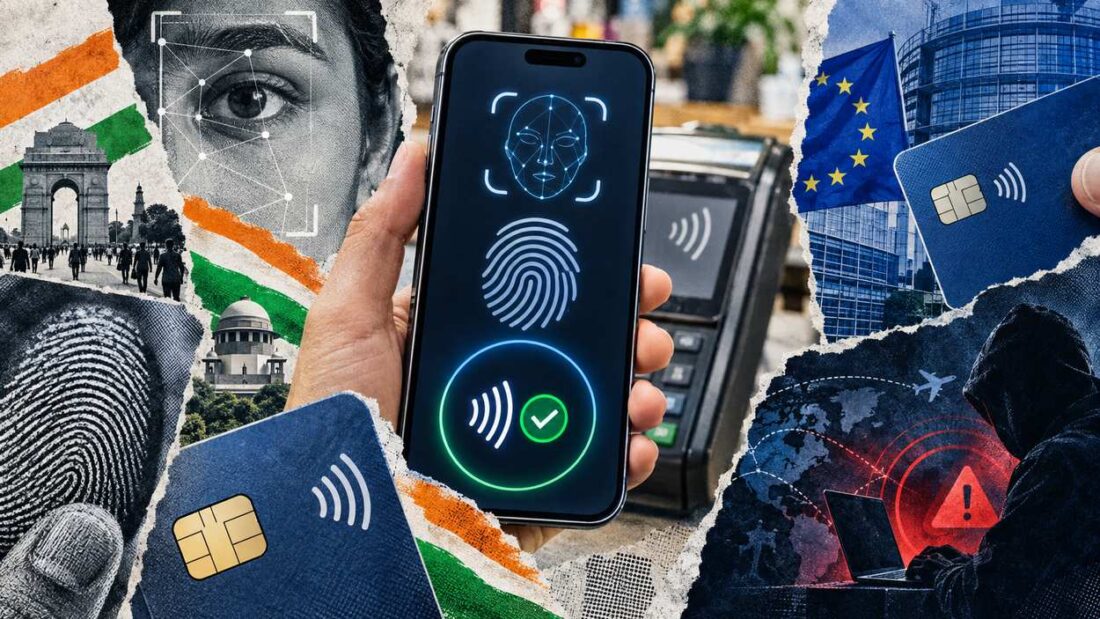

Introduction
The way Americans prove their identity is changing. For decades, people have relied on physical driver’s licenses, passports, identification cards, passwords, and security questions to access services and verify who they are. These methods remain important, but the growing use of online banking, digital payments, government portals, cloud platforms, and mobile applications is creating demand for more convenient and secure identity solutions.
Digital identity technology is helping address this need. It allows individuals to prove who they are, confirm specific personal information, and access online or physical services using secure digital credentials.
In 2026, digital identity innovation is becoming an important part of the American technology and cybersecurity industries. Mobile driver’s licenses, passkeys, biometric authentication, identity wallets, and cryptographically protected credentials are changing how organizations approach identity verification.
A particularly important development occurred on November 19, 2026, when the National Institute of Standards and Technology (NIST) announced a project designed to accelerate the adoption of mobile driver’s licenses for online services. According to NIST, 22 US states and territories had active mobile driver’s license programs, with at least five million licenses in use and approximately 47% of the population having access to them.
The initiative highlights an important challenge: creating a digital identity is only part of the process. Banks, government agencies, healthcare providers, and other organizations must also develop systems capable of accepting and verifying those credentials.
At the same time, businesses are adopting stronger authentication methods to reduce account takeovers, phishing, identity fraud, and unauthorized access.
What Is Digital Identity Technology?
Digital identity technology refers to the systems, software, and security methods used to represent and verify a person’s identity electronically.
A digital identity may contain information such as:
- Full legal name
- Date of birth
- Government identification details
- Address or residency information
- Employment or professional credentials
- Verified account information
- Other attributes required for a specific service
However, a digital identity does not necessarily need to reveal every personal detail.
For example, someone purchasing an age-restricted product may only need to prove that they meet the required age. A well-designed digital credential could confirm eligibility without unnecessarily displaying the person’s full date of birth or address.
This approach is often called selective disclosure. It allows a person to share only the information required for a particular transaction.
Digital identity systems can also connect authentication with identity verification. These are related but different processes.
Identity verification establishes whether someone is the person they claim to be.
Authentication checks whether the person attempting to access an account is authorized to use it.
A system may verify a user’s identity during registration and then authenticate that user through a passkey, security key, or another approved method whenever they sign in.
Understanding this distinction is important because secure digital services need both reliable initial verification and strong ongoing account protection.
Major Digital Identity Technologies in the USA in 2026
Several technologies are shaping the American digital identity market.
1. Mobile Driver’s Licenses
Mobile driver’s licenses, commonly called mDLs, are digital versions of state-issued driver’s licenses that can be stored on compatible smartphones or digital wallets.
They provide an alternative to carrying and presenting a physical identification card in supported situations.
A mobile driver’s license is more than a photograph of a physical card. Properly implemented systems use cryptographic protections that allow a receiving organization to verify that the credential was issued by an authorized source and has not been improperly modified.
Depending on the implementation and acceptance requirements, users may be able to present an mDL in person or online.
Potential applications include:
- Identity verification at airports
- Age verification
- Online bank account opening
- Government service access
- Healthcare account registration
- Identity confirmation for financial transactions
The technology can also support selective disclosure, reducing the amount of personal information shared during a transaction.
However, acceptance remains inconsistent. A mobile driver’s license is useful only when the receiving organization has compatible systems and agrees to accept it.
2. Passkeys and Passwordless Authentication
Passwords remain one of the most common ways to protect online accounts, but they create security and usability problems.
People frequently reuse passwords, choose predictable combinations, or fall for phishing messages designed to steal login information.
Passkeys offer a different approach.
They use public-key cryptography to authenticate users without requiring them to enter a traditional password. A credential is created for a particular website or application, and the corresponding private key remains protected by the user’s device or credential manager.
Depending on the device and configuration, users may unlock a passkey through a fingerprint, face recognition, device PIN, or another local authentication method.
Passkeys offer several potential benefits:
- Reduced exposure to traditional password phishing.
- Less dependence on password reuse.
- Faster sign-in experiences.
- Stronger protection against certain credential theft attacks.
- Support across compatible devices and services.
Passkeys are not a complete replacement for every aspect of identity security. Organizations still need secure account recovery, device management, fraud monitoring, and protection against social engineering.
3. Biometric Authentication
Biometric authentication uses physical or behavioral characteristics to help verify a person’s identity.
Common examples include:
- Facial recognition
- Fingerprint recognition
- Iris recognition
- Voice recognition
- Behavioral analysis
Smartphones already use fingerprint and facial authentication for unlocking devices and authorizing certain actions.
Businesses also use biometric systems in airports, financial services, workplaces, and identity verification applications.
Biometrics can make authentication more convenient because users do not need to remember another password.
However, biometric information is sensitive. Unlike a password, a person’s face or fingerprint cannot simply be replaced after a data breach.
Organizations must therefore use appropriate safeguards, limit unnecessary collection, and explain how biometric information is stored and processed.
Biometric verification should also be evaluated for accuracy across different populations and operating conditions.
4. Digital Identity Wallets
Digital identity wallets provide a place to store and present digital credentials.
A wallet may contain a mobile driver’s license, professional credential, membership card, or other verifiable information.
Instead of repeatedly uploading photographs of documents, users can present digitally signed credentials to participating services.
A properly designed wallet can help users control which information they share and with whom.
Digital wallets may also make identity verification more consistent across different services.
However, the technology depends on interoperability. A credential issued by one organization must be understandable and verifiable by the organization receiving it.
Standards, trusted issuers, secure devices, and compatible verification software are all important.
5. Verifiable Digital Credentials
Verifiable digital credentials are electronic records that contain claims about a person or organization and can be cryptographically checked.
For example, a university could issue a digital academic credential that an employer can verify without contacting the institution manually for every application.
Other possible credentials include:
- Professional licenses
- Educational certificates
- Employment qualifications
- Government-issued identity documents
- Membership credentials
- Eligibility records
The advantage is that verification can become more efficient while reducing opportunities for document alteration.
However, a cryptographically valid credential does not automatically mean every statement inside it is accurate. The organization receiving it must trust the issuer and understand what the credential actually proves.
Major Digital Identity Developments in the USA in 2026
1. NIST Launches a Project to Expand Mobile Driver’s License Adoption
One of the most significant recent developments occurred on November 19, 2026.
The National Institute of Standards and Technology announced a project through its National Cybersecurity Center of Excellence focused on enabling secure and interoperable online use of mobile driver’s licenses.
The project addresses a major issue in the digital identity industry: although mobile driver’s licenses are becoming more common, relatively few online services currently accept them.
NIST reported that 22 US states and territories had active mDL programs, with at least five million mobile driver’s licenses in use. Approximately 47% of the population had access to these programs.
The project developed a reference architecture showing how organizations could accept mobile driver’s licenses for online identity verification.
It also explored how mDLs could support higher-risk activities, including large financial transactions and account recovery.
Another important capability involves issuing a phishing-resistant authenticator, such as a passkey, after a successful identity verification process.
The project involved technology providers, government organizations, and representatives from five of the ten largest US banks.
NIST also published a draft report and requested public comments through December 20, 2026.
This is an important step because widespread digital identity adoption requires cooperation between government credential issuers, technology providers, financial institutions, and online service operators.
2. Federal Financial Regulators Clarify the Use of Digital Credentials
Another important development came in September 2026.
The National Credit Union Administration published information about new frequently asked questions issued by federal financial regulators concerning the use of state-issued mobile driver’s licenses and other government-issued verifiable digital credentials.
The guidance addresses how qualifying digital credentials may be used for identity verification under the Customer Identification Program rules.
The participating agencies include the Federal Reserve, Federal Deposit Insurance Corporation, Office of the Comptroller of the Currency, National Credit Union Administration, and the Treasury Department’s Financial Crimes Enforcement Network.
The guidance helps financial institutions understand how digital credentials may fit into existing identity verification processes.
Importantly, the agencies explained that the FAQs do not change existing Bank Secrecy Act requirements or establish new supervisory expectations.
This distinction matters because digital identity systems must operate within existing financial compliance obligations.
For banks and credit unions, digital credentials could eventually make certain customer onboarding processes more convenient while maintaining appropriate verification controls.
3. NIST Strengthens Digital Identity Standards
The National Institute of Standards and Technology finalized its revised Digital Identity Guidelines, known as Special Publication 800-63-4, in 2025.
These guidelines remain an important reference for US organizations developing identity verification and authentication systems in 2026.
The publication covers several major areas:
- Identity proofing and enrollment
- Authentication and authenticator management
- Federation between identity systems
- Risk management
- Security and privacy
- Account recovery
- User experience
The updated guidance reflects changes in the digital environment, including the increased use of digital wallets, new authentication methods, and the need to evaluate fraud risks more carefully.
In October 2026, NIST also announced initial implementation resources to help organizations understand and apply the guidelines.
These resources include FAQs, conformance criteria, reference architectures, and interactive tools.
The objective is to help government agencies and private-sector organizations implement digital identity systems more consistently.
4. NIST Publishes New Guidance on Identity Token Protection
On September 15, 2026, NIST announced the finalization of Interagency Report 8587, titled Protecting Tokens and Assertions from Forgery, Theft, and Misuse.
Identity tokens are widely used in modern online systems.
When someone signs into an application, a token may communicate information about the authenticated user and the resources they are authorized to access.
If attackers steal or manipulate these tokens, they may be able to access accounts or services without repeating the normal login process.
NIST’s report provides recommendations for protecting tokens and related identity information.
It discusses areas such as:
- Cryptographic key protection
- Token verification
- Secure token storage
- Token lifecycle management
- Identity provider architecture
- Cloud service security
- Token revocation and related controls
The report also includes considerations involving artificial intelligence and migration toward post-quantum cryptography.
This development is important because identity security does not end after a successful login. Organizations must also protect the credentials and authorization information used throughout an active session.
How Digital Identity Technology Is Transforming American Industries
Digital identity is becoming useful in many industries because organizations need reliable ways to establish trust between individuals, devices, and online services.
1. Banking and Financial Services
Banks need to verify customers before providing access to financial accounts and services.
Traditional onboarding may involve uploading identity documents, entering personal information, and completing additional verification steps.
Digital identity credentials could simplify parts of this process.
For example, a customer may eventually be able to present a verified mobile driver’s license to a compatible bank application instead of manually uploading photographs of physical documents.
Passkeys and biometric authentication can also help protect account access.
However, financial institutions must continue meeting applicable customer identification, anti-money-laundering, and fraud-prevention requirements.
Digital credentials are tools for supporting compliance, not automatic substitutes for every required control.
2. Government Services
Government agencies provide online services involving taxes, benefits, licensing, permits, and personal records.
These services often require reliable identity verification because they handle sensitive information and important public resources.
Digital identity technology may help reduce repeated document submissions and simplify access to public services.
A secure digital credential could make it easier for an individual to confirm their identity when interacting with different agencies.
However, government services must remain accessible to people who do not own compatible smartphones or who have difficulty completing digital verification.
Physical and alternative service channels may remain necessary.
3. Healthcare and Medical Services
Healthcare providers handle highly sensitive personal information.
Patients may need to access medical records, schedule appointments, communicate with providers, and manage insurance information through online platforms.
Digital identity systems can help ensure that the person accessing a medical account is authorized to do so.
Strong authentication is particularly important because unauthorized access to medical information can create privacy and security problems.
Identity verification may also help reduce certain types of healthcare fraud.
However, healthcare providers must consider accessibility, emergency access, patient privacy, and applicable health information regulations.
4. Education and Professional Credentials
Universities, training institutions, and professional organizations issue certificates, degrees, licenses, and qualifications.
Digital credentials can make these records easier to share and verify.
A job applicant could present a digitally verifiable university certificate to an employer. A professional could provide a digital license to an organization that needs to confirm their qualifications.
This could reduce manual verification work and make credential checks more efficient.
The issuing organization must still be trusted, and the receiving organization must understand the credential’s meaning and validity.
5. Retail and E-Commerce
Online retailers sometimes need to verify age, eligibility, or customer identity.
Digital credentials may support these checks without requiring customers to repeatedly upload sensitive documents.
Selective disclosure could allow a retailer to confirm that a person meets an age requirement without collecting unnecessary personal information.
This may improve the customer experience while reducing the amount of personal information businesses need to retain.
Retailers must still comply with applicable laws and ensure their verification systems are reliable.
6. Travel and Airport Security
Airports are among the most visible environments where digital identity technology is being introduced.
Mobile driver’s licenses and other digital identity credentials can be used at participating checkpoints and locations.
The goal is to make identity presentation more convenient while maintaining security requirements.
However, travelers should check which airports and checkpoints accept their specific digital credential before relying on it.
A digital driver’s license does not automatically replace all travel documents or guarantee acceptance for every identity check.
7. Employment and Remote Work
Businesses increasingly recruit employees, contractors, and remote workers through digital systems.
Identity verification may be needed during onboarding, access provisioning, and compliance processes.
Digital identity tools can help organizations confirm credentials and provide secure access to internal applications.
Passkeys and stronger authentication methods can also reduce risks associated with compromised employee accounts.
For remote organizations, identity security is especially important because employees may access company resources from different locations and devices.
The Role of Artificial Intelligence in Digital Identity Verification
Artificial intelligence is changing how organizations detect suspicious activity and evaluate identity information.
Modern identity systems may use machine-learning models to identify unusual patterns that could indicate fraud.
Fraud Detection
AI systems can analyze transaction patterns, login behavior, device information, and other signals to identify suspicious activity.
For example, an account that suddenly shows unusual login behavior may require additional verification.
AI can help organizations identify potential fraud more quickly, although automated alerts should not automatically be treated as proof of wrongdoing.
Document Verification
Identity verification platforms may use computer vision and machine learning to examine identity documents.
These systems can check document features, detect certain signs of alteration, and extract information for comparison.
More advanced tools may also assess whether an image appears to have been manipulated.
However, automated verification can make mistakes. Organizations need appropriate testing, human review for important decisions, and accessible alternatives.
Deepfake and Synthetic Identity Detection
Generative AI makes it easier to create convincing images, voices, and videos.
This creates new challenges for identity verification providers.
Attackers may attempt to use synthetic identities, manipulated photographs, or AI-generated media to bypass verification systems.
Organizations are therefore exploring liveness detection, device intelligence, document security checks, and additional verification signals.
No single method can prevent every attack. Multiple security controls are generally more effective than relying on one automated check.
AI Agents and Machine Identities
AI agents are increasingly capable of interacting with software, accessing information, and completing tasks.
This creates a new identity-management challenge: organizations must distinguish between human users, software services, automated agents, and devices.
An AI agent should not receive unrestricted access simply because it is associated with an authenticated person.
Organizations need clear rules about delegated permissions, authentication, activity monitoring, and access expiration.
Major Security and Privacy Challenges
Digital identity can improve convenience, but it also introduces important risks.
1. Identity Theft
Criminals may attempt to steal identity documents, compromise digital wallets, or gain unauthorized access to identity accounts.
Organizations need strong authentication, fraud monitoring, secure credential storage, and effective account recovery procedures.
2. Biometric Data Protection
Biometric information is particularly sensitive because it is connected to a person’s physical characteristics.
Companies should avoid collecting biometric data without a clear purpose and appropriate legal basis.
They should also use suitable encryption, access controls, retention limits, and privacy protections.
3. Data Breaches
Digital identity platforms may contain valuable personal information.
A security breach could expose names, addresses, identity documents, authentication information, or other sensitive records.
Organizations should minimize the information they collect and avoid retaining unnecessary identity documents.
4. Phishing and Social Engineering
Attackers may trick people into approving login requests, sharing verification codes, or handing over control of their devices.
Passkeys can reduce exposure to traditional phishing, but they do not eliminate social engineering or account recovery attacks.
Users still need to be careful when responding to unexpected messages and verification requests.
5. Deepfake Attacks
AI-generated images, video, and audio can make identity fraud more convincing.
Verification providers must continually improve their detection methods and evaluate systems against evolving attack techniques.
6. Privacy and Excessive Data Collection
Digital identity should not become a reason for collecting more personal information than necessary.
Selective disclosure, privacy-preserving verification, and clear data-retention policies can help reduce this risk.
Users should also be able to understand what information they are sharing and why it is required.
7. Digital Exclusion
Not everyone has a modern smartphone, reliable internet access, or the technical ability to use digital identity applications.
An effective digital identity ecosystem should provide accessible alternatives for people who cannot or do not want to use a digital credential.
Opportunities for Businesses in the Digital Identity Industry
The growth of digital identity technology is creating opportunities for American technology companies and service providers.
Identity verification software: Companies can develop platforms that verify documents, credentials, and customer information.
Passkey and authentication services: Developers can provide passwordless login systems, security keys, and authentication management tools.
Biometric technology: Businesses can develop secure facial, fingerprint, and other biometric verification systems.
Digital wallet infrastructure: Technology providers can build applications and platforms for storing and presenting verifiable credentials.
Fraud prevention solutions: AI-powered systems can help identify suspicious account activity and synthetic identity attempts.
Enterprise identity management: Software providers can help businesses manage employee accounts, permissions, authentication, and access policies.
Privacy and compliance consulting: Specialists can help organizations evaluate identity systems, protect personal information, and meet relevant regulatory requirements.
The most successful providers will need to balance convenience, accuracy, privacy, security, and interoperability.
What Businesses Should Consider Before Adopting Digital Identity Systems
Organizations should not adopt digital identity technology simply because it is becoming popular. They should begin by identifying a specific problem.
For example, a bank may want to improve customer onboarding, while a healthcare provider may want to strengthen patient account security.
A practical implementation strategy should include the following steps:
First, assess identity risks. Identify which services require identity verification and what could happen if an account is compromised.
Second, select appropriate authentication methods. Passkeys, security keys, biometrics, and other methods offer different capabilities. Choose methods based on the risks and users involved.
Third, evaluate credential compatibility. If an organization plans to accept mobile driver’s licenses or other digital credentials, it should test interoperability and verification processes.
Fourth, protect personal information. Collect only necessary information, apply suitable access controls, and establish clear retention policies.
Fifth, plan account recovery. Users need secure ways to regain access if they lose a device or authentication method.
Finally, test the complete user experience. A secure system must also be understandable and accessible to the people expected to use it.
The Future of Digital Identity Technology in the USA
The next phase of digital identity development will likely focus on interoperability, privacy, stronger authentication, and wider acceptance across services.
Wider Mobile Driver’s License Acceptance
More states and territories may continue developing mobile driver’s license programs.
However, wider adoption will depend on organizations accepting these credentials in practical situations.
Banks, healthcare providers, government agencies, and online services will need compatible systems and clear verification procedures.
Growth of Passkeys
Passkeys are likely to become more common as websites, financial institutions, and enterprise software providers continue improving passwordless authentication.
Their long-term success will depend on reliable device support, account recovery, cross-device compatibility, and user education.
Privacy-Preserving Verification
Future identity systems may allow users to prove specific facts without sharing complete identity documents.
For example, a person might prove that they meet an eligibility requirement without disclosing their full address or other unnecessary details.
This could help reduce the collection and storage of personal information.
AI-Based Fraud Detection
AI will continue to support fraud detection and identity verification.
Systems may become better at analyzing suspicious behavior, identifying manipulated documents, and detecting synthetic identity patterns.
Organizations will still need human oversight, privacy protections, and regular security evaluations.
Secure Identity for AI Agents
As businesses use more AI agents and automated software, identity management will need to cover non-human users.
Organizations may need more sophisticated ways to assign permissions, verify software identities, track activity, and prevent unauthorized access.
Better Government and Private-Sector Integration
Digital identity ecosystems require cooperation between government agencies, technology companies, financial institutions, and other service providers.
Improved standards and shared technical approaches could make it easier for digital credentials to work across different platforms.
This will be one of the most important factors determining whether digital identity becomes a normal part of everyday American life.
Conclusion
Digital identity technology is becoming an important part of the United States’ digital transformation in 2026. Mobile driver’s licenses, passkeys, biometric authentication, digital wallets, and verifiable credentials are creating new ways for people to establish trust online and in physical environments.
Recent developments from NIST and federal financial regulators demonstrate that digital identity is moving beyond technology experimentation. Government agencies and financial institutions are actively examining how digital credentials can be integrated into existing services.
At the same time, stronger identity security is becoming essential as businesses face phishing, account takeovers, deepfake attacks, and increasingly sophisticated fraud.
The industry still faces challenges involving privacy, interoperability, accessibility, data protection, and public trust. A digital credential is only useful when people can use it securely and organizations can verify it reliably.
The future of digital identity in America will depend on building systems that protect personal information while making everyday transactions easier.
As standards improve and more organizations adopt compatible solutions, digital identity technology could become an important foundation for secure banking, government services, healthcare access, online shopping, travel, and business operations.
Frequently Asked Questions (FAQs)
1. What is digital identity technology?
Digital identity technology includes software, credentials, and security systems that allow individuals to prove who they are electronically. It includes mobile driver’s licenses, passkeys, biometrics, digital wallets, and identity verification platforms.
2. What is a mobile driver’s license?
A mobile driver’s license is a digital version of a state-issued driver’s license that can be stored on a compatible smartphone or digital wallet. It can be presented for identity verification at participating locations and online services.
3. Which US states support mobile driver’s licenses?
Mobile driver’s license programs are available in multiple US states and territories. NIST reported 22 active programs as of November 19, 2026. Availability and acceptance vary by state and organization.
4. Are passkeys more secure than passwords?
Passkeys provide strong protection against many traditional phishing attacks because they use public-key cryptography and are associated with specific services. They can reduce password-related risks, although account recovery and device security remain important.
5. How does biometric authentication work?
Biometric authentication uses characteristics such as fingerprints, facial features, or iris patterns to help verify a person’s identity. The method can be convenient, but biometric information requires strong privacy and security protection.
6. What is a digital identity wallet?
A digital identity wallet is an application or system that stores and presents digital credentials. It may contain a mobile driver’s license, professional qualification, or other verifiable information.
7. How is AI used in identity verification?
AI can help analyze identity documents, detect suspicious login behavior, identify possible deepfakes, and recognize unusual fraud patterns. Automated decisions should be tested and supported by appropriate oversight.
8. Can mobile driver’s licenses be used for online banking?
Some digital identity systems are being developed to support online financial verification. NIST’s November 2026 project specifically explores how organizations could use mobile driver’s licenses for online identity verification and account recovery.
9. What are the biggest risks of digital identity technology?
Important risks include identity theft, data breaches, biometric misuse, phishing, deepfake attacks, excessive personal data collection, and limited access for people without compatible devices.
10. What is the future of digital identity in the USA?
The future is likely to involve wider mobile credential acceptance, more passkey adoption, privacy-preserving verification, AI-powered fraud detection, and improved integration between government and private-sector identity systems.











No responses yet