
Introduction
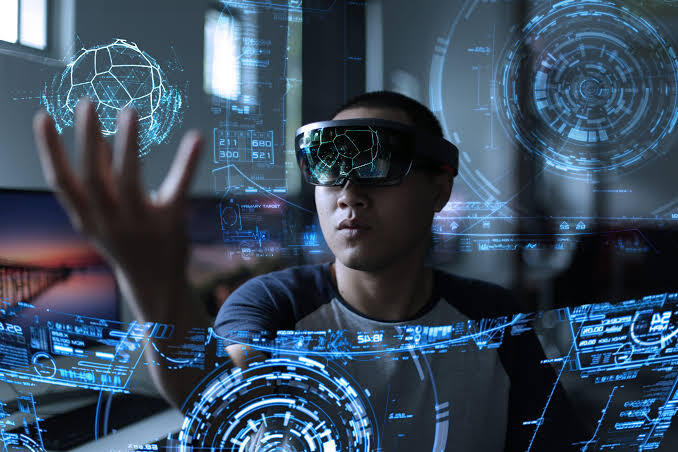
Technology is changing the way people interact with digital information. For many years, computers and smartphones have been the main tools for accessing online services, communicating, learning, and completing professional tasks. However, a new generation of immersive technologies is creating opportunities to interact with digital content in a more natural and visual way. Augmented reality (AR), virtual reality (VR), and spatial computing are becoming important parts of this transformation across the United States.
These technologies are often discussed together, but they do not all work in the same way. Augmented reality adds digital information to a view of the real world. Virtual reality places a user inside a computer-generated environment. Spatial computing goes further by allowing digital objects, applications, and information to understand and interact with physical surroundings.
In 2026, the American technology industry is continuing to develop these experiences. Companies are improving wearable hardware, software platforms, 3D graphics, hand tracking, eye tracking, and real-time collaboration. Apple’s visionOS development tools are expanding spatial experiences, while Meta is developing new hardware and software for immersive entertainment and productivity. Snap is also working with enterprise partners to bring augmented reality glasses into professional environments.
What Are AR, VR, and Spatial Computing?
Understanding the differences between these technologies helps explain why businesses are investing in them.
Augmented Reality
Augmented reality places digital information over a view of the physical world. A person might use a smartphone camera or a pair of smart glasses to see labels, instructions, graphics, or 3D objects in their surroundings.
For example, someone renovating a home could use an AR application to preview how a sofa might look in a living room. A technician repairing industrial equipment could see digital instructions positioned near the relevant components.
AR can be delivered through smartphones, tablets, and wearable displays. It does not always require a headset or a fully immersive environment.
Virtual Reality
Virtual reality creates a computer-generated environment that users experience through a headset. Instead of simply adding information to the real world, VR can place users inside a simulated location.
This makes it useful for gaming, virtual meetings, safety training, educational demonstrations, and professional simulations. A trainee could practice responding to an emergency in a virtual environment without exposing themselves to the risks of a real emergency.
Spatial Computing
Spatial computing is a broader approach to interacting with digital content in physical space. It combines technologies such as cameras, sensors, computer vision, motion tracking, 3D rendering, and spatial mapping.
A spatial computing device can understand aspects of the user’s environment and position digital content in relation to real-world surfaces and objects. This makes it possible to place virtual screens around a room, inspect a 3D model at realistic scale, or interact with digital objects using natural movements.
The main opportunity is not simply creating more immersive entertainment. It is making digital tools feel more connected to the spaces where people live and work.
Major Developments in the American AR and VR Industry in 2026
The United States remains an important market for immersive technology development. Major technology companies, software developers, hardware manufacturers, and enterprise technology providers are working to make these experiences more practical.
Apple’s Expanding Spatial Computing Platform
Apple has continued developing its spatial computing ecosystem through Apple Vision Pro and the visionOS platform. Its developer tools are important because immersive technology needs more than capable hardware. It also requires applications, content, development frameworks, and reliable ways for software to interact with the physical environment.
Apple’s 2026 developer documentation describes visionOS 27 capabilities that include enhancements to RealityKit, object tracking, spatial accessories, and spatial content workflows. The platform also supports development through technologies and engines such as Unity, Unreal, and Godot.
One notable development is the Spatial Preview framework. It allows compatible spatial content from a Mac to be previewed and worked with on Apple Vision Pro. This could be useful for designers, architects, and creative professionals who need to inspect 3D assets in a more realistic environment.
Apple has also described improvements to object tracking. Better tracking can help applications understand the position and movement of physical objects, making interactive training, product demonstrations, and spatial measurement experiences more useful.
These developments show that Apple’s approach is focused on building a broader platform for immersive software rather than treating a headset as a standalone entertainment product.
Meta’s Investment in Virtual Reality
Meta is another major company shaping the American VR market. Its Quest ecosystem has helped make virtual reality gaming, fitness, social experiences, and immersive applications more accessible to consumers.
In September 2026, Meta introduced Meta VR Glasses, a new lightweight device concept designed for entertainment, productivity, and immersive experiences. The company announced a planned spring 2027 launch and a stated price of $1,299.99 in the United States.
Meta described features including eye and hand input, immersive sports experiences, virtual displays for productivity, and compatibility with its broader VR software ecosystem. The announcement is significant because it reflects an effort to make immersive computing devices lighter and more suitable for longer sessions.
However, a product announcement is not the same as widespread market adoption. Consumers and businesses will need to evaluate comfort, battery life, software availability, performance, and total ownership cost when the product becomes available.
Meta’s continuing investment in VR demonstrates that the company sees immersive computing as a long-term platform opportunity.
Snap’s Enterprise AR Glasses Strategy
Augmented reality glasses are also attracting interest beyond consumer entertainment.
In September 2026, Snap announced partnerships intended to support enterprise applications for its SPECS AR glasses. The company highlighted potential uses in field service, remote support, and retail, with partners including Salesforce, Amazon Web Services, NVIDIA, Trifork, and Hololight.
The basic idea is straightforward: workers often need information while performing tasks with both hands. A wearable display could show instructions, product information, or remote assistance without requiring the employee to repeatedly check a phone or laptop.
For example, a maintenance technician could receive visual guidance while inspecting a machine. A retail employee could access relevant product information while assisting a customer. A remote expert could provide support to a worker at another location.
Enterprise adoption will depend on whether these devices provide clear benefits, fit existing workflows, and meet workplace privacy and safety requirements.
How AR and VR Are Transforming American Businesses
Immersive technology becomes more valuable when it solves a real business problem. Several industries in the United States are exploring ways to use AR, VR, and spatial computing to improve operations.
1. Manufacturing and Industrial Training
Manufacturing facilities often contain complicated equipment and processes. Training employees to operate machinery safely can require considerable time and supervision.
VR simulations allow workers to practice procedures in a controlled digital environment. They can learn how to respond to equipment failures, follow safety instructions, and understand production workflows before working with actual machinery.
AR can support employees during real tasks by displaying instructions, equipment details, or visual guidance. In some situations, a technician may be able to contact a remote specialist who can see the same equipment and provide assistance.
These tools could reduce training interruptions and make technical knowledge easier to share across facilities.
2. Healthcare and Medical Education
Healthcare is another area where immersive technology has potential. Medical students can use 3D visualizations to study anatomy, understand complex structures, and practice certain procedures in simulated environments.
VR can provide controlled training scenarios, while AR may help medical professionals visualize information during planning and education. Spatial displays can also make complex 3D models easier to inspect and discuss.
It is important to distinguish educational and planning applications from approved clinical use. Immersive technology does not automatically replace professional medical judgment, validated equipment, or established clinical procedures. Any application used in patient care must meet relevant safety, privacy, and regulatory requirements.
3. Education and Professional Learning
Traditional education often relies on textbooks, videos, presentations, and classroom demonstrations. AR and VR can add interactive experiences to these methods.
Students studying science could explore a 3D model of a cell. History learners could visit a reconstructed historical environment. Engineering students could inspect a virtual machine and understand how its components work together.
Virtual simulations may also help students practice skills that are difficult or expensive to demonstrate in a physical classroom.
However, schools must consider device costs, teacher training, accessibility, and the quality of educational content. Immersive technology works best when it supports clear learning objectives rather than being used simply because it looks impressive.
4. Architecture, Construction, and Real Estate
Architects and construction professionals work with designs that can be difficult to understand through flat drawings alone.
Spatial computing can help teams inspect 3D building models at realistic scale. They may be able to examine room layouts, visualize design changes, and discuss construction details before work begins.
Real estate companies can also use virtual tours to help prospective buyers or renters explore properties remotely. AR applications may allow customers to visualize furniture, finishes, or renovation ideas in an existing space.
These tools can improve communication between designers, clients, contractors, and property buyers.
5. Retail and Product Visualization
Online shopping has made it easier to compare products, but customers cannot always judge size, appearance, or fit from photographs.
AR product visualization can help customers preview furniture in their homes, examine product designs, or see how certain items may look in a real environment.
Retail businesses may also use AR displays to provide product information and support store employees. Virtual environments can be used for product demonstrations and branded experiences.
The biggest opportunity is reducing uncertainty during the buying process. However, businesses should make sure that digital previews represent products accurately and do not mislead customers.
6. Remote Collaboration and Technical Support
Remote collaboration is not limited to video calls. Spatial tools can help people discuss physical objects and digital models in a shared environment.
An engineer in one state could inspect a 3D model with colleagues in another location. A technician working at a customer site could receive remote guidance from an experienced specialist.
This can be especially useful for organizations with multiple offices, factories, service locations, or distributed teams.
The quality of these experiences depends on reliable connectivity, accurate tracking, clear communication, and software that fits existing business systems.
The Technology Behind Spatial Computing
AR, VR, and spatial computing depend on several technologies working together.
Computer Vision
Computer vision helps devices interpret information captured by cameras. It can support object recognition, surface detection, movement tracking, and environmental understanding.
For example, an AR application may use computer vision to identify a flat surface where a digital object can be placed.
Sensors and Motion Tracking
Headsets and smart glasses use sensors to understand movement and orientation. Tracking systems help digital objects remain positioned correctly as users move around.
Accurate tracking is essential. If a virtual object moves incorrectly or appears unstable, the experience can become uncomfortable or difficult to use.
Artificial Intelligence
AI can improve object recognition, environmental understanding, voice interaction, content creation, and personalization.
In a workplace application, AI could help interpret a user’s request and display relevant instructions. In education, it could support interactive explanations or adapt learning activities.
AI-generated content still needs review, particularly in professional, educational, and safety-sensitive settings. Incorrect instructions can create real problems when users rely on them.
3D Graphics and Rendering
Immersive applications require digital objects and environments to look convincing and respond smoothly.
Modern rendering systems can simulate lighting, materials, shadows, and physical interactions. More realistic graphics can improve product visualization, training, and entertainment.
However, high-quality rendering also requires processing power, efficient software, and suitable hardware.
Cloud Computing and High-Speed Connectivity
Some immersive applications can run directly on a headset, while others may depend on powerful computers or cloud infrastructure.
Streaming can make complex experiences available on lighter devices, but it introduces requirements for low latency, reliable connectivity, and sufficient bandwidth.
This is particularly important for collaborative applications and high-detail professional simulations.
Benefits of AR, VR, and Spatial Computing
Businesses and consumers may benefit from immersive technologies in several ways.
More interactive learning: Students and employees can explore visual simulations instead of relying entirely on written instructions.
Improved product understanding: Customers and professionals can examine digital objects from different angles and at realistic scale.
Remote assistance: Experts can help workers at distant locations without always traveling to the site.
Safer training opportunities: Some procedures can be practiced in simulations before employees perform them in real environments.
Better design collaboration: Teams can inspect 3D models together and identify issues earlier in the design process.
New entertainment experiences: VR can provide immersive games, live-event experiences, virtual environments, and interactive storytelling.
The value of each benefit depends on the quality of the application and the needs of its intended users.
Challenges Facing the US Immersive Technology Market
Despite progress, AR and VR still face obstacles that could slow adoption.
Hardware Cost
Advanced headsets and glasses can be expensive. Businesses must consider not only the purchase price but also software licenses, accessories, maintenance, training, and replacement costs.
For consumers, a high-priced device may be difficult to justify if it has only a small number of frequently used applications.
Comfort and Usability
A headset that feels heavy or uncomfortable may not be suitable for long work sessions. Some users also experience eye strain, motion discomfort, or fatigue.
Manufacturers need to improve weight distribution, fit, display quality, battery life, and interaction methods.
Privacy and Data Protection
AR glasses and VR headsets may use cameras, microphones, eye tracking, motion sensors, and environmental mapping. These capabilities can collect information about users and their surroundings.
Companies deploying these devices should establish clear rules about what information is collected, how long it is retained, who can access it, and whether recording is active.
Organizations also need to consider workplace consent, customer privacy, cybersecurity, and applicable US privacy laws.
Limited Software Availability
A powerful device is less useful when it lacks applications that solve everyday problems. Developers need stable platforms, practical development tools, and a sufficiently large user base.
Businesses may also need custom software integrations, which can increase implementation costs.
Accessibility and Inclusion
Immersive interfaces should work for people with different physical abilities, vision requirements, hearing needs, and levels of technical experience.
Developers should consider alternative input methods, captions, adjustable text, comfort settings, and non-headset ways to access important information.
The Future of AR, VR, and Spatial Computing in the United States
The next stage of development will likely focus on making immersive devices more useful, comfortable, and connected to existing technology.
Lighter and More Practical Wearables
Manufacturers are working toward devices that look and feel more like ordinary glasses. Reducing weight and improving battery life could make wearable displays more practical for everyday tasks.
More Natural Interaction
Hand tracking, eye tracking, voice commands, and spatial accessories can reduce dependence on traditional controllers. These interaction methods may make immersive technology easier for new users to understand.
AI-Powered Spatial Experiences
AI could help devices understand objects, recognize tasks, summarize information, and respond to natural language. A worker might ask for a maintenance procedure and receive relevant instructions in their field of view.
The reliability of such systems will remain important. AI should not provide unverified guidance for dangerous or safety-critical work.
More Enterprise Applications
Businesses may increasingly evaluate immersive technology for training, technical support, design reviews, and product demonstrations. Enterprise adoption could grow where organizations can measure improvements in time, cost, safety, or quality.
Better Interoperability
The market includes multiple hardware platforms and software ecosystems. Better support for common development tools and 3D formats could make it easier for developers to create applications that work across devices.
Immersive Entertainment and Live Events
Sports, concerts, films, and interactive games may benefit from new ways to experience digital content. Virtual viewing environments could offer different camera perspectives or a sense of being closer to an event.
The long-term success of these experiences will depend on content quality, affordability, and whether people enjoy using them regularly.
What Businesses Should Consider Before Investing
Companies interested in AR, VR, or spatial computing should begin with a specific operational problem.
First, identify the task that needs improvement. This might be employee training, remote maintenance, product visualization, or design collaboration.
Second, test the technology with a small group of users. A limited pilot can reveal comfort issues, software limitations, connectivity problems, and training requirements before a larger investment.
Third, measure the results. Businesses should compare the pilot with their existing process and track meaningful outcomes such as training time, error rates, support costs, or design review efficiency.
Finally, evaluate privacy and security. Devices that capture images, audio, movement, or environmental data need clear governance and appropriate technical safeguards.
A successful deployment is not defined by how advanced the headset looks. It is defined by whether the technology makes a real task easier, safer, faster, or more effective.
Conclusion
Augmented reality, virtual reality, and spatial computing are developing into important parts of the American technology landscape. In 2026, companies such as Apple, Meta, and Snap are advancing hardware, software platforms, and developer ecosystems that could bring immersive experiences into more areas of business and everyday life.
The most promising applications extend beyond gaming. Manufacturing teams can explore immersive training, healthcare educators can use 3D simulations, architects can inspect digital building models, and service professionals can receive remote assistance through wearable displays.
At the same time, challenges involving price, comfort, privacy, accessibility, and software availability remain significant. Not every organization needs an immersive device, and not every task becomes better when moved into a virtual environment.
The future of spatial computing will depend on practical applications that deliver measurable value. As hardware improves and developers create more useful software, AR, VR, and spatial computing could become increasingly familiar tools across the United States.
Frequently Asked Questions (FAQs)
1. What is spatial computing?
Spatial computing is a way of interacting with digital content in physical environments. It uses technologies such as cameras, sensors, computer vision, motion tracking, and 3D graphics to position and manage digital objects in real-world space.
2. What is the difference between AR and VR?
Augmented reality adds digital information to the real world, while virtual reality places users inside a computer-generated environment. AR can work through smartphones and glasses, whereas VR typically uses a headset.
3. Which US companies are developing AR and VR technology?
Major companies and platforms include Apple, Meta, and Snap. A wider ecosystem of software developers, hardware manufacturers, cloud providers, and enterprise technology companies also contributes to immersive computing.
4. How is AR used in American businesses?
Businesses can use AR for remote technical assistance, equipment instructions, product visualization, retail experiences, and workplace training. The most useful applications depend on the specific needs of each industry.
5. Can VR be used for education?
Yes. VR can provide interactive simulations, virtual field trips, scientific visualizations, and professional training environments. It is most effective when the experience supports a clear educational objective.
6. Is spatial computing the same as virtual reality?
No. Virtual reality is one type of immersive technology. Spatial computing is a broader approach that can include augmented reality, mixed reality, and interactions between digital content and physical environments.
7. What are the main challenges of AR and VR?
Major challenges include hardware cost, comfort, battery life, privacy, cybersecurity, accessibility, and limited software availability. Businesses must also consider integration and employee training.
8. Will AR glasses replace smartphones?
AR glasses may become useful for certain hands-free activities, but replacing smartphones completely would require major improvements in display quality, battery life, input methods, connectivity, and everyday software. It is too early to assume that will happen.
9. How does AI improve spatial computing?
AI can help devices recognize objects, understand environments, respond to voice commands, and provide contextual information. It may make immersive applications more useful, but generated information still needs appropriate verification.
10. What is the future of spatial computing in the USA?
Future development is likely to focus on lighter wearable devices, more natural interaction, enterprise applications, AI integration, improved 3D content, and better compatibility between platforms.











No responses yet