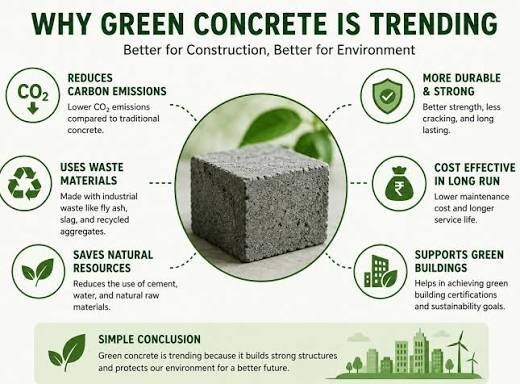

Introduction
Concrete is one of the most important materials in modern America. It is used to build highways, bridges, airports, hospitals, schools, homes, factories, warehouses, and the infrastructure that supports everyday life. From large commercial developments to neighborhood roads, concrete plays a major role in how American communities grow.
However, producing traditional cement, the binding ingredient in concrete, requires significant energy and releases carbon dioxide during manufacturing. As the United States invests in infrastructure, data centers, housing, transportation, and industrial facilities, the demand for construction materials remains substantial. This creates an important challenge: how can the construction industry produce the materials it needs while reducing the environmental impact of manufacturing?
In 2026, low-carbon cement and concrete technology is becoming an increasingly important part of the answer.
Companies, research organizations, construction firms, and material suppliers are developing new ways to manufacture cement, reuse industrial byproducts, reduce the amount of conventional clinker in concrete, and capture carbon emissions. Some emerging technologies are even exploring alternative chemical processes that can produce cement without relying on the traditional limestone-heating method.
Recent American developments show that this is moving beyond laboratory research. In October 2026, Ozinga opened a new low-carbon cement mill in East Chicago, Indiana, designed to produce up to one million tons of slag cement annually. In November 2026, Sublime Systems announced a multi-year agreement with Meta intended to support the deployment and scaling of its next-generation cement for potential data center construction.
These developments highlight a major shift in the building materials industry. Low-carbon construction materials are increasingly being considered not only for environmental reasons but also for domestic manufacturing, supply-chain resilience, and long-term infrastructure planning.
1. Understanding Low-Carbon Cement and Concrete
Before exploring the latest innovations, it is important to understand the difference between cement and concrete.
Cement is a fine binding powder. When mixed with water, sand, and aggregates such as gravel or crushed stone, it helps form concrete. Concrete is the finished construction material used in buildings, roads, foundations, bridges, and many other structures.
Traditional Portland cement is produced through a manufacturing process that usually involves heating limestone and other raw materials at very high temperatures. This creates clinker, which is then ground into cement.
Two major sources of emissions are associated with conventional cement production:
- Chemical process emissions: Heating limestone releases carbon dioxide as the material is converted into lime.
- Energy-related emissions: Cement kilns require substantial heat, traditionally supplied by fossil fuels in many facilities.
Low-carbon cement technology aims to reduce these emissions through alternative raw materials, more efficient manufacturing, cleaner energy, clinker substitution, carbon capture, and entirely different production methods.
Low-carbon concrete can also be created by changing the cement content, using supplementary cementitious materials, selecting lower-emission cement products, and optimizing the concrete mixture.
The goal is not simply to make a material with a lower environmental footprint. It must also provide the strength, durability, consistency, and performance required by construction standards.
2. Why Low-Carbon Cement Matters to the United States
The United States has a large construction and infrastructure market. Roads, bridges, power facilities, industrial buildings, commercial properties, and housing developments all depend on reliable supplies of cement and concrete.
At the same time, cement production is difficult to decarbonize because a significant share of its emissions comes directly from the chemistry of manufacturing. Switching to cleaner electricity alone cannot eliminate these process emissions.
The International Energy Agency’s 2026 Breakthrough Agenda report identifies several important pathways for reducing emissions from cement and concrete production. These include clinker substitution, fuel switching, efficiency improvements, alternative cement chemistry, and carbon capture.
The challenge is to make these solutions commercially practical. New materials must be produced consistently, tested for performance, approved for relevant applications, and supplied in sufficient quantities.
There is also a domestic manufacturing opportunity. Reliable American production of new cement materials could help strengthen supply chains and reduce exposure to international supply disruptions.
In September 2026, the US Department of Energy announced $117 million for 56 industrial projects. One selected project focused on developing advanced cement materials using abundant raw materials and industrial byproducts. This demonstrates the continued interest in improving the competitiveness and efficiency of American industrial production.
3. Limestone Calcined Clay Cement: An Important Alternative
One of the most promising approaches to lower-carbon cement is limestone calcined clay cement, commonly known as LC3.
Traditional Portland cement relies heavily on clinker. LC3 reduces the amount of clinker by combining calcined clay, limestone, and other cement components in a carefully designed formulation.
Clay is heated to activate its cementitious properties, but the process can require less energy than producing the same amount of conventional clinker. The resulting material can be engineered to provide useful strength and durability.
How LC3 Works
The process generally involves several stages:
- Suitable clay is identified and prepared.
- The clay is heated to activate its reactive properties.
- Limestone and other ingredients are processed.
- The materials are blended with a reduced quantity of clinker.
- The finished cement is tested to confirm its performance.
The exact formulation depends on the available raw materials and the required product characteristics.
According to an October 2026 analysis from the American Council for an Energy-Efficient Economy, LC3 production can be up to 40% less carbon intensive than conventional Portland cement production under the cited conditions. The analysis also highlights potential cost advantages and maps where the technology may have favorable conditions for adoption in the United States.
Why LC3 Is Important for American Construction
LC3 is attractive because it offers a way to reduce clinker use without requiring the construction industry to completely abandon familiar cement-based systems.
It may be particularly valuable in regions with suitable clay resources, cement production infrastructure, and construction markets that can support new formulations.
The main requirements are reliable raw material supplies, quality control, technical validation, and acceptance by engineers and project owners.
4. Industrial Waste Recycling in Cement Manufacturing
Another major development involves using industrial byproducts as ingredients in cement and concrete.
Steel manufacturing, for example, produces slag as a byproduct. Properly processed and tested, certain types of slag can be used as supplementary cementitious materials or in blended cement products.
This can reduce the amount of conventional clinker required in a cement mixture while giving another industrial material a useful purpose.
Ozinga’s New Low-Carbon Cement Mill in Indiana
One significant US development occurred in October 2026, when Ozinga announced the opening of a new low-carbon cement mill in East Chicago, Indiana.
The company reported that the facility is designed to produce approximately one million tons of slag cement annually. The mill uses processed slag from steelmaking and is positioned to supply construction markets across the Midwest and beyond.
Ozinga also reported that its products are designed to meet relevant ASTM performance standards, including specifications for slag cement and blended cement products.
This project demonstrates how industrial recycling can support the construction materials supply chain. Instead of treating suitable steelmaking byproducts as materials with limited value, manufacturers can process them for use in cement production.
However, not every industrial byproduct is suitable for concrete. Chemical composition, processing quality, consistency, and applicable standards must all be evaluated before use.
5. Electrochemical Cement Manufacturing: A Different Production Method
One of the most interesting areas of cement innovation is electrochemical manufacturing.
Traditional cement production depends on high-temperature processing of limestone. Electrochemical approaches explore ways to produce cement-related materials through electrically driven chemical reactions.
The objective is to reduce or avoid the emissions associated with conventional limestone calcination and fossil-fuel heating.
How Electrochemical Cement Technology Works
In a simplified explanation, an electrochemical process uses electrical energy to drive chemical reactions that separate or transform raw materials into useful cement ingredients.
Depending on the technology, the process may use calcium-bearing rocks or other alternative feedstocks rather than relying on conventional limestone-derived clinker.
The resulting material must still meet construction requirements. It needs to demonstrate suitable strength development, durability, workability, and compatibility with concrete production.
Sublime Systems and Its American Manufacturing Plans
Sublime Systems is one of the US companies developing electrochemical cement technology.
The company has been working on a manufacturing process designed to produce cement without conventional high-temperature kiln chemistry.
A major development came on November 12, 2026, when Sublime Systems announced a multi-year agreement with Meta. The agreement gives Meta priority access to Sublime Cement for potential use across its future data center construction pipeline.
The announcement is important because large construction buyers can help emerging manufacturers secure the demand needed to finance commercial-scale production.
Sublime said the agreement covers environmental attribute certificates associated with at least 180,000 tons of cement production. The company also stated that its cement had been validated against relevant ASTM standards through accredited third-party testing.
This does not mean the technology has already replaced conventional cement across the construction market. The company is still developing its first commercial manufacturing capacity. Nevertheless, the agreement represents an important example of a large technology buyer supporting the growth of a new American materials supplier.
6. Carbon Capture Technology for Cement Plants
Carbon capture is another major pathway for reducing emissions from cement production.
Because limestone releases carbon dioxide during chemical processing, some emissions cannot be eliminated simply by switching the kiln to renewable electricity or alternative fuels.
Carbon capture systems are designed to separate carbon dioxide from industrial exhaust gases before it enters the atmosphere. The captured carbon can then be transported for suitable utilization or permanent geological storage, depending on the project design.
How Carbon Capture Works
A typical industrial carbon capture project may involve:
- Collecting exhaust gases from a production process
- Separating carbon dioxide from other gases
- Compressing and preparing the captured carbon dioxide
- Transporting it through an appropriate system
- Using it in a suitable industrial process or storing it underground
The process requires additional equipment, energy, infrastructure, monitoring, and long-term planning.
Major US Cement Decarbonization Projects
The US Department of Energy’s Industrial Demonstrations Program has selected several cement and concrete projects intended to demonstrate emissions-reduction technologies.
Examples include:
Heidelberg Materials in Mitchell, Indiana: The proposed project includes an integrated carbon capture, transportation, and storage system. The project description targets capturing at least 95% of the carbon dioxide from the plant, with a planned reduction of approximately two million tons of carbon dioxide annually.
National Cement’s Lebec Net Zero Project in California: The project combines lower-carbon blended cement, alternative fuels made from biomass, and carbon capture and storage. Its design targets the capture and storage of remaining plant emissions.
Cemex in Tennessee: A project involving Cemex and research partners is developing plans for a test center to evaluate carbon capture, removal, and conversion technologies for cement facilities.
These projects are at different stages of development. Announced funding, planned capacity, and project targets should not be confused with verified operating performance. Their significance lies in testing approaches that could eventually be expanded to other cement plants.
7. The Role of Artificial Intelligence in Cement and Concrete Production
Artificial intelligence is becoming useful across many industrial operations, and cement manufacturing is no exception.
Cement plants operate complex systems involving raw material preparation, grinding, heating, cooling, blending, and quality control. Small changes in process conditions can affect energy consumption and product consistency.
AI-based systems can analyze production data to help operators understand how equipment is performing.
Potential applications include:
Predictive Maintenance
Machine-learning systems can monitor equipment data such as vibration, temperature, pressure, and operating hours. Unusual patterns may indicate that machinery needs inspection before a failure occurs.
Kiln Optimization
AI-based process controls can help operators monitor kiln conditions and adjust operating parameters. Better control may support more consistent production and reduced energy waste.
Raw Material Management
Software can analyze the chemical composition of incoming materials and help operators maintain consistent cement formulations.
Quality Testing
Digital tools can support analysis of laboratory results and production records. This can help manufacturers identify variations and improve product consistency.
Energy Management
Industrial monitoring systems can identify high-energy operations and help facilities examine opportunities for improvement.
AI cannot replace proper engineering, physical testing, or safety procedures. It is best viewed as a supporting technology that can help experienced operators make better-informed decisions.
8. How Low-Carbon Concrete Can Be Used in Construction
Low-carbon cement is only part of the story. The final concrete mixture must also meet the requirements of the project where it will be used.
Potential applications include:
Commercial buildings: Offices, retail properties, warehouses, and industrial buildings can use suitable lower-carbon concrete mixtures.
Roads and highways: Infrastructure projects may use approved blended cement and concrete formulations where specifications allow.
Bridges: Bridge construction requires careful attention to strength, durability, exposure conditions, and long-term performance.
Data centers: Large technology facilities require foundations, structural systems, equipment pads, and other concrete components. Their construction demand can create opportunities for lower-carbon materials.
Residential construction: Homes, foundations, sidewalks, driveways, and other residential projects may use qualifying lower-carbon concrete products.
Public infrastructure: Schools, hospitals, water facilities, transit infrastructure, and government buildings may be able to specify lower-carbon materials through suitable procurement requirements.
The correct product depends on engineering specifications, local material availability, construction schedules, and applicable building codes.
9. Major Benefits of Low-Carbon Cement Technology
Low-carbon cement technology offers several potential advantages for the American construction industry.
Reduced Manufacturing Emissions
Using less clinker, cleaner energy, alternative raw materials, and carbon capture can reduce emissions associated with cement production.
Better Use of Industrial Resources
Suitable steel slag, calcined clay, and other materials can be used to manufacture cement products, reducing waste and supporting resource efficiency.
Stronger Domestic Supply Chains
Developing new US cement manufacturing capacity can help improve supply availability and create opportunities for domestic producers.
Support for Infrastructure Modernization
Roads, bridges, commercial developments, and public infrastructure can benefit from construction materials that meet technical requirements while reducing embodied emissions.
Innovation and Skilled Employment
New cement plants, testing laboratories, material-processing facilities, and carbon capture projects can create demand for engineers, technicians, construction workers, and manufacturing specialists.
Potential Long-Term Cost Improvements
Some lower-carbon cement approaches may reduce fuel consumption or use locally available materials. Actual costs depend on plant design, raw material supply, energy prices, transport, and production scale.
10. Challenges Facing the Low-Carbon Cement Industry
Despite growing investment, low-carbon cement still faces several important challenges.
Higher Initial Costs
New production facilities and carbon capture systems can require substantial investment. Emerging technologies may also have higher costs while manufacturers build commercial-scale operations.
Limited Availability
Not every region has access to the same low-carbon cement products. Transportation costs and production capacity can influence availability.
Construction Standards and Approval
Engineers and contractors must be confident that alternative materials meet the technical requirements of each project. Product testing, certification, and code acceptance are essential.
Performance Consistency
Cement and concrete must perform reliably across different temperatures, moisture conditions, construction methods, and service environments.
Infrastructure Requirements
Carbon capture projects may need pipelines, transportation arrangements, storage sites, monitoring systems, and regulatory approvals.
Market Education
Some contractors, developers, and project owners may be unfamiliar with newer cement technologies. Clear technical documentation and successful project demonstrations can help build confidence.
These barriers mean that the transition will likely happen gradually, with different technologies serving different regions and applications.
11. What Construction Companies Should Consider Before Choosing Low-Carbon Concrete
Companies planning construction projects should evaluate low-carbon concrete in the same way they evaluate other important building materials.
A practical approach includes:
- Define project requirements: Identify the required strength, durability, exposure conditions, and construction schedule.
- Review available products: Ask local suppliers which lower-carbon cement and concrete options are available.
- Request environmental documentation: Review product-specific environmental product declarations, where available.
- Check technical compliance: Confirm that the proposed materials meet project specifications and applicable standards.
- Consult structural engineers: Ensure that material substitutions are approved by the responsible design professionals.
- Evaluate supply reliability: Confirm that suppliers can provide the required volume and maintain consistent quality.
- Compare total project costs: Consider material prices, transportation, construction methods, testing, and long-term performance.
A lower-carbon label alone is not enough. The product must be suitable for the actual construction application.
12. The Future of Low-Carbon Cement and Concrete in the USA
The next stage of American cement innovation will likely involve several technologies working together.
LC3 and other blended cements may help reduce clinker use in suitable markets. Industrial byproducts can provide alternative materials for cement production. Electrochemical manufacturing could offer a different route to producing cement. Carbon capture may help address emissions that remain difficult to eliminate through other methods.
The development of large commercial projects is particularly important. Technologies that perform well in laboratories must also prove they can operate continuously, produce consistent materials, and compete in real construction markets.
Major buyers may influence this transition by including lower-carbon materials in procurement strategies. The November 2026 Sublime Systems and Meta agreement illustrates how demand from large technology companies could support the development of new cement manufacturing capacity.
Data center construction is one example of a market where material demand and sustainability goals may intersect. As companies build facilities for cloud computing and AI, the foundations and structures supporting those facilities require large quantities of construction materials.
Government procurement, infrastructure investment, engineering standards, and private-sector purchasing decisions will also influence adoption.
The industry should not expect one technology to solve every problem. Instead, the future is likely to involve a combination of material substitution, efficient production, alternative chemistry, cleaner fuels, recycling, and carbon management.
Conclusion
Low-carbon cement and concrete technology is becoming an important area of American industrial innovation in 2026. As the United States continues to build homes, roads, bridges, factories, and digital infrastructure, the demand for reliable construction materials will remain strong.
New developments involving LC3, recycled industrial materials, electrochemical cement production, and carbon capture are creating additional options for manufacturers and construction companies.
Projects from companies such as Ozinga, Sublime Systems, Heidelberg Materials, National Cement, and Cemex demonstrate the variety of approaches being explored across the country. Some are focused on using industrial byproducts, others are developing alternative manufacturing chemistry, and several are investigating ways to capture emissions from existing cement plants.
The path forward will depend on technical performance, commercial production capacity, reliable supply chains, construction standards, and competitive pricing.
Low-carbon cement is not simply a new building material. It represents a broader transformation in how the United States may manufacture and use the materials that support modern infrastructure. As technologies mature and more projects demonstrate their performance, lower-carbon construction materials could become a more common part of American building and infrastructure development.
Frequently Asked Questions (FAQs)
1. What is low-carbon cement?
Low-carbon cement is cement manufactured or formulated to produce fewer greenhouse gas emissions than conventional Portland cement. It may use less clinker, alternative raw materials, cleaner energy, or carbon capture technology.
2. Is low-carbon concrete as strong as traditional concrete?
Some low-carbon concrete mixtures can meet the strength and durability requirements of conventional concrete applications. Performance depends on the specific cement, mixture design, curing conditions, and intended use.
3. What is LC3 cement?
LC3 stands for limestone calcined clay cement. It combines calcined clay and limestone with a reduced amount of clinker to lower the carbon intensity of cement production.
4. How does recycled industrial waste help cement production?
Suitable industrial byproducts, such as processed steel slag, can be used as supplementary cementitious materials or in blended cement. This can reduce the amount of conventional clinker required.
5. What is electrochemical cement manufacturing?
Electrochemical cement manufacturing uses electrically driven chemical reactions to produce cement-related materials. Some emerging processes aim to avoid conventional limestone calcination and reduce manufacturing emissions.
6. Which US companies are developing low-carbon cement technology?
Companies involved in different areas of low-carbon cement and concrete innovation include Sublime Systems, Ozinga, Cemex, Heidelberg Materials, National Cement, and other material producers and technology developers.
7. Can carbon capture reduce emissions from cement plants?
Yes. Carbon capture systems can separate carbon dioxide from industrial exhaust gases for suitable utilization or permanent storage. Their effectiveness depends on system design, operating performance, energy requirements, and storage arrangements.
8. Why is low-carbon cement important for data center construction?
Data centers require foundations, structural systems, and other concrete components. Lower-carbon cement products that meet project specifications can help reduce the embodied emissions associated with construction materials.
9. Is low-carbon cement available throughout the United States?
Availability varies by region, supplier, production capacity, and transportation infrastructure. Some products are commercially available, while other technologies are still scaling up.
10. What is the future of sustainable concrete in America?
Future development is likely to combine clinker reduction, alternative cement chemistry, industrial recycling, carbon capture, cleaner manufacturing energy, and improved concrete mixture design.











No responses yet