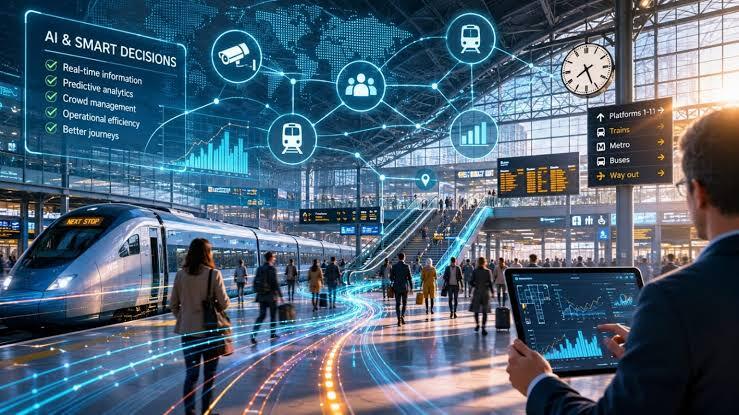

Introduction
Rail transportation continues to play an important role in the American economy. Every day, rail networks move agricultural products, industrial materials, automobiles, construction supplies, consumer goods, and passengers across the United States. However, the railway industry is changing as new technologies create opportunities to improve safety, efficiency, reliability, and transportation capacity.
In 2026, railway technology in the USA is moving beyond traditional locomotives and track systems. Artificial intelligence, automated inspection equipment, predictive maintenance, advanced signaling, digital communication, and modern passenger trains are becoming increasingly important parts of railway modernization.
American freight railroads are exploring ways to detect equipment problems earlier and improve the movement of goods. Passenger rail operators are introducing modern trainsets with improved onboard technology and additional capacity. Meanwhile, federal research programs are examining next-generation train control systems and advanced automation.
Companies such as Siemens Mobility, Alstom, Wabtec, and other railway technology providers are contributing to this transformation through equipment, software, locomotives, signaling systems, and maintenance solutions.
The changes are not happening overnight. Rail infrastructure is expensive, safety requirements are demanding, and different rail operators must coordinate across complex networks. Nevertheless, technology is creating new possibilities for the future of American transportation.
1. What Is Modern Railway Technology?
Modern railway technology refers to the combination of equipment, software, communication systems, automation, and engineering used to operate trains and maintain railway infrastructure.
Traditional railways depended heavily on manual inspections, conventional signaling, mechanical equipment, and human coordination. These systems remain important, but digital technologies are helping railway operators manage increasingly complex operations.
Modern railway technology includes:
- Smart railway signaling and train-control systems.
- Artificial intelligence for equipment monitoring.
- Automated track and railcar inspection.
- Predictive maintenance software.
- Digital dispatching and traffic management.
- Advanced passenger information systems.
- Modern electric and diesel-electric locomotives.
- Railway cybersecurity and communication networks.
- Automated yard operations and remote-controlled equipment.
These technologies work together to make railway operations more informed and responsive.
For example, a sensor installed near a railway track may detect an unusual temperature in a passing train’s wheel bearing. A monitoring platform can identify the abnormal reading and alert maintenance personnel before the equipment develops a more serious problem.
Similarly, digital dispatching systems can help railway operators understand train positions and coordinate movements across busy sections of track.
The objective is not simply to make trains faster. It is to improve the complete railway system, including infrastructure, equipment, scheduling, maintenance, and passenger services.
2. Artificial Intelligence Is Changing Railway Maintenance
Artificial intelligence is becoming an important tool for railway inspection and maintenance.
Railways operate thousands of miles of track and use large fleets of locomotives, freight cars, and passenger vehicles. Keeping this infrastructure in good condition requires continuous monitoring.
Traditional inspections often involve workers physically examining tracks and equipment. These inspections remain essential, but they can be supported by automated cameras, sensors, inspection vehicles, and machine-learning software.
AI systems can analyze large amounts of visual and sensor data to identify patterns that may indicate developing problems.
Examples include:
- Detecting cracks or defects in rail surfaces.
- Identifying damaged track components.
- Monitoring wheel and bearing conditions.
- Recognizing unusual locomotive vibration.
- Examining track geometry.
- Detecting changes in equipment temperature.
- Supporting maintenance scheduling.
How AI-powered inspections work
A railway inspection vehicle can travel along a track while collecting images and measurements. Computer vision software can then examine the information and highlight areas requiring further investigation.
Instead of relying only on scheduled manual checks, maintenance teams can use data to identify where attention may be needed sooner.
AI does not independently guarantee that a track or train is safe. Railway professionals must validate findings, follow inspection standards, and make maintenance decisions according to applicable safety requirements.
The biggest advantage is that automated analysis can help employees process more information and prioritize maintenance work.
3. Freight Rail Automation in the United States
Freight rail is one of the most important parts of the American transportation network.
Railroads transport large quantities of goods over long distances. Improving the efficiency of these operations can benefit manufacturers, agricultural businesses, logistics companies, retailers, and other industries.
In 2026, freight rail automation is attracting attention in several areas.
Automated inspection systems
Wayside inspection systems examine trains as they pass fixed monitoring locations. These systems may use cameras, acoustic sensors, temperature detectors, and other equipment to identify potential defects.
Examples include:
- Hot-box detectors that monitor bearing temperatures.
- Acoustic systems that listen for abnormal mechanical sounds.
- Machine vision systems that examine wheels and other components.
- Track monitoring systems that measure infrastructure conditions.
The information can help railroads identify problems before they become more serious.
Digital dispatching
Digital dispatching systems use real-time information to support train scheduling and movement coordination.
Railway networks have limited track capacity in many locations. When several trains need to use the same corridor, dispatchers must coordinate movements carefully.
Digital systems can help operators evaluate train locations, route conditions, and possible delays.
Autonomous rail technology
Some companies are developing autonomous rail vehicles and self-propelled freight cars.
These concepts could eventually provide new options for moving certain types of cargo, particularly in industrial or specialized environments.
However, autonomous freight technology should not be confused with widespread driverless operation of conventional American freight trains. In 2026, many of these technologies remain experimental, under development, or limited to specific deployments.
The Congressional Research Service’s November 2026 report on freight rail automation discusses both the potential advantages and the safety, regulatory, and workforce questions associated with these technologies. <Cite refs={[“turn661707search0″,”turn661707search2”]}/>
4. Positive Train Control and Advanced Railway Safety
Railway safety technology is another important area of modernization.
One major system used across the United States is Positive Train Control, commonly known as PTC.
PTC is designed to prevent certain types of serious railway accidents by monitoring train movements and enforcing safety-related restrictions.
The system can help prevent:
- Train-to-train collisions.
- Over-speed derailments.
- Unauthorized entry into established work zones.
- Train movements through switches in the wrong position.
PTC uses communication, positioning information, onboard equipment, and wayside infrastructure to monitor train operations.
The Federal Railroad Administration reported that PTC was operating on all required freight and passenger railroad route miles by the end of 2020.
In 2026, the focus includes maintaining existing systems, improving interoperability, and researching more advanced train-control technologies. <Cite refs={[“turn661707search9″,”turn661707search35”]}/>
Next-generation train control
The next stage of railway safety research involves developing more advanced communication-based systems and improving how trains interact with railway infrastructure.
These systems may offer better monitoring, more flexible control functions, and improved coordination between trains and dispatching centers.
However, safety-critical railway software must be carefully tested and validated. A software failure in a train-control system could have serious consequences, so reliability and formal verification are essential.
The Federal Railroad Administration has also published research examining how machine-learning-based predictive train control can be designed with mathematical safety verification. <Cite refs={[“turn661707search6”]}/>
5. Modern Passenger Trains Are Improving American Rail Travel
Passenger rail technology is also developing through new trainsets, upgraded locomotives, improved onboard connectivity, and better passenger facilities.
One of the most visible examples is Amtrak’s NextGen Acela fleet.
The modernized trains operate on the Northeast Corridor, connecting major cities including Boston, New York, Philadelphia, and Washington, DC.
The new trainsets offer updated passenger interiors, improved onboard technology, and greater seating capacity compared with the previous generation.
Amtrak announced on November 17, 2026, that more NextGen Acela trains had entered service, increasing the available schedule to more than 40 weekday trips, 25 Saturday trips, and 32 Sunday trips. The trains include high-speed Wi-Fi, USB ports, power outlets, and updated onboard dining facilities. <Cite refs={[“turn661707search1”]}/>
Passenger-focused technology
Modern passenger trains increasingly emphasize the complete travel experience.
Important features include:
- High-speed onboard internet connectivity.
- Individual charging outlets.
- Digital passenger information displays.
- Improved accessibility.
- Modern seating and interior layouts.
- Advanced climate-control systems.
- Updated onboard communication equipment.
These improvements can make train travel more convenient, particularly for passengers who want to work, communicate, or access digital services during their journeys.
Higher-capacity trainsets
In November 2026, Siemens Mobility announced an agreement to provide eight higher-capacity trainsets for Amtrak’s Northeast Corridor.
The project includes newly built passenger coaches and the modernization of existing ACS-64 electric locomotives. It also incorporates digital technology and predictive maintenance capabilities.
The objective is to increase passenger capacity and improve fleet availability. <Cite refs={[“turn661707search5”]}/>
6. Predictive Maintenance Is Reducing Unexpected Railway Problems
Railway equipment operates under demanding conditions. Locomotives, wheels, bearings, brakes, tracks, and signaling systems experience continuous mechanical and environmental stress.
Unexpected failures can cause delays, increase maintenance expenses, and affect the movement of passengers and freight.
Predictive maintenance uses equipment data to estimate when components may require attention.
Rather than waiting for equipment to fail or replacing every component according to a fixed schedule, railway operators can use monitoring information to make more informed maintenance decisions.
Important predictive maintenance technologies
Vibration monitoring: Sensors measure equipment vibration and identify unusual patterns that may indicate mechanical problems.
Temperature monitoring: Thermal sensors can identify overheating in bearings, motors, electrical systems, and other components.
Digital inspection records: Software stores maintenance information and helps teams track recurring equipment issues.
Machine-learning analysis: Algorithms can examine historical operating data to identify patterns associated with equipment degradation.
Remote monitoring: Maintenance teams can review equipment information from centralized systems instead of relying entirely on physical inspection visits.
Predictive maintenance is particularly useful for railway fleets that operate frequently and cover long distances.
It does not eliminate inspections or repairs. Instead, it can help maintenance teams plan work more effectively and reduce the likelihood of unexpected failures.
7. Digital Railway Communication and Connected Infrastructure
Railways require reliable communication between trains, dispatching centers, maintenance teams, stations, and infrastructure systems.
Modern communication technologies are helping improve this coordination.
Digital railway infrastructure can combine information from multiple sources, including:
- Train location systems.
- Trackside sensors.
- Railway signaling equipment.
- Dispatching software.
- Passenger information platforms.
- Maintenance management systems.
When these systems communicate effectively, railway operators can develop a clearer picture of network conditions.
For example, a passenger train experiencing a delay may affect several connecting services. Digital operating platforms can help dispatchers understand the impact and evaluate possible schedule adjustments.
Connected infrastructure can also support faster communication about maintenance restrictions, weather conditions, and equipment problems.
Cybersecurity is an important requirement because railway networks depend increasingly on connected digital systems.
Rail operators must protect operational technology, communications networks, and sensitive business information from unauthorized access and cyberattacks.
8. The Role of Major Railway Technology Companies
Several established companies are helping develop the equipment and software used in modern railway systems.
Siemens Mobility
Siemens Mobility develops locomotives, passenger trains, signaling systems, railway automation, and digital transportation technologies.
The company’s work with Amtrak on higher-capacity trainsets demonstrates how modern rolling stock and digital maintenance capabilities can be combined.
Its broader portfolio includes railway infrastructure and technology designed to support passenger and freight transportation.
Wabtec Corporation
Wabtec is an American transportation technology company with a major presence in railway equipment and services.
Its activities include locomotive systems, braking equipment, digital monitoring, train control, and railway technology solutions.
Wabtec’s technologies are relevant to both freight and passenger rail operations, particularly where operators are seeking improved reliability and operational efficiency.
Alstom
Alstom supplies passenger trains, signaling systems, railway services, and other transportation technologies.
The company manufactured the NextGen Acela trainsets for Amtrak, helping introduce a new generation of passenger equipment on the Northeast Corridor.
Parallel Systems
Parallel Systems is a US-based company developing autonomous, battery-electric rail vehicles designed for freight transportation.
Its concept involves self-propelled railcars that may operate individually or in groups.
In February 2025, the Federal Railroad Administration approved a request allowing the company and its rail carrier partner to test its technology on a limited railroad segment in Georgia under specified conditions.
The project illustrates the potential of new freight rail designs, although important safety and operational questions remain. <Cite refs={[“turn661707search2”]}/>
9. Railway Technology and Environmental Sustainability
Rail transportation can move large quantities of freight efficiently, but the industry is still working to improve its environmental performance.
Technology can support these efforts through more efficient locomotives, improved operating practices, better maintenance, and electrification where practical.
Energy-efficient locomotives
Modern locomotive technologies can help improve fuel efficiency and reduce unnecessary energy consumption.
Hybrid and battery-electric technologies are also being explored for certain railway applications.
Their suitability depends on route length, locomotive power requirements, charging infrastructure, operating schedules, and the availability of suitable equipment.
Regenerative braking
Regenerative braking captures some of the energy produced when a train slows down.
In electric railway systems, this energy may be returned to the power network or used by other trains, depending on the infrastructure.
Improved train scheduling
Better dispatching and traffic management can help reduce unnecessary stops, inefficient movements, and congestion.
Reducing idle time and improving operating patterns may contribute to lower fuel consumption.
Electrification
Electric trains can reduce direct emissions during operation, although the total environmental benefit depends on the electricity supply and the infrastructure required.
Electrification can be particularly attractive on busy passenger corridors with frequent service.
However, building new electrified railway infrastructure requires substantial investment and long-term planning.
10. The Challenges of Railway Modernization in the USA
Although new railway technology offers significant benefits, modernizing American rail networks is complicated.
Aging infrastructure
Some railway corridors depend on infrastructure that was built many decades ago. Modern technology cannot deliver its full benefits if the underlying track, bridges, tunnels, or electrical systems require major upgrades.
High installation costs
Digital signaling, automated inspection equipment, modern locomotives, and new passenger trainsets can require substantial investment.
Railway operators must evaluate the long-term benefits against installation and maintenance expenses.
Interoperability
Different railroads may use different equipment, communication systems, and operating procedures.
Technology must work reliably across the relevant network, especially when freight trains operate on infrastructure owned or managed by other railroads.
Cybersecurity risks
Connected railway systems introduce additional digital security requirements.
Operators need strong access controls, network monitoring, software maintenance, and incident-response plans.
Workforce training
New equipment requires new skills. Railway employees, technicians, engineers, and dispatchers need appropriate training to operate and maintain modern systems.
Regulatory and safety requirements
Railway technology must meet applicable federal safety requirements. Autonomous and machine-learning-based systems require particularly careful evaluation before they can be used in safety-critical operations.
11. Government Investment and Research Are Supporting Railway Innovation
Federal research and infrastructure programs play an important role in railway modernization.
The Federal Railroad Administration supports research involving track inspection, rolling stock, train control, communications, and railway safety.
Its fiscal year 2026–2027 research planning includes work on next-generation train control, automation, advanced sensing, and interoperability.
In October 2026, the US Department of Transportation announced more than $2.3 billion in rail investments through its Consolidated Rail Infrastructure and Safety Improvements program. The selected projects cover 45 states and the District of Columbia and are intended to support freight and passenger rail improvements. <Cite refs={[“turn661707search35″,”turn661707search11”]}/>
These investments matter because technology adoption often requires more than purchasing new equipment.
Railway operators may need to upgrade track infrastructure, communication systems, bridges, stations, maintenance facilities, and electrical networks before modern equipment can operate effectively.
Government support, private investment, and cooperation between rail operators and technology developers can help move research into practical applications.
12. The Future of Railway Technology in the United States
The next stage of American railway modernization will likely involve more connected infrastructure, improved inspection technology, advanced passenger equipment, and greater use of data in railway operations.
Several developments deserve attention.
More intelligent railway networks
Railway operators may increasingly combine train location information, sensor data, traffic conditions, and maintenance records through integrated digital platforms.
This could improve decision-making across complex railway networks.
Advanced automated inspection
Machine vision, acoustic sensors, and other monitoring systems may become more widely used to identify defects and prioritize maintenance work.
Human expertise will remain essential for safety decisions and physical repairs.
More capable passenger trains
New passenger trainsets may offer improved accessibility, onboard connectivity, passenger information, and maintenance monitoring.
Amtrak’s ongoing fleet investments provide an example of this modernization process.
New freight transportation models
Autonomous and self-propelled freight vehicles may create new options for specialized cargo movement.
Their future adoption will depend on safety, regulations, infrastructure compatibility, and economic performance.
Stronger railway cybersecurity
As more railway systems become digitally connected, cybersecurity will become an increasingly important part of infrastructure planning and equipment design.
The future railway will need to be both technologically advanced and resilient against digital threats.
Conclusion
Railway technology in the United States is evolving through a combination of artificial intelligence, digital signaling, automated inspection, predictive maintenance, modern passenger trains, and connected infrastructure.
In 2026, these developments are helping freight and passenger rail operators explore better ways to manage equipment, improve safety, and increase operational efficiency.
Companies such as Siemens Mobility, Wabtec, Alstom, and emerging developers like Parallel Systems are contributing to different areas of railway innovation. At the same time, the Federal Railroad Administration and other government organizations are supporting research and infrastructure improvements.
The transition will take time. Aging infrastructure, high investment costs, cybersecurity risks, workforce training, and safety requirements remain important challenges.
However, the direction is clear: data-driven maintenance, smarter train control, improved passenger equipment, and more connected railway operations will play increasingly important roles in the future of American rail transportation.
As the industry continues to modernize, railway technology could help make the movement of people and goods across the United States more reliable, efficient, and adaptable to future transportation needs.
Frequently Asked Questions (FAQs)
1. What is railway technology?
Railway technology includes the equipment, software, communication systems, automation, and engineering used to operate trains, manage railway networks, maintain tracks, and improve transportation safety.
2. How is AI used in American railways?
AI can analyze inspection images, sensor readings, vibration data, and equipment performance information. It helps railway operators identify potential defects and prioritize maintenance activities.
3. What is Positive Train Control?
Positive Train Control is a railway safety system designed to help prevent train collisions, over-speed derailments, unauthorized movements into work zones, and certain unsafe switch movements.
4. Which companies are leading railway technology development in the USA?
Companies contributing to the sector include Siemens Mobility, Wabtec, Alstom, and specialized developers such as Parallel Systems. Their work covers locomotives, passenger trains, signaling, automation, and digital monitoring.
5. Are American freight trains becoming autonomous?
Autonomous freight technologies are being developed and tested, including self-propelled rail vehicles. However, widespread driverless operation of conventional freight trains is not the standard operating model in the United States in 2026.
6. How does predictive maintenance help railroads?
Predictive maintenance uses sensors, software, and historical equipment data to identify potential failures before they occur. It can help reduce unexpected downtime and improve maintenance planning.
7. What is the latest development in Amtrak passenger train technology?
Amtrak is expanding its NextGen Acela fleet and investing in additional passenger trainsets and upgraded locomotives. These projects aim to increase capacity, improve passenger services, and strengthen operational reliability.
8. Is railway transportation environmentally friendly?
Rail can move large quantities of freight and passengers efficiently. Its environmental performance depends on locomotive technology, fuel or electricity sources, infrastructure, and operating practices.
9. What are the biggest challenges facing railway modernization?
Major challenges include aging infrastructure, high equipment costs, interoperability, cybersecurity, regulatory requirements, and the need for specialized workforce training.
10. What is the future of railway technology in the USA?
The future is likely to include smarter signaling, more automated inspections, predictive maintenance, modern passenger trains, connected infrastructure, and carefully evaluated automation technologies.











No responses yet