
Introduction
The American technology landscape in 2026 is not defined by a single breakthrough. It is defined by a pattern: the federal government, private industry, and national laboratories are building the physical and intellectual infrastructure for technologies that will take years—or decades—to mature. Semiconductor research is targeting the bottlenecks that limit AI. Quantum computers are being manufactured, not just demonstrated. And biotechnology is being positioned as a national security priority.
Here’s what’s actually happening across the key fronts of U.S. technology in 2026.
The $874 Million Semiconductor R&D Bet
On July 29, 2026, the Department of Commerce announced letters of intent with seven companies for $874 million in federal incentives under the CHIPS and Science Act . This is not funding for building chip factories. It is R&D funding targeting specific bottlenecks in the compute supply chain.
What the Funding Targets
The investments focus on technologies that could dramatically improve the performance of AI systems :
GlobalFoundries received up to $300 million to accelerate domestic research and development of co-packaged optics. By integrating photonics directly alongside AI processors, this technology promises ultra-fast, energy-efficient computing that could reinforce U.S. leadership in AI infrastructure by two to three years .
Kepler received up to $245 million to develop a new class of high-performance AI memory technology enabled by 3D and ferroelectric technologies .
Multibeam Corporation received up to $140 million for advanced packaging technology that assembles and stacks multiple chips with thousands of connections .
The remaining awards went to Extropic ($75 million for thermodynamic sampling units), Thintronics ($50 million for ultra-low-loss dielectrics), OBSIDIA Semiconductors ($34 million for counterfeit detection), and Aeluma ($30 million for photonic substrate technology) .
The Department will receive a minority, non-controlling equity stake in each company as a condition for receiving the funds .
Quantum Computing: From Lab to Manufacturing
Quantum computing in 2026 is transitioning from research to manufacturing. The evidence is in the partnerships between quantum computing companies and semiconductor foundries.
Quantinuum’s Helios: 98 Qubits, Independently Verified
In June 2026, Sandia National Laboratories and Quantinuum published a peer-reviewed paper in Nature reporting the performance of Quantinuum’s 98-qubit commercial system, Helios .
The system demonstrated single-qubit fidelity of 99.9975% and two-qubit fidelity of 99.921% . Sandia evaluated and certified the performance, using a new benchmarking methodology to measure mid-circuit measurements essential for quantum error correction .
“The most important aspect of today’s quantum computers is not speed, but reliability,” said Sandia’s Robin Blume-Kohout . Helios operates beyond the capabilities of classical simulation and establishes a new benchmark of fidelity and complexity .
ORNL’s Pathfinder: Quantum-HPC Integration
In June 2026, Oak Ridge National Laboratory deployed its first on-premises quantum computer: a 20-qubit IQM Radiance system named Pathfinder . The system is based on superconducting technology, chilled to less than 10 millikelvin by a Bluefors cryosystem .
The system is connected to ORNL’s high-performance computing systems, enabling researchers to develop a quantum-centric HPC ecosystem—a hardware-agnostic software architecture that merges quantum and classical computing .
AI-Driven Materials Discovery: SandboxAQ’s $500 Million Mission
In June 2026, the Department of Commerce signed a definitive agreement with SandboxAQ for a $500 million award under the CHIPS and Science Act .
SandboxAQ’s platform combines first-principles physics and chemistry simulation, AI-driven optimization, and high-throughput screening to compress traditional materials development timelines .
The Four Priority Areas
The award targets four critical semiconductor materials bottlenecks :
PFAS-free chemicals for semiconductor manufacturing. PFAS “forever chemicals” are used throughout chip manufacturing, and no compliant alternatives exist at scale.
Advanced catalysts for semiconductor fabrication. Creating domestic catalyst designs reduces foreign supplier control over catalyst formulations and process intellectual property.
Rare earth-free magnets. China controls more than 90% of global production of neodymium-based permanent magnets, which are critical inputs to semiconductor manufacturing equipment .
Advanced battery chemistries for semiconductor facility backup power. Most backup power systems rely on lithium and cobalt sourced primarily from China .
The Department will receive a minority, non-controlling equity stake in SandboxAQ .
Physical AI: The Next Phase of AI
At CES 2026 and GTC 2026, the AI industry’s focus shifted from building infrastructure for model training to deploying agentic and physical AI at scale .
NVIDIA’s Vera Rubin Platform
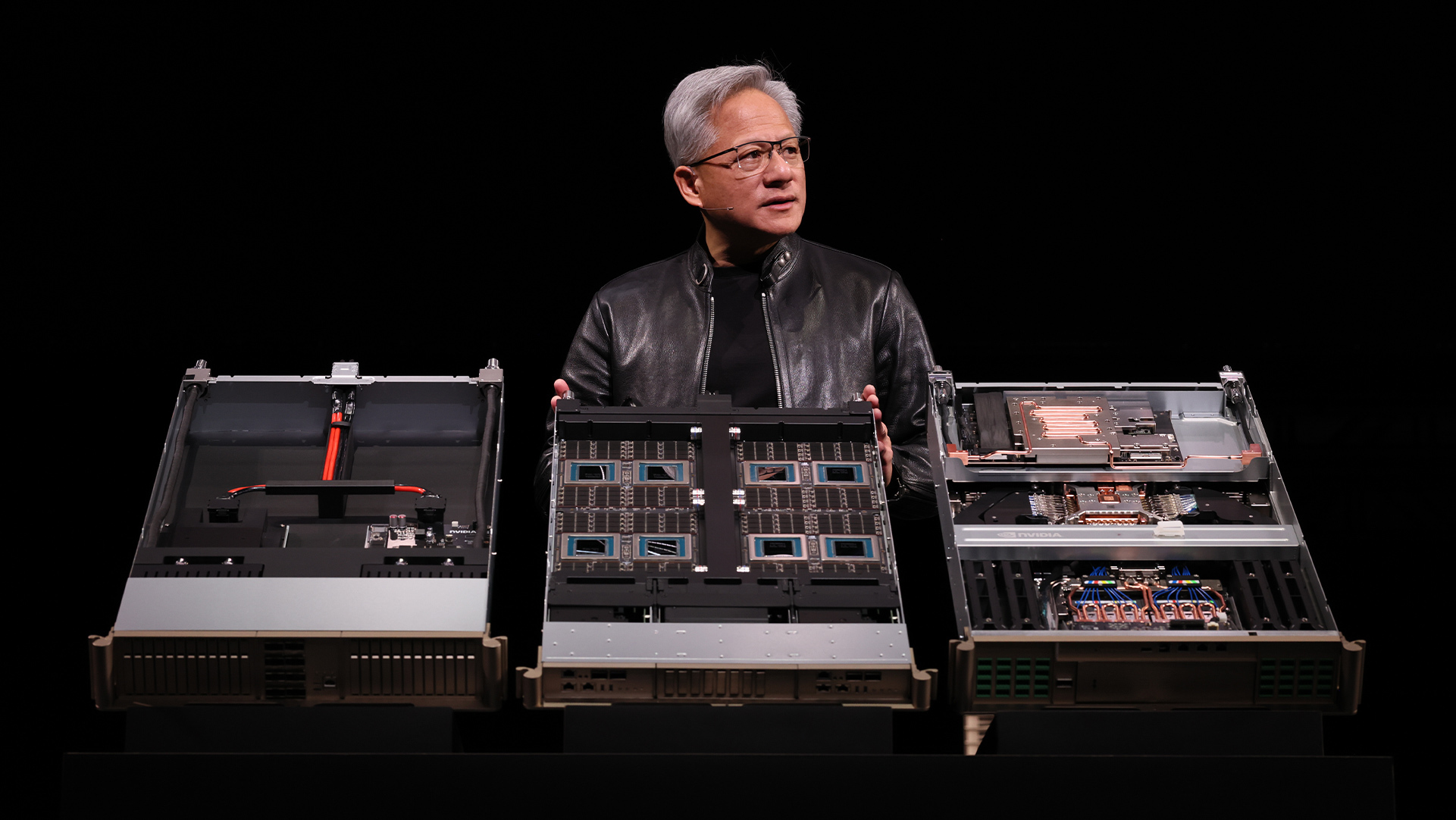
At GTC 2026, NVIDIA announced the Vera Rubin platform—a system-level computing platform with six chips, five rack-scale systems, and a supercomputer for agentic AI . The platform is in full production .
Jensen Huang described the shift: “The AI evolution will go from perception to generation to agency, and finally to physical AI that understands the physical world. The ‘ChatGPT moment’ for physical AI is coming” .
The Agentic Shift
Fei-Fei Li, speaking at CES, described the transition: “AI development is moving from systems that passively understand text and images to systems that not only understand but can help us interact with the world” .
Liquid AI CEO Ramin Hasani predicted that 2026 would be “the year of proactive agents”—AI systems that run on-device, always online, and work proactively for humans in the background .
Biotechnology: ARPA-H Funds a New Class of RNA Medicines
In September 2026, Harvard Medical School announced that a team led by HMS researchers received up to $4.4 million in federal funding from the Advanced Research Projects Agency for Health (ARPA-H) to develop a new class of RNA medicines .
The project aims to use riboswitches—genetic switches that alter gene activity in response to chemical cues—to create highly precise medicines that turn specific genes on or off only at the right time and in the right cell types .
If successful, this platform could apply to cancer, metabolic diseases like diabetes, autoimmune disorders, neurodegeneration, and rare genetic diseases .
“Pairing academic discovery with industry’s ability to execute is, honestly, the only way I see this becoming a real therapy instead of just another paper,” said principal investigator Silvi Rouskin .
The Bio Genesis Mission: AI Meets Biomedical Research
In July 2026, NIH launched the Bio Genesis Mission, its contribution to the national Genesis Mission—an effort to harness AI and advanced computing to accelerate American science .
The goal: cut in half the time it takes for a scientific discovery to reach the people who need it within ten years .
NIH has more than $1.2 billion in obligated FY26 and planned FY27 funding aligned to priority areas including predicting the behavior of living systems, scaling American biomanufacturing, detecting biological threats earlier, and using AI to unlock new treatments for pediatric cancer .
“AI will not replace the scientific judgment, rigor, and peer review that have always driven medical progress,” said NIH Director Dr. Jay Bhattacharya. “It will extend their reach” .
The Common Thread: Building the Infrastructure for What Comes Next
What connects these developments—semiconductor R&D, quantum manufacturing, AI-driven materials discovery, physical AI, and biotech innovation—is a shared focus on building infrastructure.
The semiconductor investments target the bottlenecks that limit AI performance. The quantum partnerships connect computing companies with foundries to enable manufacturing at scale. SandboxAQ uses AI to discover materials that break foreign supply chain monopolies. Physical AI moves artificial intelligence from the cloud into the physical world. And the biotech investments aim to compress the timeline from discovery to patient.
The U.S. is not betting on a single technology or approach. It is building a portfolio—chips, quantum, AI, biotech—and accepting that some bets will pay off while others may not. What matters is that the infrastructure is being built. The technologies that succeed will have somewhere to grow.











No responses yet