
Introduction
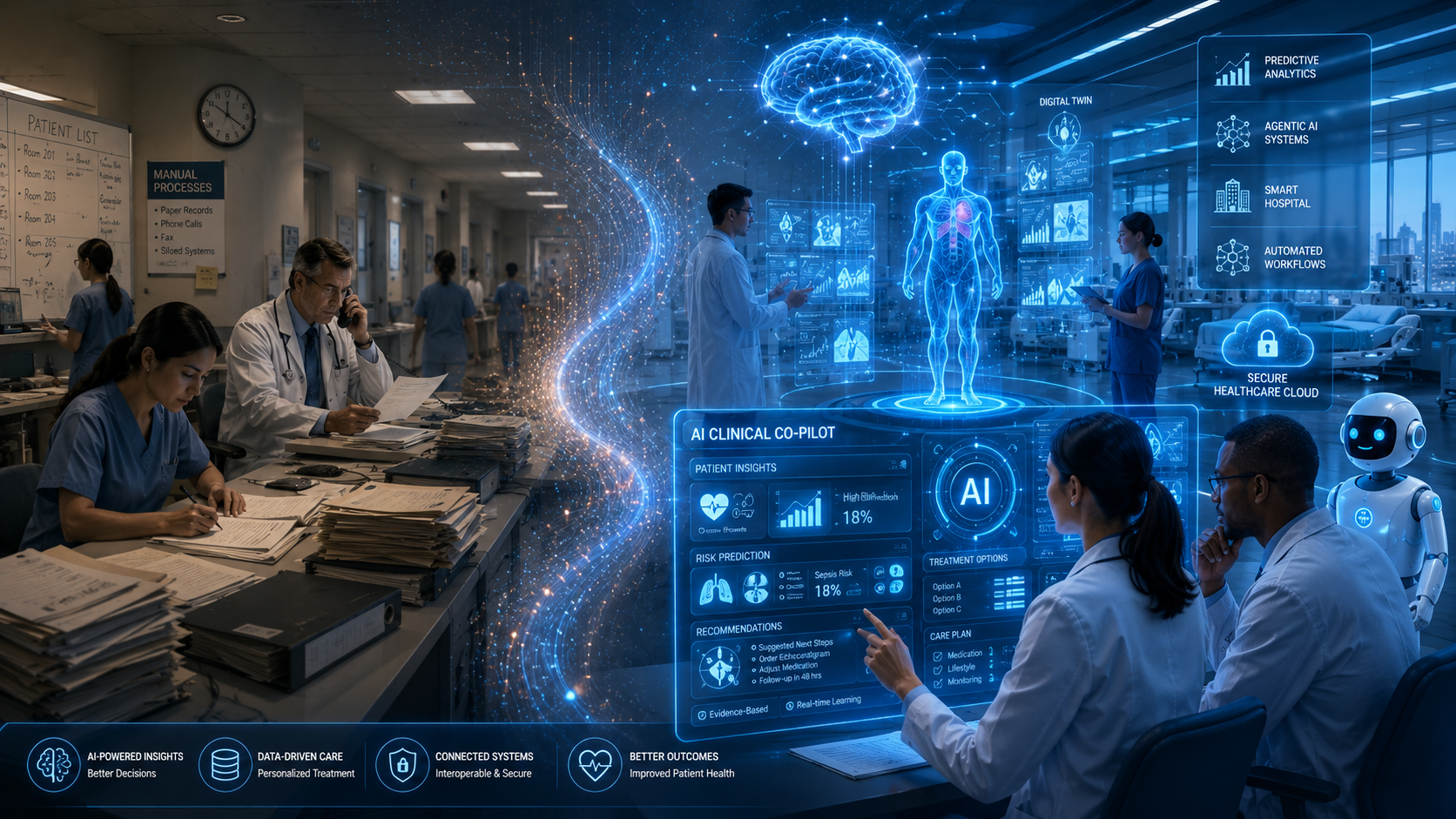
Artificial intelligence is becoming an important part of the American healthcare industry. Hospitals, medical technology companies, research institutions, and healthcare software developers are exploring how AI can help clinicians analyze information, reduce administrative work, improve medical imaging workflows, and support more informed decisions.
In 2026, healthcare AI is moving beyond experimental projects. Hospitals and healthcare organizations are evaluating practical applications such as automated clinical documentation, medical image analysis, patient scheduling, predictive analytics, and digital assistance for healthcare professionals.
The US Food and Drug Administration (FDA) is also addressing the opportunities and risks associated with AI-enabled medical devices. As of September 2026, the FDA reported that it had authorized more than 1,600 AI-enabled medical devices for marketing in the United States. These devices cover different medical specialties and functions, including imaging, diagnostic support, and patient monitoring.
However, the growing availability of AI tools does not mean that every application is equally reliable or suitable for clinical use. Healthcare organizations must consider patient safety, data privacy, bias, accuracy, regulatory requirements, and the role of qualified medical professionals.
1. The Current State of Healthcare AI in the USA
The American healthcare system produces enormous amounts of information. Medical records, laboratory results, diagnostic images, prescriptions, insurance claims, and monitoring devices all generate data that healthcare professionals may need to review.
AI systems can analyze selected types of information and identify patterns that may be difficult or time-consuming to detect manually. Depending on the application, these systems may support clinical workflows, administrative processes, medical research, and operational planning.
Healthcare AI is not a single technology. It includes several different approaches, such as machine learning, computer vision, natural language processing, predictive analytics, and generative AI.
Machine learning can identify patterns in data. Computer vision can analyze images, including certain medical scans. Natural language processing can help interpret or organize written information. Generative AI can produce draft text, summarize information, and assist with selected documentation tasks.
These capabilities are creating opportunities across hospitals, medical practices, laboratories, pharmaceutical companies, and healthcare technology businesses.
Why healthcare organizations are interested in AI
Healthcare organizations often face heavy administrative workloads, complex information systems, and pressure to use staff time effectively.
AI tools may help with tasks such as preparing draft clinical notes, organizing incoming documents, routing patient inquiries, and summarizing information for review.
In medical settings, AI can also help identify areas of a scan that may require closer examination or flag patterns for a clinician to investigate.
The value of an AI system depends on the problem it solves. A tool that saves administrative time may be useful even if it does not directly diagnose disease. A diagnostic tool, meanwhile, requires careful evaluation of its intended use, accuracy, limitations, and safety.
The goal should be to improve healthcare processes and support professionals, rather than introducing AI simply because the technology is available.
2. AI-Powered Medical Imaging and Diagnostics
Medical imaging is one of the most established areas of healthcare AI. Radiology departments use imaging systems to examine X-rays, CT scans, MRI scans, mammograms, and other medical images.
AI-enabled software can analyze specific image features, highlight suspicious regions, help prioritize certain cases, or support measurements used during clinical review.
AI in radiology
Radiology departments often handle large numbers of medical images. AI tools may help identify particular findings and bring them to the attention of radiologists.
For example, a validated system may be designed to help identify signs associated with certain lung abnormalities or prioritize images that require prompt review.
Such systems do not automatically replace radiologists. Their performance depends on the specific medical task, image quality, patient population, and conditions under which the software was evaluated.
Healthcare providers must also understand when an AI tool is likely to be less reliable and when additional human review is necessary.
AI in breast imaging
Some AI applications are designed to assist with mammography and breast imaging workflows. Depending on the device, the software may support image analysis, help identify suspicious areas, or provide information that clinicians consider alongside other findings.
AI should not be treated as a universal guarantee of early detection. Medical decisions still require appropriate clinical interpretation and follow-up.
Eye disease detection
AI systems can analyze retinal images to identify signs associated with certain eye conditions, including diabetic retinopathy.
In suitable settings, these tools may help support screening programs and identify people who need further evaluation. Their usefulness depends on validated performance, image quality, workflow design, and the availability of appropriate follow-up care.
Why FDA authorization matters
The FDA evaluates medical devices, including certain AI-enabled products, through regulatory pathways appropriate to their intended use and risk.
Authorization or clearance for one specific function does not mean that the software can safely perform every medical task. Healthcare organizations should verify the exact intended use, limitations, and regulatory status of the product they plan to adopt.
The FDA maintains a searchable AI-enabled medical devices resource that provides information about devices authorized for marketing in the United States.
3. Generative AI Is Changing Hospital Workflows
Generative AI is receiving considerable attention because it can produce and summarize text, respond to questions, and assist with information-heavy tasks.
In healthcare, one practical area is clinical documentation. Doctors and other healthcare professionals spend substantial time recording patient encounters, preparing notes, reviewing information, and completing administrative documentation.
AI tools can assist with some of these tasks, although their output must be checked for accuracy and completeness.
Automated clinical documentation
Some healthcare systems use AI-assisted documentation tools to create draft notes from conversations between clinicians and patients.
The clinician reviews the draft, corrects mistakes, and decides what should be included in the medical record.
This approach may help reduce manual typing and allow professionals to focus more directly on the patient during a consultation. However, transcription errors, missing details, and inaccurate summaries remain possible.
Organizations need clear processes for patient consent where applicable, clinician review, data handling, and correction of mistakes.
Summarizing medical records
Patients may have years of medical history spread across different records and systems. AI tools can help summarize selected information, such as previous diagnoses, medications, test results, or recent clinical encounters.
A summary can make information easier to review, but it may omit important details or incorrectly connect separate events. For this reason, clinicians should verify relevant information in the original record when making important decisions.
Administrative assistance
Generative AI can also help prepare draft referral letters, organize internal documents, respond to routine staff questions, and create patient-friendly explanations of approved information.
These applications may be easier to introduce than tools that directly influence diagnosis or treatment because the output can often be reviewed before use.
Nevertheless, administrative AI must still protect sensitive information and avoid presenting incorrect content as verified medical fact.
4. Predictive Analytics and Personalized Healthcare
Predictive analytics uses data to estimate the likelihood of future events or identify patterns associated with particular outcomes.
In healthcare, these systems may be used to help organizations understand patient needs, plan staffing, identify possible deterioration, or prioritize follow-up.
Hospital risk monitoring
Some clinical systems analyze information such as vital signs, laboratory results, and medical history to flag patients who may require additional assessment.
The purpose is to provide an additional signal for healthcare teams, not to make every clinical decision automatically.
A model may generate false alarms or miss important changes. Healthcare organizations should evaluate its performance in the population where it will be used and ensure that staff understand how to respond to alerts.
Personalized treatment support
Patients can respond differently to the same treatment. Researchers are exploring how AI can help analyze medical history, diagnostic information, and other relevant data to support more individualized care.
In appropriate applications, these tools may help clinicians compare patterns across patient groups or identify information worth considering when evaluating treatment options.
However, a statistical prediction is not a guarantee of an individual outcome. Personalized treatment decisions require professional judgment and consideration of the patient’s circumstances, preferences, and clinical needs.
Population health management
Healthcare organizations may use analytics to identify trends across patient populations, understand patterns of service use, and plan preventive programs.
These approaches can help direct attention toward areas where additional support may be needed. Their effectiveness depends on data quality, fairness, implementation, and access to suitable services.
5. Major Companies and Organizations in Healthcare AI
The American healthcare AI market includes established technology providers, medical device manufacturers, hospital software vendors, and specialized startups.
Their products differ significantly, so organizations should evaluate specific capabilities rather than assuming all healthcare AI systems provide the same benefits.
Microsoft
Microsoft provides cloud computing, data, and AI technologies used by organizations across multiple industries, including healthcare.
Healthcare applications can include information management, clinical documentation support, analytics, and tools integrated into enterprise software.
Hospitals considering these technologies must assess how the systems handle protected health information, how access is controlled, and whether the proposed implementation meets applicable legal and security requirements.
Google and Google Cloud
Google and Google Cloud develop AI and data technologies that can support healthcare research, analytics, and selected clinical or operational applications.
Healthcare organizations may use cloud platforms to manage data, develop models, and build digital services. The suitability of a particular tool depends on its capabilities, integration requirements, and compliance arrangements.
AI research and general-purpose AI tools should not automatically be considered approved medical devices. Intended use and applicable regulatory requirements remain important.
NVIDIA
NVIDIA supplies computing hardware and software used in AI development, scientific computing, medical research, and medical imaging applications.
High-performance computing can help researchers train models, analyze complex datasets, and develop new tools for medical research and healthcare technology.
NVIDIA’s role is often that of a technology infrastructure provider rather than a direct healthcare service provider.
GE HealthCare
GE HealthCare develops medical imaging equipment, patient monitoring systems, and related healthcare technologies.
AI-enabled features can support particular imaging and clinical workflows, depending on the product. Healthcare organizations should evaluate the intended use and evidence for each feature rather than assuming every system offers the same capabilities.
Siemens Healthineers
Siemens Healthineers develops medical imaging, laboratory diagnostics, and healthcare technology products.
AI can be incorporated into selected systems to support image processing, workflow efficiency, measurements, and other specialized functions.
The practical benefits depend on the specific device, its regulatory status, the clinical setting, and how professionals use the results.
Healthcare AI startups
Smaller companies are also developing tools for clinical documentation, imaging analysis, patient communication, care coordination, and medical research.
Startups may introduce specialized products quickly, but healthcare organizations should carefully assess reliability, privacy protections, financial stability, interoperability, and ongoing support before adopting them.
6. AI in Drug Discovery and Medical Research
Developing a new medicine is a complex process that involves identifying promising biological targets, discovering candidate compounds, conducting laboratory research, and completing appropriate clinical studies.
AI is being used to support several stages of this process.
Identifying promising drug candidates
Machine-learning systems can analyze chemical structures, biological data, and research publications to help scientists identify compounds worth investigating.
These tools may reduce the time needed to screen certain possibilities, but a promising computational result is not proof that a drug will be safe or effective in humans.
Laboratory experiments and clinical trials remain essential.
Understanding biological systems
AI can help researchers analyze complex biological data and investigate relationships between genes, proteins, disease mechanisms, and potential treatments.
These methods can generate hypotheses that researchers then test through established scientific methods.
The quality of the results depends on the data used, the model’s limitations, and whether findings can be reproduced.
Clinical trial support
Researchers are exploring AI tools for trial planning, participant identification, document analysis, and monitoring of research data.
Such systems may help organize complex workflows, but trial eligibility, informed consent, safety monitoring, and interpretation of results require appropriate professional oversight.
Why AI does not eliminate the need for clinical trials
A model can predict a potential interaction or suggest a candidate treatment without proving that it works in real patients.
Clinical trials are needed to evaluate safety, effectiveness, appropriate dosage, and possible adverse effects. AI may assist the research process, but it does not replace scientific evidence or regulatory review.
7. AI-Powered Remote Monitoring and Telehealth
Telehealth enables patients to consult healthcare professionals remotely through video, messaging, and other digital services.
Remote monitoring extends this approach by collecting information from compatible devices and transmitting it to healthcare teams or digital platforms.
Wearable health technology
Wearable devices may collect information such as heart rate, activity levels, sleep patterns, and other measurements, depending on the device.
AI can help identify patterns in selected data and generate alerts or summaries. However, consumer wellness measurements are not necessarily equivalent to medical-grade measurements.
Patients should understand the capabilities and limitations of their devices and seek professional assessment when symptoms or concerns warrant it.
Remote patient monitoring
Remote monitoring programs may use connected equipment to collect measurements from patients at home.
For example, a program may monitor blood pressure or blood glucose in appropriate clinical settings. Software can help organize incoming measurements and identify values that may require review.
Successful programs need more than sensors and algorithms. They also require clear escalation procedures, staff capacity, reliable connectivity, and appropriate follow-up.
Virtual healthcare assistants
AI-powered assistants may help patients find appointment information, understand preparation instructions, or navigate a healthcare organization’s digital services.
They should clearly communicate their limitations and direct users to qualified professionals when questions require individualized medical judgment.
AI chat tools should not be treated as a substitute for emergency services or a professional diagnosis.
8. Patient Privacy, Data Security, and Healthcare AI Regulations
Healthcare AI depends on data, and medical information is highly sensitive. A system may process patient histories, imaging files, laboratory results, clinical notes, and other information that requires strong protection.
Privacy and security must therefore be part of the design and implementation process.
Protecting health information
The Health Insurance Portability and Accountability Act (HIPAA) establishes privacy and security requirements for covered entities and business associates, subject to its scope and applicable rules.
Healthcare organizations must evaluate how information is collected, used, stored, shared, and accessed when introducing AI tools.
Important safeguards may include role-based access controls, encryption, audit logs, secure configuration, vendor assessments, and procedures for handling security incidents.
Not every health-related app is covered by HIPAA in the same way. Organizations must understand which laws apply to their specific services and data practices.
AI bias and fairness
AI systems can produce different levels of performance across populations if their training data or evaluation methods do not adequately represent the people who will use them.
In healthcare, these differences may influence screening, risk prediction, or other decisions.
Developers and healthcare organizations should evaluate model performance across relevant groups, monitor real-world results, and investigate unexpected disparities.
FDA oversight of AI-enabled medical devices
The FDA regulates medical devices, including certain AI-enabled products, through applicable pathways based on their intended use and characteristics.
In August 2026, the FDA published a discussion paper seeking public feedback on regulatory considerations for generative AI-enabled medical devices. The paper addressed topics including risk assessment, premarket evaluation, postmarket monitoring, and the distinctive risks of generative systems.
This reflects the continuing effort to address new AI capabilities while maintaining patient safety.
The latest information is available through the FDA’s AI-enabled medical devices resource.
Transparency and accountability
Healthcare professionals and patients should be able to understand the intended purpose of a medical AI tool, its limitations, and the role it plays in a decision.
Organizations should establish clear accountability for checking results, managing errors, responding to incidents, and updating software.
The presence of AI in a workflow should not make responsibility for patient care unclear.
9. The Biggest Challenges for Healthcare AI in 2026
Despite its potential, AI adoption in American healthcare remains complicated.
Integrating with existing systems
Hospitals often use multiple systems for electronic health records, imaging, billing, scheduling, laboratory services, and patient communication.
A new AI tool may require technical integration, staff training, changes to established workflows, and ongoing maintenance.
Poor integration can create extra work rather than reducing it.
Measuring real-world value
An AI product may perform well in a demonstration but deliver limited benefits after deployment.
Healthcare organizations should define measurable objectives before implementation. These may include documentation time, workflow delays, error rates, patient access, or other outcomes appropriate to the tool.
They should also monitor unintended effects, including additional alerts, new administrative tasks, or unequal performance across patient groups.
Staff training and trust
Doctors, nurses, administrators, and other healthcare professionals need to understand what a system can do and where it may fail.
If staff do not trust a tool, they may avoid using it. If they trust it too much, they may overlook errors.
Training should therefore emphasize appropriate use, verification, escalation, and the limitations of automated recommendations.
Financial and operational barriers
Healthcare AI can require licensing fees, computing resources, integration work, security reviews, and ongoing evaluation.
Smaller medical practices may face different constraints from large hospital systems.
A practical adoption strategy should consider total cost, staff time, vendor support, and the possibility that a product may need to be changed or discontinued.
10. Career and Business Opportunities in Healthcare AI
Healthcare AI creates opportunities for professionals who understand both technology and the needs of healthcare organizations.
AI and machine-learning engineering
Engineers may develop models, build data pipelines, evaluate system performance, and integrate AI capabilities into software.
These roles typically require strong programming skills, knowledge of machine learning, and experience working with complex datasets.
Health informatics
Health informatics specialists work with healthcare information systems, data standards, clinical workflows, and technology implementation.
They help ensure that digital tools fit the way healthcare professionals actually work.
Clinical safety and AI evaluation
Healthcare organizations need people who can evaluate AI tools, document limitations, monitor performance, and assess whether systems remain suitable for their intended uses.
Depending on the role, this work may involve clinical expertise, regulatory knowledge, statistics, quality assurance, or software testing.
Cybersecurity and privacy
Healthcare technology companies need professionals who can protect sensitive information, assess vendor risks, manage access controls, and respond to security incidents.
Experience with cloud security, identity management, risk assessment, and applicable healthcare regulations can be valuable.
Product management and implementation
AI healthcare products require coordination between engineers, clinicians, compliance teams, customers, and business leaders.
Product managers and implementation specialists help translate real operational needs into practical software features and deployment plans.
People interested in this field should focus on a specific area of expertise rather than assuming that general knowledge of AI alone is sufficient.
11. The Future of AI in Healthcare in the USA
The future of American healthcare AI will likely involve a combination of clinical support, administrative automation, medical research, and digital health services.
Several developments deserve particular attention.
First, generative AI may become more deeply integrated into documentation, information retrieval, and communication workflows. Its success will depend on whether it produces reliable results and meaningfully reduces workload.
Second, medical imaging AI may continue to expand into specialized diagnostic and workflow applications. Each system will need evidence appropriate to its intended use.
Third, researchers may use AI more extensively to analyze complex biological data, explore drug candidates, and support clinical research. These tools could accelerate selected tasks, but the overall development of medicines will still require extensive testing.
Fourth, remote monitoring and digital healthcare tools may help providers organize care beyond traditional clinical settings. Their value will depend on accessibility, data quality, follow-up, and the ability to integrate them into routine care.
Finally, governance will remain essential. Healthcare organizations need clear policies for privacy, safety, bias evaluation, human oversight, and performance monitoring.
The FDA’s September 2026 information indicates that more than 1,600 AI-enabled medical devices had been authorized for marketing in the United States. This demonstrates the breadth of AI applications in regulated medical technology, but it should not be interpreted as proof that all healthcare AI systems are authorized or that every tool improves patient outcomes.
The long-term impact of AI will depend on responsible deployment, credible evidence, practical workflow improvements, and trust among patients and healthcare professionals.
Conclusion
Artificial intelligence in healthcare in the USA in 2026 is creating new possibilities for medical imaging, clinical documentation, predictive analytics, drug discovery, remote monitoring, and healthcare administration.
Established technology providers, medical device manufacturers, research organizations, and startups are contributing to the development of these tools. Meanwhile, the FDA and other relevant organizations are addressing questions involving safety, regulation, privacy, and responsible use.
The potential benefits are significant, but AI is not a universal solution to healthcare’s challenges. Systems can make mistakes, perform differently across populations, and create additional costs when poorly implemented.
For hospitals and medical practices, successful adoption requires clear objectives, appropriate evaluation, staff training, privacy safeguards, and ongoing monitoring. For patients, AI should be viewed as a technology that may support care rather than automatically replace professional medical judgment.
As research and commercial applications continue to develop, healthcare AI is likely to remain an important area of American technology innovation. The strongest long-term results will come from tools that solve real problems, protect patient information, and demonstrate meaningful value in everyday healthcare.
Frequently Asked Questions (FAQs)
1. What is AI in healthcare?
AI in healthcare refers to computer systems that analyze medical or operational data to support tasks such as image analysis, documentation, predictive analytics, research, and patient communication.
2. How is AI used in US hospitals in 2026?
Potential uses include clinical documentation, medical imaging, patient scheduling, operational analytics, monitoring workflows, and selected clinical decision-support applications. The available capabilities differ between organizations and products.
3. How many AI-enabled medical devices has the FDA authorized?
As of September 2026, the FDA reported more than 1,600 AI-enabled medical devices authorized for marketing in the United States. The list is periodically updated and is not a comprehensive inventory of every AI healthcare application.
4. Can AI replace doctors?
AI can assist with certain tasks, but it cannot safely replace the full range of medical judgment, patient communication, examination, and responsibility required in healthcare. Its role depends on the application and the evidence supporting it.
5. Is healthcare AI safe?
Safety depends on the specific technology, intended use, validation, clinical setting, and monitoring. AI tools can make mistakes, so appropriate human oversight and risk management remain important.
6. How does AI help medical imaging?
Certain AI systems can analyze medical images, highlight findings, support measurements, or help prioritize cases. Their performance and permitted use depend on the particular device and clinical application.
7. Does HIPAA apply to every healthcare AI application?
No. HIPAA applies to covered entities and business associates within its scope. Other privacy and consumer-protection laws may apply to apps and services that fall outside HIPAA.
8. What are the biggest risks of healthcare AI?
Key risks include inaccurate outputs, bias, privacy breaches, cybersecurity vulnerabilities, poor integration, unclear accountability, and overreliance on automated recommendations.
9. Which companies work in healthcare AI?
Companies and organizations involved in healthcare AI include Microsoft, Google Cloud, NVIDIA, GE HealthCare, Siemens Healthineers, and numerous specialized medical technology startups. Their roles and products differ.
10. What careers are available in healthcare AI?
Career options include machine-learning engineering, health informatics, clinical software evaluation, healthcare cybersecurity, data science, regulatory affairs, and AI product implementation.
11. Can AI help develop new medicines?
AI can support selected drug discovery and research tasks by analyzing biological data and identifying promising candidates. Laboratory experiments and clinical trials are still necessary to establish safety and effectiveness.
12. What is the future of AI in American healthcare?
Likely areas of continued development include clinical documentation, medical imaging, remote monitoring, research, administrative automation, and more structured approaches to evaluating AI safety and performance.











No responses yet