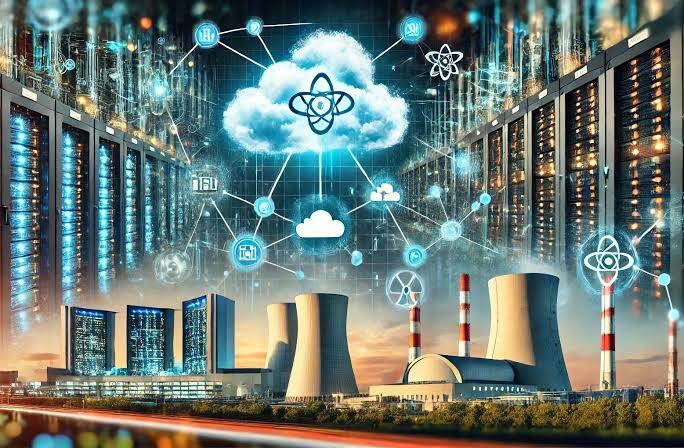

Introduction: A New Chapter for American Nuclear Energy
The United States is entering an important period of change in its energy industry. Electricity demand is growing as data centers expand, artificial intelligence becomes more widely used, manufacturing facilities modernize, and businesses invest in new digital infrastructure. At the same time, utilities must maintain reliable electricity supplies while managing costs, environmental objectives, and aging infrastructure.
These challenges have renewed interest in nuclear energy, particularly advanced nuclear technologies designed to improve how reactors are constructed, operated, and integrated into modern power systems.
Traditional nuclear power plants have supplied electricity in the United States for decades. However, building large nuclear facilities can involve significant capital investment, lengthy construction schedules, complex licensing requirements, and specialized engineering. Advanced nuclear developers are exploring alternative designs that may address some of these challenges.
One of the most discussed developments is the small modular reactor, commonly known as an SMR. Other technologies include high-temperature gas-cooled reactors, sodium-cooled fast reactors, molten-salt-cooled systems, and transportable microreactors.
Developments during 2026 have made the subject particularly relevant. On September 29, 2026, the U.S. Nuclear Regulatory Commission approved a construction permit for the Tennessee Valley Authority’s planned small modular reactor at its Clinch River site in Tennessee. The project uses GE Vernova Hitachi’s BWRX-300 design, with a planned electrical capacity of approximately 300 megawatts. A construction permit is not permission to operate the reactor; additional licensing and construction steps remain necessary. Source: Reuters.
This milestone reflects growing interest in nuclear technology as part of America’s long-term energy strategy. Nevertheless, advanced reactors must still demonstrate that they can be built economically, operate reliably, satisfy regulatory requirements, and manage nuclear waste responsibly.
What Is Advanced Nuclear Energy Technology?
Advanced nuclear energy technology refers to reactor designs and supporting systems that introduce new engineering approaches compared with conventional nuclear power plants.
Some designs use familiar water-cooled reactor technology in smaller configurations. Others explore different coolants, fuel forms, operating temperatures, or safety systems.
The U.S. Nuclear Regulatory Commission describes advanced reactors as including non-light-water reactor designs and small modular light-water reactors. These technologies may incorporate alternative coolants, innovative fuel approaches, passive safety features, or different physical configurations.
Official overview: https://www.nrc.gov/facilities-safety/new-reactors/advanced-reactors
Advanced nuclear technology can include several categories.
1. Small Modular Reactors
Small modular reactors are designed to generate less electricity per unit than many traditional large reactors. The U.S. Energy Information Administration generally classifies an SMR as a reactor with an electrical capacity of approximately 300 megawatts or less.
The modular concept aims to make it possible to manufacture certain components in factories and transport them to a site for assembly. Developers hope this approach can improve quality control, simplify construction, and allow capacity to be added in stages.
However, modular construction does not guarantee lower costs. Actual project economics depend on manufacturing volume, financing, supply chains, construction experience, and the number of units ordered.
2. Microreactors
Microreactors are even smaller nuclear systems. They are often designed for remote facilities, industrial locations, specialized installations, or sites where access to conventional electricity infrastructure is limited.
Some concepts aim to make reactors compact and transportable, although transportation, installation, security, fuel supply, and maintenance still present important engineering challenges.
Microreactors may eventually support applications such as remote industrial operations, isolated communities, or certain military installations. Many projects remain in the development, testing, or demonstration stages.
3. Advanced Non-Light-Water Reactors
Most existing commercial nuclear power plants in the United States use water as both a coolant and a means of transferring heat. Some advanced reactor designs instead investigate liquid metals, gas, or molten salts.
These alternatives can offer different operating characteristics. For example, certain high-temperature designs could potentially supply heat for industrial processes in addition to generating electricity.
The advantages depend on the specific design. Different coolants and fuel systems introduce their own technical, maintenance, materials, and regulatory requirements.
Why the United States Is Investing in Advanced Nuclear Energy
Several factors are contributing to renewed interest in advanced nuclear power.
Increasing Electricity Demand
Electricity consumption can rise when data centers, industrial facilities, electric transportation, and other energy-intensive technologies expand.
AI infrastructure is one area receiving particular attention because large computing facilities can require substantial and continuous electricity supplies.
Nuclear power can provide low-carbon electricity around the clock, subject to planned maintenance and unplanned outages. This characteristic makes it attractive to some utilities and large energy consumers looking to complement variable renewable energy sources.
However, advanced nuclear projects typically require years of development, construction, testing, and licensing. They should not be assumed to solve immediate electricity shortages.
Energy Security
The ability to generate electricity from domestic infrastructure can support national and regional energy-security objectives.
Advanced nuclear developers are also working to strengthen American manufacturing capabilities for reactor components, fuel production, and associated industrial systems.
Establishing reliable domestic supply chains will be important, particularly for specialized fuels and materials required by certain next-generation reactors.
Industrial Modernization
Electricity is not the only potential use for nuclear energy. Some advanced reactors are designed to deliver high-temperature heat that could support industrial processes.
Potential applications include chemical manufacturing, hydrogen production, and other energy-intensive operations. Whether nuclear heat is competitive depends on local demand, reactor design, infrastructure, and alternative energy sources.
Long-Term Decarbonization
Nuclear power produces electricity without direct carbon dioxide emissions from the reactor’s generation process. Its complete lifecycle still includes emissions associated with construction, fuel production, transportation, and other activities.
Advanced nuclear technologies may contribute to lower-carbon energy systems if they can be deployed safely and economically at meaningful scale.
Small Modular Reactors: A Major Development in 2026
Small modular reactors have become one of the most prominent topics in the American nuclear industry.
Unlike a conventional large nuclear station, an SMR project may use smaller reactor units and a more modular construction strategy. Depending on the design, several units could be installed at one site to supply electricity in stages.
The concept could offer advantages for utilities that want to manage investment risk or expand generating capacity gradually.
The Clinch River SMR Project
The Tennessee Valley Authority’s planned Clinch River project in Tennessee represents an important development for US nuclear power.
On September 29, 2026, the Nuclear Regulatory Commission approved a construction permit for the planned BWRX-300 reactor. The design was developed by GE Vernova Hitachi Nuclear Energy and is intended to produce approximately 300 megawatts of electricity.
The permit allows the project to proceed with authorized construction activities. It does not mean the reactor has been completed, fueled, or approved to begin commercial operation.
The project is significant because the licensing process marks a concrete step toward commercial deployment of a new generation of smaller reactors in the United States.
Why Modular Construction Matters
Traditional nuclear projects can require extensive on-site construction and coordination among numerous contractors.
SMR developers are exploring factory-based manufacturing of standardized components to reduce complexity and improve consistency.
Potential advantages include:
- More repeatable manufacturing processes
- Improved quality control for factory-produced components
- Smaller individual generating units
- Opportunities to expand capacity in stages
- Potential applications at selected industrial or utility sites
These benefits are not automatic. A factory-based approach is most likely to become economical when developers have standardized designs, reliable suppliers, experienced construction teams, and enough orders to justify manufacturing investment.
Advanced Nuclear Reactor Companies in the United States
Several American companies and organizations are developing reactor technologies. Their designs differ considerably in maturity, fuel requirements, capacity, and intended applications.
TerraPower
TerraPower is developing its Natrium advanced reactor technology, which uses a sodium-cooled fast reactor design combined with an energy-storage concept.
The company received an important regulatory milestone in March 2026 when the NRC authorized a construction permit for its planned Kemmerer Power Station, Unit 1, in Wyoming.
The project is notable because it represents a major step for commercial non-light-water reactor development in the United States.
Nevertheless, construction authorization is only one stage of deployment. The project must continue through construction, testing, and applicable licensing requirements before commercial operation.
Official source: https://www.nrc.gov/facilities-safety/new-reactors/advanced-reactors/highlights/2026
GE Vernova Hitachi Nuclear Energy
GE Vernova Hitachi Nuclear Energy is associated with the BWRX-300 small modular reactor design.
The design uses boiling-water reactor technology in a smaller configuration. Its development is relevant to utilities seeking a standardized reactor that could potentially be replicated across multiple sites.
The Clinch River project is an important US licensing development for this technology, but the long-term commercial outlook will depend on construction performance, financing, operating results, and future orders.
Kairos Power
Kairos Power is developing fluoride salt-cooled reactor technology.
Its Hermes demonstration project in Tennessee is intended to help develop and demonstrate the company’s approach. The project is not equivalent to a fully commercial electricity-generating nuclear power station.
Demonstration projects are important because they allow engineers and regulators to gather evidence about materials, operating behavior, fuel performance, and system reliability.
X-energy
X-energy is developing the Xe-100 high-temperature gas-cooled reactor.
The design uses fuel particles embedded in graphite-based fuel elements and is intended to support electricity generation and potential industrial applications.
High-temperature reactors may offer opportunities for supplying process heat, but commercial performance and cost depend on successful demonstration, fuel availability, construction, and customer requirements.
The US Department of Energy provides information on advanced reactor demonstration and small modular reactor programs here:
2026 Milestones in Advanced Nuclear Energy
Recent developments show that the industry is moving from research and design toward testing, licensing, and early construction.
New Reactor Licensing Framework
On March 25, 2026, the Nuclear Regulatory Commission announced a new licensing pathway known as Part 53.
The framework is intended to provide a technology-inclusive approach to evaluating advanced reactors, with greater flexibility for different designs while maintaining regulatory safety requirements.
The change may help developers structure applications around the characteristics and risks of their specific technologies. However, a new framework does not remove the need for detailed safety analysis or independent regulatory review.
Source: https://www.nrc.gov/facilities-safety/new-reactors/advanced-reactors/highlights/2026
Demonstration Testing at Idaho National Laboratory
In April 2026, the Department of Energy announced that its Demonstration of Microreactor Experiments facility, known as DOME, was ready to support testing of privately developed advanced reactor technologies.
Located at Idaho National Laboratory, DOME is designed to provide a dedicated environment for testing and demonstrating microreactors.
Such facilities can help developers obtain operational data, investigate engineering challenges, and improve designs before pursuing wider deployment.
Source: https://www.energy.gov/ne/articles/worlds-first-microreactor-test-bed-now-open-business
Private Reactor Demonstrations
In June 2026, the Department of Energy announced that Antares Nuclear’s Mark-0 reactor had reached criticality during a test demonstration at Idaho National Laboratory.
Criticality means that a controlled nuclear fission chain reaction has become self-sustaining. It is an important technical milestone, but it does not by itself prove that a reactor is commercially viable or ready for routine electricity production.
The distinction matters because testing, demonstrating electricity generation, completing licensing, and operating a commercial power plant are different stages of development.
Source: https://www.energy.gov/articles/fact-sheet-golden-era-american-nuclear-energy-has-arrived
How Advanced Nuclear Energy Could Support AI Data Centers
The rapid development of artificial intelligence has increased interest in dependable electricity supplies for data centers.
These facilities run computing equipment, networking systems, cooling infrastructure, and backup systems. Large facilities may require substantial electricity continuously, making power availability and grid capacity important considerations.
Advanced nuclear developers are exploring whether smaller reactors could serve some industrial campuses or data center projects in the future.
Reliable Electricity Supply
Nuclear power plants can provide steady electricity output and may help complement renewable sources whose generation changes with weather and time of day.
A nuclear-powered data center could potentially reduce its dependence on some external electricity purchases, depending on its design and grid connection.
However, connecting a reactor directly to a data center involves engineering, regulatory, commercial, and safety considerations. The reactor must also be available when needed, and the site may still require grid support and backup power.
Location and Infrastructure
A proposed nuclear-powered data center must consider land use, cooling requirements, transmission infrastructure, emergency planning, security, and regulatory approval.
Not every data center location will be suitable for a nuclear installation.
Developers must also assess whether a reactor is economically preferable to grid electricity, renewable energy contracts, storage, demand management, or other power-generation arrangements.
A Long-Term Opportunity
Advanced nuclear power may eventually become one option for meeting electricity demand from computing and industrial facilities.
The opportunity should be evaluated realistically: new reactor projects have substantial development requirements, and their timelines may not align with the rapid construction schedules of some data centers.
Benefits of Advanced Nuclear Technology
Advanced nuclear systems offer several potential benefits, although their real-world performance must be demonstrated.
1. Low-Carbon Electricity
Nuclear generation produces electricity without direct carbon dioxide emissions during reactor operation. This can help reduce emissions when it replaces higher-emission generation.
Lifecycle impacts, including construction and fuel processing, should still be considered.
2. Reliable Power Generation
Nuclear plants can provide continuous electricity for extended periods between refueling and maintenance activities.
This can support power systems that need dependable generation alongside solar, wind, storage, and other resources.
3. Flexible Plant Sizing
Smaller reactor designs may allow certain projects to match generating capacity more closely to local demand.
This flexibility depends on the design, site, financing, and regulatory requirements.
4. Industrial Heat Applications
Some advanced reactors are being designed to supply high-temperature heat for industrial processes.
Potential uses include chemical production, hydrogen manufacturing, and other applications where heat demand is substantial.
5. Potential Manufacturing Innovation
Standardized designs and factory-based production may help improve consistency and support repeatable construction.
The potential cost advantage must be confirmed through actual projects rather than assumed from the modular concept alone.
6. Skilled Employment
The nuclear industry requires engineers, technicians, construction specialists, safety professionals, cybersecurity personnel, and skilled manufacturing workers.
A growing industry could create opportunities across these fields, although employment levels will depend on how many projects reach construction and operation.
Challenges Facing Advanced Nuclear Energy
Despite the potential benefits, advanced nuclear energy faces substantial technical and economic challenges.
High Initial Investment
Nuclear projects require significant spending on engineering, equipment, construction, regulatory compliance, and safety systems.
SMRs may reduce the size of an individual project, but smaller capacity does not necessarily mean lower electricity costs.
Financing becomes especially challenging when projects have long development periods and limited operating history.
Construction Delays
Nuclear construction involves specialized components, quality assurance, complex engineering, and strict oversight.
Delays can increase costs and postpone electricity production. New reactor designs may face additional challenges because suppliers and construction teams have limited experience with the specific technology.
Nuclear Waste Management
Nuclear power generates radioactive materials that must be managed safely.
Advanced reactor designs may change fuel utilization and waste characteristics, but they do not eliminate the need for responsible waste management.
Spent fuel requires secure handling, storage, transportation, and long-term planning under applicable regulations.
Fuel Supply Challenges
Some advanced reactor designs require specialized fuels, including high-assay low-enriched uranium, commonly called HALEU.
Expanding domestic fuel production, processing, transport, and qualification is an important industrial challenge. A reactor design may be technically promising but difficult to deploy at scale if its required fuel is not available in sufficient quantities.
Safety and Security
Advanced reactors must demonstrate that their designs can manage operational disturbances, equipment failures, and other relevant hazards.
Security planning must also address physical protection, cybersecurity, emergency preparedness, and the protection of sensitive information.
New technologies may introduce different risks, which regulators and operators need to evaluate carefully.
Public Confidence
Communities near proposed nuclear facilities may have questions about safety, emergency planning, waste, water use, local employment, and long-term environmental effects.
Clear communication and meaningful public engagement can help communities evaluate projects using reliable information.
Environmental Considerations
Nuclear energy is frequently discussed as part of a lower-carbon electricity strategy, but environmental performance involves more than emissions from the reactor itself.
Project assessments should consider the complete lifecycle, including uranium mining, fuel processing, construction materials, water use, waste handling, and eventual decommissioning.
Water Use
Many conventional nuclear plants use water for cooling. Actual water requirements depend on the cooling system, site conditions, reactor design, and local climate.
Advanced reactors may use different cooling approaches, but water use and heat management must be evaluated for each specific project.
Land Requirements
Nuclear plants can produce large quantities of electricity from a relatively compact generating site. Nevertheless, the total land and infrastructure footprint also includes security areas, supporting facilities, transmission connections, and other site requirements.
Waste and Decommissioning
Planning for waste management and decommissioning should begin early in a project’s lifecycle.
Developers and regulators must ensure that financial, technical, and institutional arrangements are available to manage these responsibilities safely over time.
What the Future of Nuclear Energy May Look Like in the USA
The future of advanced nuclear energy will depend on whether developers can move from promising designs to repeatable commercial projects.
Several trends are likely to influence progress.
More demonstration projects: Test facilities can provide engineering data and reveal practical challenges before wider deployment.
Standardized reactor designs: Reusing a design may help companies improve manufacturing efficiency and construction experience, provided that projects remain sufficiently consistent.
Greater interest from industrial customers: Utilities, manufacturers, and data center operators may investigate nuclear power when they need dependable electricity or industrial heat.
Evolving regulatory processes: Technology-inclusive licensing approaches may give developers more flexibility while preserving safety requirements.
Domestic fuel and component production: Reliable supply chains will be essential for projects that use specialized materials and reactor fuels.
Stronger cost evaluation: Customers and investors will need evidence about construction budgets, financing, operating performance, maintenance, and fuel costs before making large commitments.
The industry should not be judged solely by announcements or construction permits. Commercial success requires completed facilities, reliable operation, competitive economics, safe performance, and responsible waste management.
Conclusion
Advanced nuclear energy technology is becoming an important part of the United States’ discussion about future electricity supplies. Small modular reactors, advanced non-light-water designs, and microreactors offer different approaches to generating reliable, low-carbon energy.
Developments in 2026—including the Clinch River SMR construction permit, new licensing pathways, and microreactor demonstration activity—show that the industry is progressing beyond research alone.
However, substantial work remains. Construction costs, fuel availability, project schedules, regulatory requirements, nuclear waste, and public confidence will influence whether these technologies become commercially widespread.
For the United States, the opportunity is significant, but success will depend on evidence rather than promises. If advanced nuclear developers can demonstrate safe operation, predictable construction, dependable fuel supplies, and competitive costs, these technologies could become a valuable component of America’s future energy system.
Frequently Asked Questions (FAQs)
1. What is advanced nuclear energy technology?
Advanced nuclear energy technology includes newer reactor designs, small modular reactors, microreactors, and systems using alternative coolants or fuel approaches. These technologies aim to improve specific aspects of nuclear power, such as construction, safety systems, flexibility, or industrial heat production.
2. What is a small modular reactor?
A small modular reactor is a nuclear reactor designed to generate less electricity per unit than many traditional large reactors. Some designs aim to use factory-produced modules and standardized construction methods.
3. What is the latest major US SMR development in 2026?
On September 29, 2026, the Nuclear Regulatory Commission approved a construction permit for the planned TVA Clinch River small modular reactor project in Tennessee. The permit allows authorized construction to proceed but does not authorize commercial operation.
4. Can nuclear energy power AI data centers?
Nuclear energy could supply dependable electricity to some data centers, depending on reactor availability, location, economics, and regulatory approval. New nuclear projects have lengthy development requirements, so they may not meet every data center’s immediate power needs.
5. Are advanced nuclear reactors safer than traditional reactors?
Safety depends on the specific design, engineering, operating procedures, and regulatory oversight. Some advanced reactors incorporate passive safety features or different operating characteristics, but every design must undergo appropriate evaluation and demonstrate that relevant risks are adequately controlled.
6. What is a nuclear microreactor?
A microreactor is a very small nuclear reactor intended for specialized applications, potentially including remote locations and certain industrial or government facilities. Many designs are still undergoing development or demonstration.
7. Which US companies are developing advanced nuclear technology?
Companies and organizations involved in different advanced nuclear projects include TerraPower, GE Vernova Hitachi Nuclear Energy, Kairos Power, X-energy, and Antares Nuclear. Their technologies, project stages, and commercial plans differ.
8. Does nuclear power produce carbon emissions?
Nuclear reactors produce electricity without direct carbon dioxide emissions during operation. The overall lifecycle still includes emissions from mining, fuel processing, construction, and other activities.
9. What are the main challenges for advanced nuclear power?
Major challenges include construction costs, financing, project delays, fuel supply, waste management, regulatory approval, cybersecurity, and public confidence.
10. Will advanced nuclear energy replace renewable energy?
Advanced nuclear power is more likely to complement a range of electricity sources than automatically replace them. The role of nuclear, solar, wind, storage, and other technologies will depend on regional needs, costs, reliability, infrastructure, and policy decisions.











No responses yet