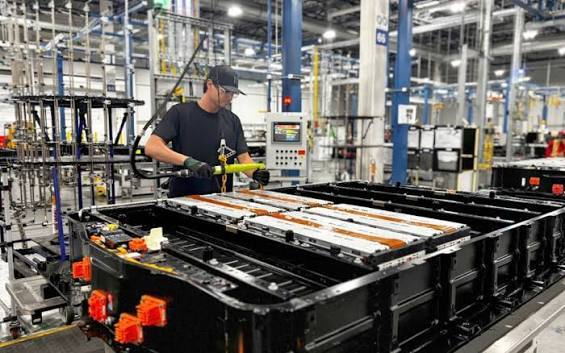

Introduction: Why Battery Recycling Is Becoming Important in America
Batteries have become essential to modern life. They power electric vehicles, smartphones, laptops, cordless tools, home energy storage systems, and large-scale battery installations that help stabilize electricity grids. As the United States expands its use of electrification and energy storage, the demand for battery materials is creating new opportunities for recycling technology.
Lithium-ion batteries contain valuable materials such as lithium, nickel, cobalt, copper, aluminum, and graphite. The precise composition depends on the battery chemistry. Recovering these materials from used batteries can help manufacturers reuse existing resources instead of depending entirely on newly mined materials.
Battery recycling is therefore becoming an important part of America’s technology and manufacturing landscape. It connects the electric vehicle industry with materials science, chemical processing, robotics, artificial intelligence, environmental management, and domestic supply-chain development.
In July 2026, the US Department of Energy announced eight winning teams in its Lithium-Ion Battery Recycling Prize Breakthrough Contest. The competition focuses on improving the collection, sorting, transportation, and processing of discarded lithium-ion batteries. The selected teams advanced to the next phase, where they can further validate their approaches.
The development of battery recycling technology is not only an environmental issue. It is also connected to economic competitiveness, manufacturing resilience, resource recovery, and the ability to establish dependable domestic supplies of important battery materials.
What Is Battery Recycling Technology?
Battery recycling technology refers to the equipment, software, chemical processes, and industrial methods used to collect used batteries and recover materials that can be reused.
The process can involve several stages, from identifying a battery and making it safe to handle through separating its components and refining valuable materials.
A typical lithium-ion battery recycling operation may include:
- Collection and transportation of used batteries
- Battery identification and chemistry classification
- Inspection, testing, and safe discharge where appropriate
- Mechanical dismantling or size reduction
- Separation of metals, plastics, and other components
- Recovery of valuable materials from battery-processing residues
- Refining recovered materials for suitable industrial uses
- Quality testing before recovered materials enter another supply chain
Not every facility performs all these steps. Some recycling companies specialize in collecting and processing battery packs, while others focus on extracting metals from intermediate materials produced by earlier processing stages.
The final quality of the recovered material matters. A recycling facility must produce materials that meet the specifications required by the intended customer. Recovering a metal does not automatically mean it can be placed directly into a new battery.
Why the USA Needs a Strong Battery Recycling Industry
The United States uses batteries across transportation, consumer electronics, industrial equipment, and electricity storage. As these applications expand, managing used batteries safely and recovering valuable materials becomes increasingly important.
1. Reducing Dependence on Imported Materials
Lithium-ion batteries rely on supply chains for critical minerals and processed materials. Some parts of these supply chains are geographically concentrated, creating potential exposure to trade disruptions, changing prices, and production constraints.
Recycling offers another source of materials that can supplement mining and primary refining.
A July 2026 report from the US Government Accountability Office examined how recycling and substitution technologies could help reduce American dependence on imported critical minerals. The report found that battery recycling could offer a relatively near-term opportunity, although the availability of discarded batteries and domestic processing capacity remain important constraints.
Source: US GAO — Critical Minerals: Reducing US Import Reliance with Substitution and Recycling Technologies
2. Supporting Electric Vehicle Manufacturing
Electric vehicles use substantial battery packs that contain valuable materials. When those batteries eventually reach the end of their useful life, recycling can help recover some of their material value.
Battery recycling can also process manufacturing scrap generated when companies produce battery cells, modules, and packs. This material may become available sooner than batteries from vehicles that remain in service for many years.
A domestic recycling industry could help battery manufacturers establish additional sources of raw materials while reducing the amount of usable material lost during production and disposal.
3. Improving Resource Efficiency
Mining and refining new materials require land, energy, water, equipment, and transportation. Recycling also consumes resources, but recovering materials can reduce the need for some primary production.
The actual environmental benefit depends on the recycling method, electricity source, transport distances, recovery rates, and the quality of the recovered materials.
4. Managing Battery Waste More Responsibly
Lithium-ion batteries should not be treated like ordinary household waste. Damaged or improperly handled batteries can create fire risks, especially when they are crushed, punctured, overheated, or short-circuited.
A developed recycling system can provide specialized collection and processing routes that reduce the likelihood of batteries entering unsuitable waste streams.
5. Creating New Industrial Opportunities
Battery recycling supports work in engineering, chemistry, automation, logistics, testing, manufacturing, and environmental compliance.
As more companies develop recycling systems, the industry may create additional opportunities for equipment suppliers, materials processors, battery manufacturers, and research institutions.
How Lithium-Ion Battery Recycling Works
The recycling process depends on the battery’s condition, design, chemistry, and intended recovery pathway.
Step 1: Collection and Transportation
Used batteries may come from electric vehicles, consumer electronics, energy storage systems, industrial tools, or battery manufacturing facilities.
Collection systems must account for the size, condition, chemistry, and safety risks of the batteries being transported.
Damaged or defective batteries may require special packaging, handling procedures, and transport arrangements.
Step 2: Identification and Sorting
Battery chemistry affects which materials are present and which processing method may be most appropriate.
For example, lithium iron phosphate batteries, often called LFP batteries, have a different material composition from nickel-manganese-cobalt batteries, commonly known as NMC batteries.
Sorting batteries by type and condition can help recycling facilities select suitable processing methods and improve the consistency of recovered materials.
Automated identification systems may use barcodes, labels, databases, imaging, and other inspection technologies to support this stage.
Step 3: Safety Inspection and Preparation
Before processing, facilities need to assess battery condition and manage electrical and fire risks.
Depending on the equipment and process, preparation may involve controlled discharge, pack dismantling, removal of external components, or other specialized steps.
These activities require trained personnel and appropriate safety systems. Batteries should not be dismantled or processed using improvised methods.
Step 4: Mechanical Processing
Some facilities use shredders, crushers, and separation equipment to reduce batteries into smaller fractions.
Mechanical processing can separate materials such as steel, aluminum, copper, plastics, and a powder-like mixture often called black mass.
Black mass generally contains battery electrode materials and can include valuable metals. It is an intermediate material, not necessarily a finished product ready for battery manufacturing.
Step 5: Material Recovery
The next stage depends on the chosen recycling process.
Companies may use high-temperature processing, chemical leaching, or other separation methods to recover metals and compounds.
The goal is to extract materials with sufficient purity for further refining and reuse.
Step 6: Refining and Quality Control
Recovered materials may require additional chemical treatment, purification, and testing.
Manufacturers need materials that satisfy strict specifications for composition, contamination, particle characteristics, and performance.
Recycling companies therefore need to consider both the amount of material recovered and whether the resulting product can be sold into a suitable market.
Major Battery Recycling Technologies in 2026
Several recycling approaches are used or developed in the United States. Each has advantages and limitations depending on the battery chemistry and the materials a company wants to recover.
1. Pyrometallurgical Recycling
Pyrometallurgical recycling uses high temperatures to process battery materials and recover selected metals.
The process can handle certain mixed material streams, but its performance varies by battery chemistry and process design. Some materials may be lost to slag or require additional treatment, and recovering lithium may need further processing.
Energy consumption, emissions management, and material recovery rates are important factors when evaluating a pyrometallurgical facility.
2. Hydrometallurgical Recycling
Hydrometallurgical recycling uses liquid-based chemical processes to separate and recover metals.
After mechanical preparation, materials may be treated using chemical solutions. Different metals can then be separated and purified through subsequent processing steps.
This approach can support recovery of lithium, nickel, cobalt, and other materials, depending on the feedstock and process configuration.
Its performance depends on chemical consumption, water management, energy requirements, wastewater treatment, and the quality of the final products.
3. Direct Recycling
Direct recycling aims to preserve and restore valuable battery materials instead of breaking them down completely into their individual chemical elements.
For selected battery chemistries, this approach may reduce some processing requirements and retain useful characteristics of electrode materials.
However, direct recycling can be challenging when incoming batteries have different chemistries, designs, states of degradation, or contamination levels.
The approach is promising for certain applications, but it requires careful sorting and appropriate material qualification.
4. Mechanical Separation
Mechanical separation uses physical processes to separate battery components.
These can include shredding, screening, magnetic separation, density separation, and other techniques designed to isolate useful material fractions.
Mechanical processing is often an important part of larger recycling systems. It can help prepare materials for chemical or thermal treatment, but it does not necessarily recover all valuable materials in a form suitable for immediate reuse.
5. Robotics and Automated Dismantling
Electric vehicle battery packs can differ significantly in design. Dismantling them manually may require substantial labor and can expose workers to safety risks if the work is not carefully controlled.
Robotic systems and automated equipment can help identify components, perform selected dismantling operations, and reduce repetitive tasks.
Automation can improve consistency, but it must account for differences in battery designs and the condition of used packs. Systems may also need human supervision when encountering damaged, unfamiliar, or irregular batteries.
6. Artificial Intelligence for Battery Sorting
Artificial intelligence can support battery identification, inspection, and logistics.
Computer vision systems may help identify labels, detect visible damage, or recognize certain components. Data-analysis tools may help facilities manage inventories, route batteries to suitable processing lines, and monitor equipment performance.
AI cannot reliably determine every safety issue from a photograph alone. Automated systems should be combined with suitable testing, inspection, and safety procedures.
New US Battery Recycling Developments in 2026
The American battery recycling sector is working to improve material recovery, build processing capacity, and strengthen domestic supply chains.
Department of Energy Recycling Prize
On July 28, 2026, the US Department of Energy announced eight winners of its Lithium-Ion Battery Recycling Prize Breakthrough Contest.
The selected teams included Rose City Robotics, ReJoule, BinIt, Glimpse Engineering, NAECO, Li Industries, Renewance, and Smartville.
The competition focuses on infrastructure for collecting, sorting, transporting, and processing used lithium-ion batteries. The teams are pursuing different approaches to improving the flow of materials through the recycling system.
The next phase provides noncash vouchers to support validation and technical and economic evaluation. The program is designed to help promising ideas progress toward more practical implementation.
Source: DOE — Battery Recycling Prize Breakthrough Contest
R3 Lithium’s Georgia Operations
In September 2026, R3 Lithium announced that it had initiated operations at a Georgia facility intended to recover lithium carbonate from recycled battery materials.
The company described the facility as a commercial-scale lithium recovery operation. As with other company announcements, claims about capacity, commercial performance, and future production should be evaluated against operational data and independent verification where available.
The development illustrates the growing interest in recovering lithium itself rather than focusing only on other battery metals.
Source: R3 Lithium — Recycled Lithium Recovery Facility
American Battery Technology Company
American Battery Technology Company has pursued technologies for recovering critical minerals from primary resources and recycled battery materials.
In September 2026, the company reported financial results for its fiscal year ending June 30, 2026, highlighting growth in its domestic critical-mineral manufacturing and recycling activities.
The company’s announcements reflect wider efforts to establish American processing capabilities. However, company-reported financial and operational figures should be distinguished from independent assessments of long-term performance.
Source: American Battery Technology Company — FY 2026 Results
Blue Whale Materials in Oklahoma
In September 2026, Blue Whale Materials announced mechanical completion of an expanded processing line at its Bartlesville, Oklahoma facility and said commissioning had begun.
The company reported that the line would support processing of battery cells, modules, and packs through an integrated operation.
This type of expansion is important because the recycling industry needs more than collection programs. It also needs facilities that can process incoming materials reliably and produce usable recovered products.
Source: Blue Whale Materials — Processing Line Update
The Role of Electric Vehicles in Battery Recycling
Electric vehicles are one of the major reasons battery recycling is receiving increased attention.
An EV battery pack contains many individual cells connected through electrical and thermal management systems. These packs are designed for long service life, but their performance changes with age, use, temperature, and charging history.
When an EV battery reaches the end of its useful life in a vehicle, it may still retain some capacity for less demanding applications. In other cases, its condition or damage may make recycling the more appropriate option.
Second-Life Battery Applications
Some used EV batteries may be suitable for stationary energy storage after inspection and testing.
For example, a battery that no longer meets the range or power requirements of a vehicle may still be useful in an application with different performance demands.
However, second-life use is not always economically or technically appropriate. Testing, repackaging, warranties, safety certification, and system integration all add costs.
When Recycling Becomes Necessary
Eventually, battery materials need to be recovered or managed through an appropriate end-of-life pathway.
Recycling can recover valuable metals and other materials that might otherwise be lost. The choice between reuse and recycling should be based on battery condition, safety, remaining performance, cost, and environmental considerations.
Battery Design for Easier Recycling
Manufacturers can help improve recycling by designing batteries that are easier to identify, dismantle, and process.
Standardized labeling, accessible components, clear material information, and designs that reduce unnecessary complexity may make end-of-life processing more efficient.
This is often described as designing for circularity: considering how a product will be maintained, reused, and recycled before it reaches the end of its useful life.
Battery Recycling and America’s Critical Mineral Supply Chain
Battery recycling is closely connected to the US strategy for strengthening access to critical minerals.
Materials such as lithium, nickel, cobalt, copper, and graphite play different roles in battery manufacturing. Their importance varies according to battery chemistry, and not every battery contains significant quantities of every mineral.
Recovering Lithium
Lithium is a key component of many rechargeable batteries. Recovering lithium from used batteries can create an additional source of material for refining and manufacturing.
However, recovery is only one step. The lithium must be converted into an appropriate chemical product and meet customer specifications before it can replace primary material in a particular application.
Recovering Nickel and Cobalt
Some battery chemistries contain substantial amounts of nickel and cobalt. These materials may have significant economic value, depending on market prices and processing costs.
Other chemistries, such as LFP, do not use nickel or cobalt in their cathodes. This difference influences the economics of recycling different battery types.
Recovering Copper and Aluminum
Copper and aluminum are used in battery current collectors, electrical connections, enclosures, and other components.
Mechanical processing and subsequent refining can recover these metals for reuse in appropriate industrial applications.
Reducing Supply Chain Vulnerability
The Government Accountability Office has noted that battery recycling technologies could help reduce dependence on imported critical minerals, but US recyclers face capacity and feedstock challenges.
A successful domestic recycling ecosystem requires a steady supply of suitable used batteries, effective collection networks, adequate processing capacity, and customers willing to purchase recovered materials.
Source: GAO — Critical Minerals and Recycling Technologies
Environmental Benefits of Battery Recycling
Battery recycling can provide environmental benefits, but the actual results depend on the process and the materials recovered.
Reduced Demand for Some Primary Materials
Recovered materials can supplement newly mined resources. Depending on the process and the material, this may reduce the need for some primary mining and refining.
More Responsible Waste Management
Specialized collection and processing can reduce the chance that used batteries will enter unsuitable waste streams.
Potential Energy Savings
Some recycling pathways may require less energy than producing the same materials entirely from primary resources. The result depends on the battery chemistry, recovery route, energy source, and processing efficiency.
Better Use of Manufacturing Scrap
Battery manufacturing can generate scrap materials during production and quality control. Recovering this material can improve resource efficiency and return valuable materials to the supply chain.
Lower Environmental Impacts Through Improved Process Design
Modern facilities can incorporate emission controls, wastewater treatment, material tracking, and energy-management systems.
These measures can help reduce the environmental footprint of recycling, but they do not eliminate all risks. Facilities still need appropriate permits, monitoring, and environmental safeguards.
Challenges Facing the US Battery Recycling Industry
Despite its potential, battery recycling faces several practical and economic challenges.
1. Limited Collection Infrastructure
A recycling plant needs a consistent supply of batteries or battery-processing materials.
Consumer electronics, industrial batteries, EV packs, and energy storage systems are distributed across different locations and may require different collection arrangements.
Without effective collection systems, recycling facilities may struggle to obtain sufficient feedstock to operate economically.
2. Fire and Safety Risks
Lithium-ion batteries can experience thermal runaway if damaged or mishandled. A thermal runaway event can generate heat, fire, and hazardous gases.
Facilities must establish appropriate procedures for storage, inspection, transport, emergency response, and processing.
Batteries should never be punctured, crushed, or dismantled casually. Consumers should follow local disposal guidance and use designated battery collection services.
3. Changing Battery Chemistry
Battery manufacturers use different chemistries to balance cost, energy density, lifespan, safety, and performance.
As battery designs change, recycling facilities may need to update equipment, sorting systems, and processing methods.
A process optimized for one chemistry may not be equally efficient for another.
4. High Capital Costs
Commercial recycling facilities require specialized equipment, environmental controls, trained workers, and reliable material supply chains.
Investment decisions depend on processing capacity, expected recovery rates, product quality, operating costs, and market prices for recovered materials.
A technically successful process may still struggle financially if the cost of collecting and processing batteries exceeds the value of the recovered products.
5. Uncertain Material Prices
The prices of lithium, nickel, cobalt, and other materials can change substantially.
When prices fall, the economic value of recovered materials may decrease even if the recycling process remains technically effective.
Companies need business models that can withstand market fluctuations and support long-term operations.
6. Product Quality and Customer Requirements
Battery manufacturers need materials that meet strict specifications. Recycled materials may require additional refining, testing, and certification before they can be used in a particular product.
The ability to produce consistent material quality is therefore essential to building long-term commercial relationships.
7. Transportation and Logistics
Batteries are bulky, can be heavy, and may require special handling. Transporting them over long distances can increase costs and complicate safety management.
Regional collection networks and strategically located processing facilities may help improve logistics, although the best arrangement depends on local battery volumes and industrial demand.
How Artificial Intelligence Is Improving Battery Recycling
Artificial intelligence is becoming useful in selected parts of the battery recycling process.
Automated Battery Identification
Computer vision and data systems can help identify battery types, read labels, and categorize products based on available information.
This can improve sorting and reduce the need for manual classification, provided the system can handle damaged labels and unfamiliar designs.
Robotic Dismantling
Robots can support repetitive dismantling tasks and may improve consistency in carefully controlled environments.
However, batteries vary considerably, so systems need safeguards for unusual configurations, damaged packs, and unexpected conditions.
Process Monitoring
AI and conventional analytics can monitor equipment performance, energy consumption, temperature, and other operating parameters.
These tools may help identify process changes or maintenance needs before they cause larger disruptions.
Improving Material Recovery
Analytical models can help operators evaluate process settings and compare different operating conditions.
The results must be verified using measurements from the actual process. AI predictions should not be treated as proof that a material has been recovered at a particular purity or yield.
How Businesses Can Enter the Battery Recycling Industry
Companies interested in battery recycling should begin by identifying a specific role in the supply chain.
Step 1: Choose a Business Focus
Potential areas include battery collection, logistics, testing, pack dismantling, mechanical processing, chemical recovery, materials refining, and recycling equipment.
Each area requires different capabilities and investment levels.
Step 2: Understand the Feedstock
Businesses should determine which battery types they will process, how much material is available, and whether the incoming batteries are consistent enough for the planned process.
Step 3: Assess Safety and Regulatory Requirements
Battery handling and processing may involve transportation rules, environmental permits, worker-safety requirements, fire protection, and waste-management obligations.
Requirements vary by activity and location. Companies should obtain appropriate professional and regulatory guidance before beginning operations.
Step 4: Select Suitable Technology
The right technology depends on the incoming battery chemistry, desired recovered products, process capacity, available energy, and local infrastructure.
Companies should compare the complete process rather than focusing only on headline recovery percentages.
Step 5: Build Reliable Customer Relationships
A recycling operation needs suppliers for used batteries and customers for the recovered materials.
Long-term agreements can help reduce uncertainty, but businesses should carefully assess contract terms, quality specifications, and market risks.
Step 6: Measure Environmental and Financial Performance
Companies should track recovery rates, material quality, energy use, waste generation, safety incidents, operating costs, and product revenue.
These measurements help determine whether the process is genuinely effective and commercially sustainable.
The Future of Battery Recycling Technology in the USA
The future of battery recycling will be shaped by advances in materials recovery, battery design, automation, and domestic manufacturing.
Several trends are worth watching.
Better lithium recovery: New processes may improve lithium recovery and reduce the amount of valuable material lost during treatment.
More automated sorting: Robotics, sensors, and software may help recycling facilities manage increasingly diverse battery designs.
Expanded domestic processing: Additional recycling and refining capacity could help return more recovered material to US manufacturing.
Improved battery traceability: Better information about battery chemistry, condition, and history may support safer handling and more efficient processing.
Second-life applications: Testing and repurposing may extend the useful life of selected batteries before final recycling.
Stronger collection systems: Convenient collection channels and better logistics could increase the amount of material reaching appropriate facilities.
More attention to battery design: Manufacturers may increasingly consider dismantling, material recovery, and end-of-life management during product development.
None of these trends guarantees that every recycling project will be profitable. Long-term success will depend on a combination of technical performance, feedstock availability, market demand, regulation, and responsible operations.
Conclusion
Battery recycling technology is becoming an important part of the United States’ electric vehicle, energy storage, and advanced manufacturing industries.
By recovering lithium, nickel, cobalt, copper, aluminum, and other materials, recycling can help supplement primary resources and strengthen domestic supply chains. Developments in automation, chemical processing, battery identification, and material refining are creating new opportunities for companies and researchers.
However, recycling is not a simple process of collecting old batteries and turning them directly into new ones. Batteries must be handled safely, materials must be separated and refined, and recovered products must meet appropriate quality requirements.
The industry also faces challenges involving collection infrastructure, processing capacity, capital costs, changing battery chemistry, and fluctuating material prices.
For the United States, a stronger battery recycling ecosystem could support resource efficiency and manufacturing resilience. The most successful technologies will be those that demonstrate reliable recovery, appropriate safety controls, credible environmental benefits, and sustainable business economics.
As battery use continues to evolve, recycling will be an important part of determining how effectively America can reuse valuable materials and manage the next generation of energy technologies.
Frequently Asked Questions (FAQs)
1. What is lithium-ion battery recycling?
Lithium-ion battery recycling involves collecting used batteries, processing them safely, and recovering valuable materials such as lithium, copper, aluminum, nickel, and cobalt where present.
2. Why is battery recycling important in the USA?
Battery recycling can help supplement domestic supplies of critical materials, support electric vehicle manufacturing, reduce material waste, and provide specialized routes for managing used batteries.
3. Which materials can be recovered from lithium-ion batteries?
Depending on the chemistry and process, recycling may recover lithium, nickel, cobalt, copper, aluminum, graphite, and other materials. Not every battery contains the same materials.
4. What is black mass in battery recycling?
Black mass is a material produced by processing battery components. It generally contains a mixture of electrode materials and may include valuable metals. Additional refining is usually needed before recovered materials can be used in new batteries.
5. What are the main battery recycling technologies?
Major approaches include pyrometallurgical processing, hydrometallurgical processing, direct recycling, mechanical separation, and combinations of these methods.
6. Can old electric vehicle batteries be reused?
Some batteries may be suitable for second-life applications, such as stationary energy storage, after appropriate inspection and testing. Others may be more suitable for recycling because of their condition or economics.
7. How does AI help battery recycling?
AI can support battery identification, automated sorting, robotic dismantling, process monitoring, and equipment maintenance. Its effectiveness depends on data quality, system design, and safety controls.
8. Is battery recycling environmentally friendly?
Battery recycling can reduce the need for some primary materials and improve waste management. Its overall environmental benefit depends on energy use, transport, chemical processing, material recovery, and the quality of recovered products.
9. What are the biggest challenges in battery recycling?
Key challenges include collecting enough batteries, managing fire risks, processing different chemistries, recovering materials economically, maintaining product quality, and building dependable supply chains.
10. What is the future of battery recycling in America?
The industry may see better lithium recovery, more automated processing, stronger collection networks, and additional domestic refining capacity. Progress will depend on technical performance, investment, material prices, and the availability of used batteries.











No responses yet