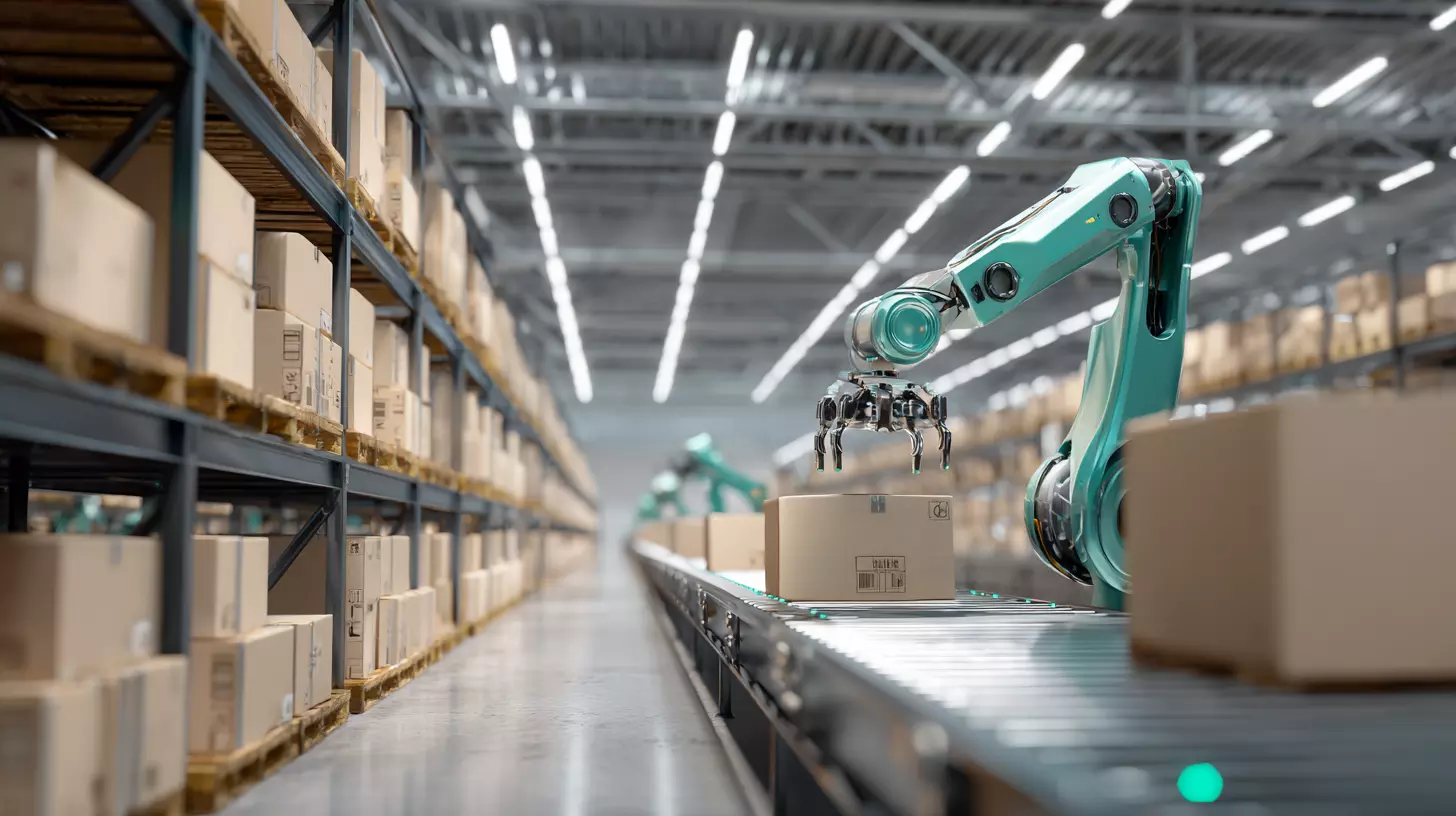

Introduction
The logistics and supply chain industry is one of the most important parts of the American economy. Every day, millions of products move between manufacturers, warehouses, distribution centers, retailers, businesses, and customers. Food, electronics, medicines, automotive components, clothing, industrial equipment, and countless other products depend on reliable transportation and distribution networks.
However, managing these operations has become increasingly complicated. Customer expectations for faster deliveries are rising, transportation costs can fluctuate, warehouse operations require more flexibility, and companies must respond to unexpected disruptions.
To address these challenges, businesses across the United States are investing in artificial intelligence, robotics, automation, cloud computing, and advanced data analytics.
In 2026, AI-powered logistics technology is becoming an important part of the modernization of American supply chains. Companies are using intelligent software to forecast demand, robotic systems to move products, automated machines to unload packages, and digital platforms to coordinate warehouse operations.
Recent announcements from companies such as Walmart, Symbotic, DHL Supply Chain, FedEx, and GXO Logistics demonstrate how quickly this market is developing.
The transformation is not simply about replacing manual work with machines. It is about creating connected operations in which employees, software, robots, transportation systems, and inventory platforms work together.
1. What Is AI-Powered Logistics Technology?
AI-powered logistics refers to the use of artificial intelligence and related digital technologies to improve how goods are stored, handled, transported, tracked, and delivered.
Traditional logistics operations often depend on separate systems for inventory management, transportation planning, warehouse operations, and customer communication.
Modern intelligent logistics platforms can connect these activities and analyze information from multiple sources.
For example, an AI system may examine sales history, current inventory, delivery schedules, seasonal demand, and warehouse capacity to recommend where products should be stored.
Similarly, a transportation management platform can evaluate delivery routes, traffic conditions, vehicle availability, and delivery deadlines to help companies plan shipments.
Important technologies include:
- Artificial intelligence and machine learning.
- Autonomous mobile robots.
- Automated warehouse storage and retrieval.
- Computer vision and smart cameras.
- Predictive demand forecasting.
- Cloud-based warehouse management systems.
- Internet of Things sensors.
- Digital twins and simulation platforms.
- Automated package sorting.
- Real-time shipment tracking.
These technologies can work independently, but their greatest potential comes from integration.
A connected logistics operation can use data from transportation, inventory, and warehouse systems to make decisions more quickly and respond to changing conditions.
2. Why American Companies Are Investing in Smart Supply Chains
The United States has a large and complex logistics network that supports domestic commerce and international trade.
Manufacturers need reliable access to raw materials. Retailers require consistent inventory. E-commerce businesses must fulfill online orders. Food companies need dependable distribution systems, while pharmaceutical businesses must maintain strict storage and transportation conditions.
Several factors are encouraging investment in logistics technology.
Growing e-commerce demand
Online shopping has changed how businesses manage inventory and deliveries.
Customers increasingly expect accurate delivery estimates, convenient returns, and faster order fulfillment.
To meet these expectations, companies are improving warehouse automation and integrating their digital ordering systems with distribution operations.
Increasing operational complexity
Businesses often manage products across multiple warehouses, transportation providers, and retail locations.
AI can help analyze these interconnected operations and identify opportunities to improve inventory placement, resource allocation, and shipment planning.
Pressure to control operating costs
Labor, transportation, fuel, equipment, and warehouse expenses can significantly affect logistics profitability.
Automation and predictive analytics may help companies use their resources more efficiently.
Need for supply chain resilience
Unexpected weather events, transportation interruptions, equipment failures, and supplier problems can disrupt product movement.
Digital monitoring and predictive systems can help companies identify potential problems earlier and evaluate alternative plans.
Expansion of warehouse automation
Robotics and intelligent warehouse software are becoming more capable.
Companies are moving beyond individual automated machines toward connected systems that coordinate people, robots, inventory, and packaging equipment.
3. AI-Powered Warehouse Automation Is Transforming Distribution Centers
Warehouses are among the most important areas of logistics technology innovation.
Traditional warehouses rely heavily on workers to receive products, move pallets, select items, prepare orders, package shipments, and organize inventory.
Modern automated facilities combine software, sensors, robotic equipment, and conveyor systems to perform many of these activities.
Autonomous mobile robots
Autonomous mobile robots, commonly known as AMRs, can move products and materials through warehouse environments.
Unlike traditional automated guided vehicles that may depend on fixed routes, many AMRs use sensors and mapping technology to navigate changing surroundings.
They can support tasks such as:
- Moving inventory between warehouse zones.
- Transporting picking containers.
- Delivering materials to packaging stations.
- Moving pallets.
- Supporting order fulfillment.
- Reducing unnecessary walking and material handling.
AMRs can be particularly useful in facilities where product movement is frequent and warehouse layouts need flexibility.
Robotic picking systems
Robotic picking technology uses cameras, sensors, mechanical arms, and AI software to identify and handle products.
The system analyzes the item’s position and orientation before attempting to pick it.
These machines can support repetitive picking operations, although irregular shapes, fragile products, transparent packaging, and mixed inventory can make certain tasks difficult.
Automated storage and retrieval
Automated storage and retrieval systems use machines to place and retrieve products from designated storage locations.
High-density storage technology can help businesses use warehouse space more effectively.
The software coordinates inventory locations and retrieval tasks to support order fulfillment.
Intelligent warehouse orchestration
The next stage involves coordinating different automated systems through one digital platform.
Instead of operating robots and conveyor systems separately, orchestration software can assign tasks based on real-time demand and available resources.
This can help warehouse managers respond to changing order volumes without constantly reorganizing operations manually.
4. Walmart and Symbotic Are Expanding AI-Powered Distribution
One of the significant American supply chain developments in 2026 is the expanded partnership between Walmart and Symbotic.
On October 29, 2026, Symbotic announced an expanded commercial agreement with Walmart to bring additional automation capabilities to 25 US regional distribution centers.
The agreement includes an initial commitment of approximately $6 billion in spending over several years across multiple locations. The companies intend to improve distribution operations through AI-powered robotics and software. <Cite refs={[“turn419092search4″,”turn419092search26”]}/>
How Symbotic technology works
Symbotic develops an integrated warehouse automation platform that combines robotics, high-density storage, and software.
Its systems are designed to organize products and manage their movement through distribution centers.
The platform can help businesses:
- Improve inventory organization.
- Increase storage capacity.
- Coordinate robotic material movement.
- Support faster product replenishment.
- Improve warehouse visibility.
- Manage complex distribution operations.
The Walmart partnership demonstrates that large retailers are treating automation as a long-term investment rather than a temporary technology experiment.
For businesses operating extensive distribution networks, improved warehouse capacity and inventory movement can have an impact across multiple parts of the supply chain.
5. DHL Supply Chain Is Moving Toward Adaptive AI and Robotics
DHL Supply Chain is another major company investing in intelligent logistics operations.
In a November 9, 2026 announcement, DHL described its next phase of digitalization, including adaptive AI-powered robotics and AI orchestration in live warehouse operations.
The company reported that it had deployed more than 9,000 robots across its global network, completed over 1.5 billion robotic picks, and recorded more than 2.5 million minutes of interactions with conversational AI agents. It also reported that more than 95% of its global warehouses had advanced digitalization solutions. <Cite refs={[“turn419092search0”]}/>
What makes adaptive robotics different?
Traditional warehouse robots often follow predefined instructions and routes.
Adaptive robots are being developed to interpret their surroundings and adjust their actions when conditions change.
For example, a robot may need to navigate around an unexpected obstacle or respond when a product is positioned differently than expected.
AI orchestration adds another layer by connecting robots, employees, warehouse software, and operational information.
This can help warehouse managers:
- Allocate resources according to current demand.
- Coordinate different automated machines.
- Respond to changes in order volumes.
- Monitor operational performance.
- Improve workflow coordination.
DHL’s approach illustrates how modern logistics companies are moving from isolated automation projects toward integrated human-and-machine operations.
6. FedEx Is Using Robotics to Improve Package Handling
Package handling is one of the most physically demanding parts of parcel logistics.
Large delivery networks receive trailers containing thousands of packages in different sizes, shapes, and weights. Unloading these shipments can require significant manual effort.
FedEx announced a new autonomous robotic trailer-unloading system developed with Berkshire Grey on February 3, 2026.
The system, called Scoop, is designed to automate package unloading and support safer, more efficient operations in FedEx facilities. Its deployment was planned for calendar year 2026. <Cite refs={[“turn419092search3″,”turn419092search9”]}/>
Why robotic unloading matters
Trailer unloading can be difficult because packages are not always arranged consistently.
A robotic system must identify individual items, determine how to handle them, and move them to the appropriate location.
AI-enabled robotics can help with these tasks through:
- Computer vision.
- Object recognition.
- Robotic movement planning.
- Automated package handling.
- Safety monitoring.
- Integration with facility systems.
Automating repetitive unloading tasks may reduce some physical demands on employees and help facilities manage large shipment volumes.
However, human supervision and maintenance remain important, particularly when systems encounter damaged packages, unusual objects, or operating conditions outside their design limits.
7. GXO Logistics Is Expanding Adaptive Automation Across the USA
GXO Logistics announced on November 18, 2026, that it plans to accelerate the deployment of adaptive technologies across its US operations.
The planned rollout, beginning in early 2027, is expected to include pallet autonomous mobile robots, robotic unloading systems, and wearable scanning solutions.
The company intends to introduce these technologies across priority sites over the following 12 months, serving sectors such as consumer goods, food and beverage, retail, aerospace and defense, and technology. <Cite refs={[“turn419092search2″,”turn419092search25”]}/>
Why this development is important
Different industries have different warehouse requirements.
A food distribution facility may need careful product handling and inventory rotation. An aerospace supplier may require precise tracking of specialized components. An online retailer may prioritize fast order fulfillment.
Adaptive technologies can help logistics providers configure their operations according to customer requirements.
GXO has also expanded its partnership with Agility Robotics to introduce Digit humanoid robots at additional US facilities in North Carolina and Tennessee.
The October 26, 2026 announcement builds on earlier deployment work in Georgia. The companies reported that Digit had moved more than 100,000 totes at the Flowery Branch facility. <Cite refs={[“turn419092search8″,”turn419092search27”]}/>
These developments show that humanoid robots are beginning to receive more attention in real warehouse environments, although their practical use remains focused on specific material-handling tasks rather than replacing entire warehouse workforces.
8. Predictive Analytics Is Improving Supply Chain Planning
AI is not limited to physical warehouse equipment. It is also changing how companies plan their operations.
Predictive analytics uses historical and real-time information to estimate future conditions.
For example, an AI platform may examine previous sales, seasonal patterns, promotional activity, inventory levels, and supplier lead times to estimate future product demand.
Businesses can use these predictions to make more informed decisions.
Demand forecasting
Retailers can use machine learning to identify patterns in purchasing behavior.
This may help companies prepare for busy shopping periods, seasonal demand, and changes in customer preferences.
Inventory optimization
AI software can recommend how much inventory should be held at different warehouse locations.
The objective is to balance product availability against storage and carrying costs.
Supplier risk monitoring
Supply chain platforms can monitor supplier performance, delivery schedules, and operational information.
They may help businesses identify potential delays and evaluate alternative sourcing arrangements.
Delivery planning
Predictive analytics can help estimate transportation times and identify possible disruptions.
These tools are especially valuable for companies managing large shipment volumes across multiple regions.
However, forecasts are not guarantees. Unexpected events, inaccurate data, and sudden market changes can affect prediction quality.
9. Smart Transportation and Real-Time Shipment Tracking
Transportation is another major part of the logistics technology transformation.
Goods move through highways, ports, railways, airports, and regional distribution networks. Businesses need reliable information about where shipments are and when they are likely to arrive.
Modern tracking technology combines GPS, connected sensors, cloud software, and transportation management systems.
GPS-enabled shipment visibility
GPS tracking can help businesses monitor the location of vehicles and shipments.
Transportation managers can use location information to estimate arrival times and identify route changes.
Internet of Things sensors
IoT devices can monitor more than location.
Depending on the equipment, they may measure:
- Temperature.
- Humidity.
- Shock and vibration.
- Door opening events.
- Equipment operating conditions.
- Cargo handling conditions.
This is particularly useful for sensitive products such as food, pharmaceuticals, and certain chemicals.
Route optimization
AI-based route planning can analyze traffic conditions, delivery windows, vehicle capacity, and transportation requirements.
A system may recommend a different route when congestion or weather conditions create a potential delay.
Real-time customer updates
Shipment visibility platforms can provide customers with updated delivery estimates and tracking information.
This improves communication and can reduce uncertainty throughout the delivery process.
10. Cloud Computing Is Connecting the Supply Chain
A modern logistics operation may involve several independent software platforms.
Warehouse management systems control storage and picking. Transportation management systems coordinate shipping. Enterprise resource planning systems manage business information, while inventory platforms track product availability.
Cloud computing can help connect these systems.
Instead of keeping all information in isolated databases, companies can use cloud-based platforms to share operational data across locations.
Benefits may include:
- Centralized inventory visibility.
- Easier integration between warehouses.
- Remote access to operational information.
- Improved reporting and analytics.
- Flexible computing capacity.
- Better coordination between suppliers and logistics providers.
Cloud systems also support AI applications because machine-learning tools require access to large amounts of relevant information.
However, businesses must consider data security, access permissions, system reliability, and integration costs when moving logistics operations to cloud platforms.
11. Digital Twins Are Helping Companies Simulate Warehouse Operations
Digital twin technology creates a virtual representation of a physical system.
In logistics, a digital twin can represent a warehouse, distribution center, transportation network, or production facility.
The model can use information from real operations to simulate different scenarios.
For example, a warehouse operator may want to understand what happens when order volume increases by 30%.
A digital simulation can help evaluate whether the existing picking stations, conveyor systems, robots, and storage capacity can handle the additional workload.
Potential applications include:
Warehouse layout planning: Testing alternative storage arrangements before making physical changes.
Automation planning: Evaluating where robots and automated systems could be introduced.
Capacity forecasting: Estimating how a facility may perform during periods of high demand.
Equipment planning: Studying how machinery and material-handling systems interact.
Disruption analysis: Examining the potential effects of equipment downtime or transportation delays.
Digital twins do not automatically guarantee better decisions. Their accuracy depends on the quality of the data and assumptions used to build the model.
Nevertheless, they can provide a useful environment for testing operational changes before investing in physical infrastructure.
12. Artificial Intelligence Is Changing Inventory Management
Inventory management involves deciding what products a business should store, where they should be stored, and when additional stock should be ordered.
Poor inventory decisions can create two problems.
First, insufficient stock can lead to lost sales and delayed orders. Second, excessive stock can increase storage costs and tie up business capital.
AI can help businesses make more informed inventory decisions.
Intelligent stock replenishment
AI systems can analyze sales history, supplier lead times, seasonal trends, and current stock levels to recommend replenishment quantities.
Automated stock monitoring
Computer vision, barcode scanning, RFID systems, and connected devices can help identify inventory movement.
Product placement
Analytics can help determine which products should be stored closer to picking and shipping areas.
Returns management
AI can help classify returned products, identify common return patterns, and recommend suitable processing workflows.
These applications are particularly valuable for retailers and distributors managing large numbers of products across multiple locations.
13. The Role of Robotics Companies and Logistics Technology Providers
The American logistics technology market includes major industrial automation companies, software developers, robotic equipment manufacturers, and logistics providers.
Several companies are shaping the sector.
Symbotic
Symbotic develops AI-powered warehouse automation systems combining robotics, software, and high-density storage.
Its expanded agreement with Walmart demonstrates the growing role of integrated automation in large retail distribution networks.
Berkshire Grey
Berkshire Grey develops AI-enabled robotic systems for package handling, picking, sorting, and warehouse automation.
Its Scoop system is being introduced through its collaboration with FedEx.
Agility Robotics
Agility Robotics develops the Digit humanoid robot.
Its partnership with GXO is exploring how humanoid robots can perform selected material-handling tasks in operational warehouse environments.
Honeywell
Honeywell develops warehouse automation, sorting equipment, software, and control systems.
In April 2026, the company introduced its Intelligrated Momentum Core warehouse software platform and IntelliSort Irregulars Sorter. Honeywell said the new sorter could process up to 5,000 irregular-sized parcels per hour under its stated operating conditions. <Cite refs={[“turn419092search7”]}/>
DHL Supply Chain
DHL is a major logistics provider investing in robotics, analytics, and AI orchestration.
Its latest digitalization initiatives demonstrate how logistics service providers can combine software intelligence with physical automation.
14. Benefits of AI-Powered Logistics for American Businesses
The adoption of intelligent logistics technology can provide several operational benefits.
Improved warehouse productivity
Robots and automated systems can support repetitive material-handling activities and help employees focus on other tasks.
Better inventory accuracy
Digital tracking and automated scanning can reduce certain manual recording errors.
Faster operational decisions
AI analytics can help managers evaluate complex information and respond to changing conditions.
Improved shipment visibility
GPS, sensors, and connected platforms can provide better information about shipment status and location.
More flexible warehouse operations
Adaptive robotics and orchestration software can help facilities respond to changing workloads.
Better use of warehouse space
High-density storage and automated retrieval can improve how facilities use available space.
Potential improvements in workplace safety
Robotic systems may reduce employees’ exposure to certain repetitive or physically demanding tasks.
The actual benefits depend on equipment selection, implementation quality, employee training, and integration with existing systems.
15. Challenges Facing AI-Powered Logistics in the USA
Despite its advantages, intelligent logistics technology introduces important challenges.
High implementation costs
Robotics, automation equipment, software platforms, and infrastructure upgrades require investment.
Small and medium-sized businesses may find large-scale automation difficult to finance.
Integration with older systems
Many logistics companies use software that was installed years ago.
Connecting modern AI tools with older warehouse and transportation systems can require complex integration work.
Data quality
AI systems depend on accurate information.
Incorrect inventory records, incomplete shipment data, and inconsistent product information can reduce system performance.
Cybersecurity
Connected logistics systems may become targets for cyberattacks.
Businesses must protect warehouse software, supplier portals, transportation platforms, and operational networks.
Workforce training
Employees need training to work with new robotic systems, digital platforms, and automated equipment.
Technology adoption should include plans for employee safety, training, and changes in daily responsibilities.
Reliability and downtime
A highly automated warehouse can become vulnerable when a critical system stops working.
Companies need maintenance procedures, backup processes, and clear plans for continuing operations during technical problems.
16. What Businesses Should Consider Before Adopting Logistics AI
Companies should avoid investing in automation simply because a technology is popular.
The right solution depends on the organization’s size, order volume, product types, operating requirements, and budget.
A practical implementation strategy includes the following steps.
Step 1: Identify the operational problem
Determine whether the biggest challenge involves inventory accuracy, package handling, transportation planning, warehouse capacity, or delivery delays.
Step 2: Review existing systems
Examine current warehouse software, transportation platforms, scanners, sensors, and inventory databases.
Step 3: Evaluate suitable technologies
Compare robotics, predictive analytics, automated sorting, cloud platforms, and tracking solutions according to business requirements.
Step 4: Calculate the investment
Consider equipment costs, software subscriptions, installation, integration, maintenance, training, and potential operational savings.
Step 5: Start with a pilot project
Testing a system in one warehouse or one operational process can help identify problems before a larger rollout.
Step 6: Train employees
Provide practical training so employees understand how to use, monitor, and maintain new systems.
Step 7: Monitor performance
Measure order accuracy, fulfillment time, inventory reliability, equipment availability, and total operating costs.
A successful logistics technology project should deliver measurable business improvements rather than simply adding more automation.
17. The Future of Logistics Technology in the United States
The future of American logistics will likely involve more connected systems, adaptive robotics, intelligent planning, and data-driven decision-making.
Several developments deserve attention.
More adaptive warehouse robots
Robots may become better at handling unfamiliar objects, navigating changing environments, and working alongside employees.
Greater use of humanoid robots
Humanoid robots could support selected tasks involving movement, lifting, and handling in warehouse environments designed for human workers.
However, large-scale adoption will depend on cost, reliability, safety, and practical performance.
AI-powered supply chain orchestration
Software platforms may increasingly coordinate transportation, inventory, warehouse equipment, and employees through a shared operational system.
More accurate demand forecasting
Improved data integration and machine learning could help companies anticipate product demand and respond to changing market conditions.
Smarter transportation networks
Connected vehicles, GPS, predictive traffic analysis, and automated dispatching may improve shipment planning and delivery visibility.
More sustainable logistics operations
Companies may use route optimization, efficient warehouse equipment, electric delivery vehicles, and improved inventory planning to reduce unnecessary energy consumption and transportation activity.
Stronger cybersecurity
As logistics operations become more connected, protecting operational systems and business data will remain essential.
The companies that combine reliable technology with practical workforce planning and strong operational management may be best positioned to benefit from these changes.
Conclusion
AI-powered logistics technology is transforming how American businesses manage warehouses, transportation, inventory, and product distribution.
In 2026, developments from Walmart and Symbotic, DHL Supply Chain, FedEx, GXO Logistics, Agility Robotics, and Honeywell demonstrate that automation is moving beyond isolated experiments toward more integrated supply chain operations.
Artificial intelligence can help forecast demand and coordinate resources. Robotics can support repetitive material handling. Digital tracking can improve shipment visibility, while cloud computing and predictive analytics can connect information across complex networks.
However, successful adoption requires careful planning. High investment costs, integration challenges, cybersecurity risks, data quality, and workforce training remain important considerations.
The future of logistics will not depend on robots or AI alone. It will depend on how effectively businesses combine intelligent software, physical automation, skilled employees, and reliable transportation infrastructure.
As the American supply chain continues to modernize, AI-powered logistics could become an increasingly important foundation for faster distribution, better inventory management, and more resilient business operations.
Frequently Asked Questions (FAQs)
1. What is AI-powered logistics?
AI-powered logistics uses artificial intelligence, machine learning, robotics, and data analytics to improve warehouse operations, inventory management, transportation planning, and delivery processes.
2. How is AI changing supply chains in the USA?
AI helps businesses forecast demand, optimize inventory, analyze shipment information, coordinate warehouse resources, and identify potential disruptions.
3. What are autonomous mobile robots in warehouses?
Autonomous mobile robots are machines that use sensors and navigation software to move products and materials through warehouse environments with limited manual guidance.
4. Which American companies are investing in logistics automation?
Companies involved in logistics automation include Walmart, Symbotic, FedEx, Berkshire Grey, GXO Logistics, Agility Robotics, Honeywell, and other technology providers.
5. How does AI improve inventory management?
AI analyzes historical sales, current stock, supplier lead times, and demand patterns to help businesses determine inventory requirements and improve replenishment decisions.
6. What is AI orchestration in logistics?
AI orchestration connects operational information, employees, automated machines, and software systems to coordinate warehouse activities and allocate resources more effectively.
7. How does GPS help modern supply chains?
GPS provides location information that helps businesses monitor vehicles, track shipments, estimate arrival times, and plan transportation routes.
8. Are humanoid robots being used in American warehouses?
Yes. Humanoid robots such as Agility Robotics’ Digit are being tested and deployed for selected material-handling tasks through commercial logistics partnerships. Their use remains focused on specific applications rather than fully autonomous warehouse operations.
9. What are the main challenges of logistics automation?
Major challenges include high initial investment, software integration, cybersecurity, data quality, maintenance, equipment reliability, and employee training.
10. What is the future of AI-powered logistics in the USA?
The future is expected to include more adaptive robotics, intelligent warehouse orchestration, predictive analytics, connected transportation systems, and increasingly automated distribution networks.











No responses yet