
Introduction
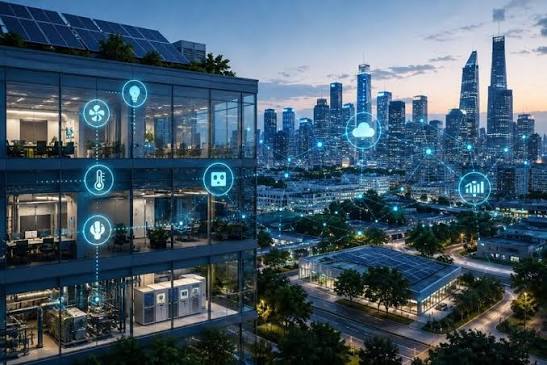
Buildings are becoming more intelligent, connected, and automated. Across the United States, technology is changing how offices, hospitals, schools, shopping centers, hotels, warehouses, and industrial facilities operate.
In the past, building management often involved separate systems for heating, ventilation, air conditioning, lighting, security, and energy monitoring. Facility managers frequently had to check different control panels and manually adjust equipment to maintain comfortable indoor conditions.
That approach is gradually changing.
In 2026, smart building technology is helping businesses connect these systems through digital platforms, Internet of Things (IoT) sensors, artificial intelligence, cloud software, and automated controls. Instead of treating every building function as a separate operation, modern systems can collect information from different equipment and use it to improve overall performance.
For example, a smart office building can use occupancy sensors to understand which areas are being used, adjust heating and cooling accordingly, and reduce unnecessary lighting. An intelligent hospital can monitor environmental conditions and equipment performance. A commercial property manager can review energy consumption across several buildings through a centralized dashboard.
These developments are becoming increasingly important as American businesses look for ways to manage operating costs, improve energy efficiency, maintain indoor comfort, and modernize aging infrastructure.
1. What Is Smart Building Technology?
Smart building technology refers to the combination of connected devices, sensors, automation systems, software, and data analytics used to monitor and manage building operations.
A smart building can collect information from different systems and use that information to support automated decisions.
Common technologies include:
- Building management systems (BMS).
- Building automation systems (BAS).
- Internet of Things sensors.
- Artificial intelligence and machine learning.
- Smart heating and cooling controls.
- Automated lighting systems.
- Digital access control.
- Energy monitoring platforms.
- Cloud-based facility management.
- Predictive maintenance software.
The main objective is to make buildings easier to operate, more efficient, and more responsive to the needs of occupants.
Smart buildings versus traditional buildings
A traditional building may use separate equipment and controls for different functions. Some operations may require manual intervention, and information about energy use or equipment performance may not be available in one place.
A smart building connects more of these functions.
For example, an integrated system may receive information from occupancy sensors, temperature sensors, lighting controllers, and HVAC equipment. It can then help facility managers coordinate building operations.
Smart technology does not necessarily mean that every building function is fully autonomous. Many systems still require human supervision, maintenance, and manual approval for important decisions.
2. Artificial Intelligence Is Changing Building Management
Artificial intelligence is becoming one of the most important developments in modern building automation.
Commercial buildings generate large amounts of operational data. HVAC equipment, electrical systems, lighting, access controls, and environmental sensors continuously produce information about building conditions.
AI-powered software can analyze this information to identify patterns and help operators make better decisions.
AI-powered energy optimization
Heating and cooling systems are among the major energy-consuming systems in many commercial buildings.
AI software can analyze historical energy usage, indoor temperatures, occupancy patterns, and weather information to recommend adjustments.
For example, an office building may have several floors, but only some areas may be occupied throughout the day. Intelligent controls can help adjust heating and cooling based on actual usage rather than operating every zone at the same settings.
This can reduce unnecessary equipment operation while maintaining suitable indoor conditions.
Automated fault detection
Building equipment can develop problems that are difficult to identify through routine visual inspections.
AI-supported fault detection and diagnostics can analyze equipment readings and identify unusual operating patterns.
Potential warning signs include:
- Unusual temperature changes.
- Unexpected energy consumption.
- Equipment operating outside normal schedules.
- Irregular pressure readings.
- Repeated system alarms.
- Cooling or heating performance changes.
The system can alert maintenance teams so that they can investigate the problem.
AI-assisted building operations
In September 2026, Trane introduced new AI and digital solutions covering its cloud applications, connected controls, and intelligent thermal management.
The company’s announcement highlighted the growing role of analytics, connected tools, and coordinated controls in helping building operators manage increasingly complex environments.
This reflects a broader industry shift from basic equipment monitoring toward more integrated, data-driven building operations.
3. Smart HVAC Systems Are Improving Indoor Comfort
Heating, ventilation, and air conditioning (HVAC) systems are essential for maintaining comfortable indoor environments.
They are particularly important in American buildings that experience different seasonal temperatures and changing occupancy levels.
Traditional HVAC systems often depend on scheduled operation and fixed temperature settings. Smart HVAC systems can use sensors and connected controls to respond more dynamically.
Occupancy-based temperature control
Occupancy sensors can detect whether a room or area is being used.
When a meeting room is empty, the system may adjust its temperature settings to reduce unnecessary heating or cooling. When people enter, the system can return to an appropriate operating mode.
This is especially useful in offices, educational facilities, conference centers, and large commercial buildings.
Smart ventilation
Indoor air quality is another important part of building management.
Connected sensors may monitor conditions such as carbon dioxide concentration, humidity, and particulate levels.
Building automation software can use these measurements to support ventilation adjustments, depending on system capabilities and applicable operating requirements.
Predictive HVAC maintenance
Smart HVAC systems can also help identify potential equipment problems before they cause major disruptions.
For example, changes in motor performance, airflow, pressure, or temperature may indicate that equipment needs inspection.
Predictive maintenance can help facilities teams prioritize service work rather than relying entirely on fixed maintenance schedules.
Why smart HVAC matters
Smart HVAC technology can help businesses balance several objectives:
- Indoor comfort.
- Energy efficiency.
- Equipment reliability.
- Indoor air quality.
- Maintenance planning.
- Operating cost management.
The results depend on proper installation, sensor quality, system configuration, and regular maintenance.
4. IoT Sensors Are Giving Buildings Real-Time Visibility
The Internet of Things is a major foundation of smart building technology.
IoT sensors collect information from different parts of a building and transmit it to connected systems for monitoring and analysis.
Instead of relying only on manual inspections, facility managers can receive information from equipment and spaces throughout a property.
Common building sensors
Smart buildings may use sensors to monitor:
Temperature: Measures indoor and equipment temperatures.
Humidity: Helps monitor moisture levels and indoor environmental conditions.
Occupancy: Detects whether spaces are being used.
Light levels: Measures available lighting and supports automated lighting controls.
Air quality: Monitors selected environmental indicators.
Water leakage: Detects unwanted water and sends alerts.
Equipment vibration: Helps identify unusual mechanical behavior.
Wireless sensor networks
Wireless sensors can make certain building upgrades easier because they may reduce the need to install extensive new cabling.
This can be particularly useful when modernizing older buildings.
However, wireless installations still require appropriate network planning, battery management, device security, and reliable communication coverage.
Remote monitoring
Building operators can use centralized dashboards to review information from different areas.
For organizations managing multiple facilities, this can make it easier to compare performance and identify properties that may need attention.
5. Smart Lighting Is Reducing Unnecessary Energy Use
Lighting is another important part of commercial building operations.
Traditional lighting systems may operate according to fixed schedules or manual switches. Smart lighting systems can respond to occupancy, daylight availability, and programmed operating requirements.
Motion-based lighting
Occupancy sensors can switch lights on when a space is being used and reduce lighting when it becomes empty.
This can be particularly useful in corridors, storage areas, meeting rooms, and other spaces that are not occupied continuously.
Daylight harvesting
Some smart lighting systems measure natural daylight entering a room.
When sufficient daylight is available, the system can reduce artificial lighting levels while maintaining the desired illumination.
Connected lighting controls
Modern lighting platforms can connect with building automation systems.
This allows operators to manage lighting schedules, monitor system performance, and coordinate lighting with other building functions.
Smart lighting is not only about reducing electricity use. Proper lighting levels can also contribute to workplace comfort and support the needs of different activities.
6. Building Management Systems Are Becoming More Integrated
A building management system is software and hardware used to monitor and control building equipment.
Modern BMS platforms are increasingly designed to bring information from multiple systems into a centralized environment.
For example, one platform may connect:
- HVAC equipment.
- Lighting controls.
- Electrical monitoring.
- Environmental sensors.
- Access control.
- Selected security systems.
- Equipment alarms.
- Energy dashboards.
Why integration matters
When building systems operate independently, facility managers may have difficulty understanding how one system affects another.
An integrated platform can provide a more complete picture.
For example, if a building experiences unusually high energy consumption, managers may compare HVAC operation, occupancy, lighting schedules, and equipment alarms to investigate possible causes.
Open communication standards
Interoperability is an important consideration when selecting building automation technology.
Protocols such as BACnet and Modbus are used in building and industrial automation environments to support communication between compatible devices and systems.
However, compatibility is not automatic. Different equipment versions, configurations, cybersecurity settings, and software implementations can affect integration.
Building owners should evaluate compatibility before installing new systems or replacing older equipment.
7. Smart Buildings Are Supporting Better Energy Management
Energy management is one of the strongest reasons businesses invest in smart building technology.
Commercial buildings consume electricity and other forms of energy for heating, cooling, lighting, equipment, and daily operations.
Smart energy management systems can help property owners understand where energy is being consumed and identify opportunities for improvement.
Real-time energy monitoring
Smart meters and connected electrical monitoring systems can provide information about energy consumption.
A building manager may use this information to identify periods of high demand or compare energy usage across different floors and equipment groups.
Automated demand management
Some buildings can adjust selected operations in response to electricity prices, grid signals, or demand-management programs.
For example, a building may temporarily adjust certain noncritical loads during periods of high electricity demand, provided comfort, safety, and operational requirements are maintained.
Integration with solar and battery systems
Smart buildings can connect energy management software with on-site solar panels and battery storage.
This may help coordinate electricity generation, storage, and consumption.
For example, a building with battery storage may use its energy management platform to monitor battery levels and coordinate charging and discharging according to operational requirements.
These systems can be particularly relevant to large facilities with substantial and variable energy demand.
8. Smart Building Security Is Becoming More Connected
Modern commercial buildings use digital systems to manage entry, monitor selected areas, and support visitor management.
Smart building security combines connected access devices, cameras, alarms, and management software.
Digital access control
Employees may use mobile credentials, access cards, or other approved identification methods to enter specific areas.
Building administrators can manage permissions and review access records through centralized platforms.
Smart visitor management
Connected visitor systems can help businesses register guests, notify employees, and manage visitor access.
This can make reception processes more organized in offices and commercial facilities.
Integrated security monitoring
Some building platforms connect access control and video management systems.
This can help security teams investigate events and understand what happened in a particular area.
Cybersecurity considerations
Connecting physical building systems to digital networks creates additional cybersecurity responsibilities.
Building operators should consider:
- Secure device configuration.
- Strong authentication.
- Network segmentation.
- Regular software updates.
- Access permissions.
- Monitoring of unusual activity.
- Vendor security practices.
- Backup and recovery procedures.
Building automation systems should not be treated as ordinary office computers. They may control equipment that affects physical operations, so security planning needs to account for operational technology risks.
9. Indoor Air Quality Is Becoming a Major Smart Building Priority
Indoor air quality affects the comfort and experience of people using offices, schools, hospitals, and other buildings.
Smart environmental monitoring systems can help facility managers understand selected indoor conditions.
Air quality monitoring
Depending on the sensors installed, a building may monitor:
- Carbon dioxide.
- Particulate matter.
- Humidity.
- Temperature.
- Certain volatile organic compounds.
These measurements can help identify environmental conditions that may require investigation.
Automated ventilation support
When connected to a building automation system, environmental sensors may support ventilation adjustments.
For example, a system can use selected indoor readings to help operators understand when additional ventilation may be appropriate.
Healthcare and education applications
Hospitals, clinics, schools, and universities have different environmental requirements.
Smart monitoring can support facilities teams by providing more consistent visibility into indoor conditions.
However, sensor readings must be interpreted correctly. A single measurement does not provide a complete assessment of indoor air quality or guarantee a healthy environment.
10. Digital Twins Are Creating Virtual Models of Buildings
Digital twin technology is becoming an important part of advanced building management.
A digital twin is a digital representation of a physical asset, system, or environment.
In smart buildings, a digital twin may combine building design information, equipment data, sensor readings, and operational information.
How building digital twins work
A digital building model may include information about:
- Building layout.
- HVAC equipment.
- Electrical systems.
- Lighting.
- Occupancy patterns.
- Equipment performance.
- Energy consumption.
When connected to live data, the model can help operators understand how different systems are performing.
Testing operational changes
Digital models may help engineers explore possible changes before applying them to the physical building.
For example, a facility team may evaluate different temperature schedules or equipment configurations and study their potential operational effects.
Maintenance planning
Digital twins can also help organize information about building equipment, maintenance history, and asset locations.
This may make it easier for facility teams to understand which equipment requires inspection or replacement.
Digital twins vary significantly in complexity. Some are detailed engineering models, while others are operational dashboards with visual representations of building systems.
11. Major Companies Driving Smart Building Innovation in the USA
The American smart building market includes established building automation manufacturers, HVAC companies, energy management providers, and specialized software developers.
Some important industry participants include the following.
Johnson Controls
Johnson Controls develops building automation and management technologies, including its Metasys and OpenBlue platforms.
Its solutions cover areas such as HVAC management, building operations, energy performance, and connected services.
Honeywell
Honeywell provides building automation, control, security, and energy management technologies.
Its building solutions support commercial facilities that need to manage equipment, environmental conditions, and operational performance.
Siemens
Siemens Smart Infrastructure develops building automation, energy management, and connected building solutions.
Its technologies support the integration of building systems and digital infrastructure.
Schneider Electric
Schneider Electric offers building management, electrical distribution, automation, and energy management technologies.
Its platforms support organizations looking to coordinate building operations and energy use.
Trane Technologies
Trane develops HVAC equipment, building controls, connected services, and digital solutions.
Its September 2026 announcement of new AI and digital capabilities highlights the growing importance of intelligent building performance and connected thermal management.
Carrier Global
Carrier provides heating, ventilation, air conditioning, refrigeration, and building-related technologies.
Its products and services contribute to the modernization of commercial HVAC systems.
75F
75F is a US-based building automation company focused on connected HVAC controls and energy management.
Its technology targets commercial buildings that want to improve environmental control and building operations.
These companies have different product portfolios and business models. Building owners should compare system compatibility, installation requirements, ongoing service, security, and total operating costs before choosing a provider.
12. Smart Building Technology in Offices, Hospitals, Schools, and Hotels
Different building categories have different operational requirements.
Smart building technology can be adapted to these needs.
Smart office buildings
Offices can use occupancy sensors, smart lighting, connected HVAC controls, and workplace management software.
These technologies may help property managers understand how spaces are used and adjust operations accordingly.
Smart hospitals
Hospitals require reliable environmental controls, equipment monitoring, and secure access management.
Connected systems can help facility teams monitor building operations while maintaining appropriate procedures for clinical areas.
Smart schools and universities
Educational institutions can use automation to manage classroom temperatures, lighting, energy consumption, and building schedules.
Systems can be configured around school hours and changing room occupancy.
Smart hotels
Hotels can use connected room controls, digital access systems, and centralized building management to support guest comfort and operational efficiency.
For example, selected room settings may be adjusted when rooms are unoccupied, subject to guest preferences and property policies.
Smart warehouses
Warehouses can use environmental sensors, automated lighting, energy monitoring, and equipment alerts.
Large facilities may also benefit from integrated monitoring across multiple buildings.
13. Challenges Facing Smart Building Adoption
Although smart building technology offers important opportunities, implementation is not always simple.
High installation costs
Advanced sensors, controllers, software platforms, and network upgrades require investment.
Older buildings may need additional electrical, mechanical, or communications work before they can support modern automation systems.
Legacy equipment
Many American commercial buildings contain equipment installed years or decades ago.
Integrating older systems with modern platforms may require gateways, replacement controllers, or custom engineering.
Cybersecurity risks
Connected building systems create additional points that need protection.
Poorly secured devices or networks may expose building operations to unauthorized access.
Data quality
AI systems depend on accurate and useful information.
Incorrect sensor readings, missing data, and inconsistent equipment configurations can reduce the reliability of automated recommendations.
Staff training
Facility teams need the skills to operate and maintain connected building systems.
Businesses may need training in automation software, network management, cybersecurity, and data analysis.
Privacy concerns
Occupancy analytics and workplace monitoring can create privacy questions.
Businesses should use appropriate data practices, limit unnecessary personal information collection, and communicate clearly about monitoring technologies.
14. The Future of Smart Building Technology in the USA
The next stage of smart building development is likely to involve greater integration between AI, energy systems, connected equipment, and building infrastructure.
Several trends are worth watching.
More autonomous building operations
AI-powered platforms may increasingly support routine adjustments to HVAC, lighting, and other building systems.
Human operators will remain important for supervision, safety, and complex decisions.
Greater use of predictive maintenance
More facilities may use equipment data and analytics to identify potential problems before failures occur.
Integration with electric grids
Smart buildings may become more capable of adjusting selected electricity loads in response to grid conditions and energy prices.
This could support wider demand flexibility and better coordination between buildings and electricity networks.
More connected building portfolios
Large organizations may increasingly manage several properties through centralized digital platforms.
This can make it easier to compare performance and coordinate maintenance across locations.
Better integration of renewable energy
Buildings with solar panels, batteries, and EV charging infrastructure may use more advanced energy management systems to coordinate electricity use.
Stronger cybersecurity requirements
As buildings become more connected, cybersecurity will become an increasingly important part of building design, procurement, installation, and maintenance.
Conclusion
Smart building technology is changing the way commercial and institutional buildings operate across the United States.
AI-powered analytics, connected HVAC systems, IoT sensors, automated lighting, digital security, and integrated building management platforms are helping businesses gain better visibility into their facilities.
The biggest opportunity is not simply installing more connected devices. It is making different building systems work together in a way that improves operational performance, supports occupants, and helps manage energy consumption.
Developments from companies such as Trane, Johnson Controls, Honeywell, Siemens, and Schneider Electric demonstrate how the industry is moving toward more intelligent and connected building operations.
However, successful adoption requires careful planning. Installation costs, older equipment, cybersecurity, data quality, and staff training all need attention.
As technology continues to develop, smart buildings could become an important part of America’s broader digital infrastructure. Offices, hospitals, schools, hotels, and industrial facilities may increasingly rely on intelligent systems to manage their operations.
The future of American buildings will be shaped not only by their architecture but also by how effectively they use data, automation, and connected technology.
Frequently Asked Questions (FAQs)
1. What is smart building technology?
Smart building technology uses connected sensors, automation systems, software, and data analytics to monitor and manage building operations such as HVAC, lighting, energy, and security.
2. How does AI improve smart buildings?
AI can analyze building data, identify unusual equipment behavior, support energy optimization, predict maintenance requirements, and help automate selected building operations.
3. What is a building management system?
A building management system is a platform used to monitor and control building equipment and services, including HVAC, lighting, and selected electrical systems.
4. What is the role of IoT in smart buildings?
IoT sensors collect information about temperature, humidity, occupancy, air quality, equipment performance, and other conditions. This information can be used by connected building systems.
5. Can smart buildings reduce energy consumption?
Smart building systems can help identify energy waste and automate selected operations. Actual savings depend on building design, equipment condition, system configuration, and occupant behavior.
6. Which companies provide smart building technology in the USA?
Important companies include Johnson Controls, Honeywell, Siemens, Schneider Electric, Trane Technologies, Carrier Global, and specialized providers such as 75F.
7. What is smart HVAC technology?
Smart HVAC uses connected sensors, automated controls, and software to manage heating, cooling, and ventilation according to building conditions and operating requirements.
8. Are smart buildings secure?
They can be designed with strong cybersecurity controls, but connected systems also introduce risks. Secure configuration, network segmentation, authentication, and regular updates are important.
9. What is a digital twin in building technology?
A digital twin is a digital representation of a physical building or system. It can combine design information and operational data to support monitoring, analysis, and planning.
10. What is the future of smart buildings in the USA?
Future developments are expected to include more AI-assisted automation, predictive maintenance, connected energy systems, digital twins, and improved integration with electricity grids.











No responses yet